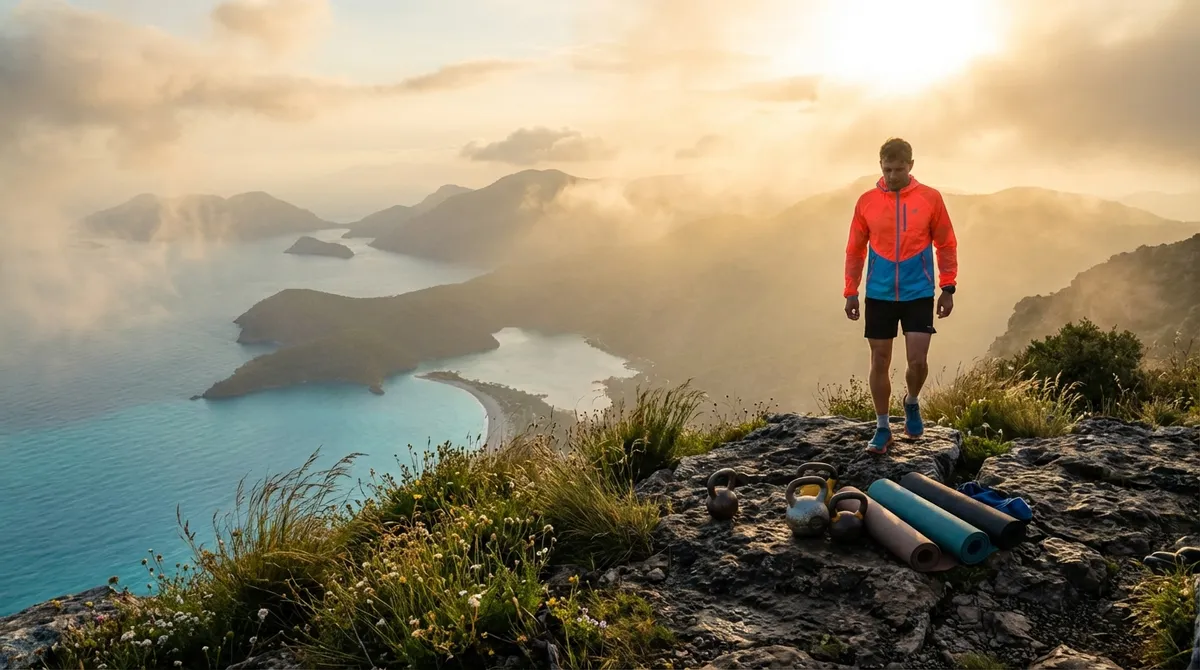
Where Sweat Meets Skyline: High-Altitude Urban Challenges
If you want your VO₂ max to send you a thank-you postcard, head for a city in the clouds.
Think of La Paz, Bolivia, perched at over 3,600 meters (11,800+ feet), where even walking stairs feels like a workout. Training here—easy jogs, light interval sessions, slow-paced hikes—forces your body to adapt to thinner air, potentially boosting endurance when you return to sea level. It’s not about going hard; it’s about going smart in a place where every breath counts.
Or try Quito, Ecuador, cradled in the Andes. Early mornings reveal runners circling Parque La Carolina, cyclists slicing through the cool air, and hikers eyeing the slopes of Pichincha. City parks become your open-air gym: think bodyweight circuits, sprints along tree-lined paths, and yoga with a backdrop of volcanic peaks. When skyscrapers share horizon space with mountains, your motivation takes care of itself.
In these high-altitude hubs, you’re not chasing PRs—you’re building resilience. Hydrate, ease into intensity, and listen to your body. In return, the city pays you back with sharper lungs, stronger legs, and a story most people will never dare to write.
Ocean Edge Endorphins: Coastal Destinations That Keep You Moving
Some destinations invite you to unplug; coastal fitness escapes dare you to outrun the tide.
On Portugal’s Algarve coast, rugged cliffs, hidden coves, and undulating trails form a natural obstacle course. Run sunrise along the golden paths above Praia da Marinha, alternating between steady efforts and quick hill surges. Cool down with a swim in the Atlantic, letting salt water double as recovery therapy.
Head east to Cape Town, South Africa, where Table Mountain looms over the city and the ocean glitters below. Mornings can mean a taxing hike up Lion’s Head—scrambling sections included—followed by a refreshing dip in Camps Bay. Afternoons might transform into ocean kayaking, surf sessions, or beach sprints on the soft sand of Muizenberg.
Coastal fitness destinations blend exertion with ease: one moment you’re grinding up a cliffside trail, the next you’re floating in the sea, lungs slowed, mind clear. The rhythm of the waves becomes your metronome, and suddenly, “cardio day” feels like freedom instead of a chore.
Wilderness That Works You: Forests, Fjords, and Untamed Trails
If cities sharpen your edge, wilderness deepens it.
In Norway’s fjord country, towering cliffs and glacial valleys create a landscape that demands movement: steep hikes to panoramic viewpoints, trail runs along mossy singletrack, and kayaking across glassy water. A climb to Trolltunga or Preikestolen is not just spectacle—it’s a full-day fitness mission, testing strength, stamina, and mental grit.
Farther afield, New Zealand’s South Island feels like a giant adventure park disguised as a country. The Queenstown area alone offers trail runs along Lake Wakatipu, mountain bike routes in the Ben Lomond Reserve, and alpine hikes in nearby national parks. Recovery days might include an easy paddleboard session or a gentle walk along the lakeshore that still racks up steps and scenery.
In these wild places, your “gym” has no walls and no opening hours. Weather becomes your coach, terrain your training plan, and every summit reminds you how small you are—and how capable you can be.
5 Active Travel Tips for the Fitness-Obsessed Explorer
1. Train With the Terrain, Not Against It
Let the destination dictate your workouts instead of forcing your usual routine onto unfamiliar ground. In hilly cities, swap flat intervals for stair sprints and hill repeats. In beach towns, lean into soft-sand runs, open-water swims, and board sports. Mountain escapes call for hikes, scrambles, and trail runs at varied intensities.
This “terrain-first” mindset prevents boredom and injury while tapping into movement styles you’d never find on a gym floor.
2. Pack a Mini Gym That Fits in Your Daypack
You don’t need a suitcase full of equipment to stay strong. Bring:
- A light resistance band or mini-band for glute activation, rows, and shoulder work
- A jump rope for quick, high-intensity cardio where running isn’t practical
- A compact suspension trainer (if you’re serious about strength), which can hook to doors, trees, or sturdy posts
- A travel yoga mat or foldable mat for mobility sessions anywhere
Combine this with bodyweight staples—push-ups, split squats, planks, and burpees—and you’re never more than 15 minutes away from a full-body sweat session.
3. Periodize Your Trip Like an Athlete
Treat your journey as a training block:
- Arrival days: Low-intensity movement—walks, light mobility, easy cycling—to shake off travel fatigue
- Middle days: Higher-intensity efforts—long hikes, trail runs, summit pushes—when you’re adjusted and energized
- Departure eve: Gentle recovery—yoga, stretching, light swim—to reset before the next travel leg
This approach lets you go hard when it counts without burning out halfway through your adventure.
4. Use Local Culture as Your Warm-Up and Cool-Down
Movement is only part of the story; how you experience a place amplifies every workout.
Warm up by walking or cycling to your trailhead instead of hopping in a car. Cool down by strolling farmers’ markets, exploring old town streets, or wandering waterfront promenades. Opt for fresh, local foods that align with your needs: grilled fish, regional vegetables, hearty whole grains, and traditional dishes that fuel your next outing instead of weighing you down.
You’ll rack up mileage without even noticing—and the memories will taste better than any energy bar.
5. Chase Sunrises, Not Just Step Counts
Early starts are a fitness traveler’s secret weapon. Dawn workouts offer:
- Cooler temperatures in hot climates
- Quieter trails and streets
- Spectacular sunrise views that turn each session into a moment you’ll remember
Plan one or two “sunrise missions” per destination—maybe a pre-dawn hike to a viewpoint, a waterfront run as the city wakes, or a yoga flow on a rooftop. You’re not just training; you’re watching the world reveal itself, one horizon at a time.
Crafting Your Own Fitness Destination Map
The world is not divided into “vacation places” and “training grounds.” With the right mindset, everywhere you go can be both. Instead of asking, “Where can I stay in shape while traveling?” ask, “Where can my next workout double as the best story I’ve ever told?”
High-altitude metropolises that test your lungs, coastlines that fire up your legs, and wild landscapes that reset your spirit—they’re not waiting for elite athletes or influencers. They’re waiting for anyone willing to swap comfort for curiosity and routine for adventure.
Book the ticket that scares you a little. Pack the shoes that can handle more than pavement. And let your next destination shape not just your itinerary, but your strength, resilience, and sense of what your body—and your life—can do.
Sources
- Centers for Disease Control and Prevention – Benefits of Physical Activity - Overview of health benefits of regular physical activity
- American Council on Exercise – Exercise at Altitude - Guidance on adapting training to high-altitude environments
- Harvard T.H. Chan School of Public Health – Outdoor Exercise - Discusses mental and physical benefits of exercising outdoors
- New Zealand Department of Conservation – Hiking and Outdoor Safety - Official advice on staying safe while hiking and exercising in the outdoors
- Visit Norway – Hiking in Norway’s Fjords - Destination information and example routes in Norway’s fjord regions