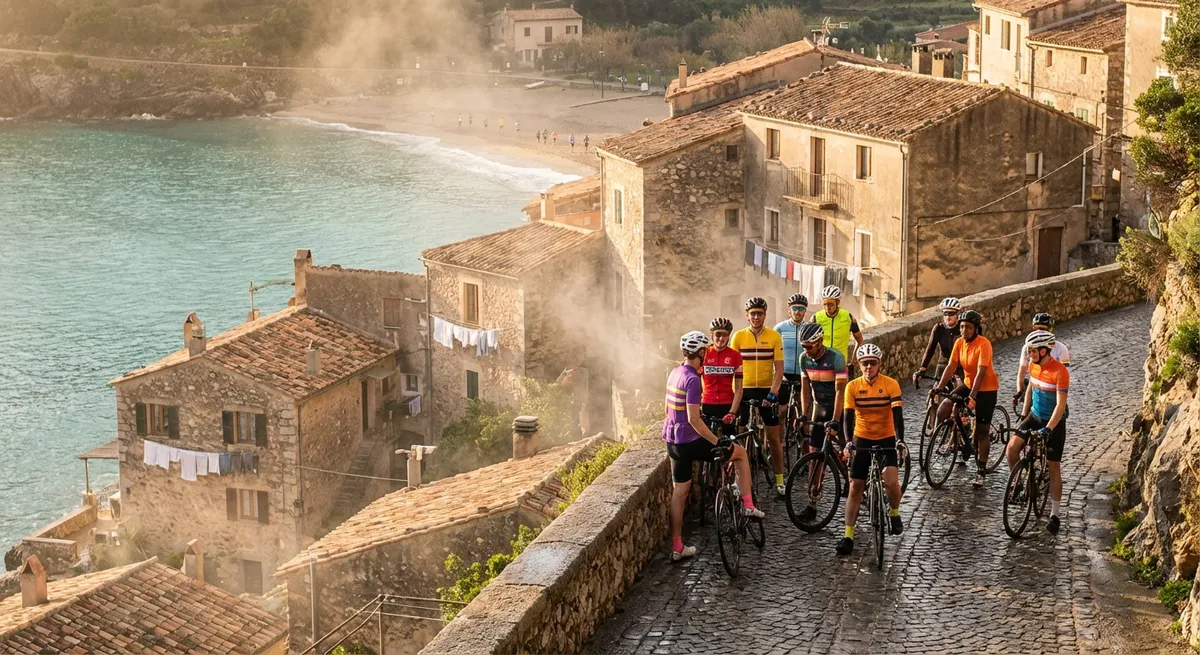
This guide dives into fitness-powered destinations around the globe and packs in five adventure-ready tips to help you move with purpose—whether you’re sprinting along a seaside promenade or summiting a volcano at sunrise.
Where Landscapes Fuel Your Workout
Some destinations don’t just accommodate an active lifestyle—they demand it. Imagine swapping a standard city stroll for a power hike along the cliffs of Portugal’s Algarve, or trading a lazy beach day in Thailand for a kayak session through emerald lagoons.
In places like Queenstown, New Zealand, the self-proclaimed “adventure capital of the world,” your day might start with a lakeside run along Lake Wakatipu, roll into a quad-burning hike up Ben Lomond, and end with your legs shaking from a downhill mountain-bike blast. The town’s network of trails and bike paths means movement is built into the landscape, not hidden away in a hotel gym.
Over in Chamonix, France, the jagged spine of the Mont Blanc massif turns every training session into an alpine epic. Stair-climb your way through cobbled streets, then hit the high trails for elevation gain that would make a treadmill blush. Even rest days feel active here—wandering glacial valleys still racks up steps and stories.
Along Costa Rica’s Pacific coast, strength and mobility take center stage. Surf breaks in places like Nosara and Santa Teresa demand agility, core power, and balance, transforming every wave into a full-body workout. Off the board, jungle treks, waterfall scrambles, and zip-line approaches become natural intervals: hike, climb, splash, repeat.
These destinations prove a simple truth: when the surroundings are wild and compelling, movement stops feeling like “exercise” and starts feeling like exploration.
5 Active Travel Tips for the Adventure-Hungry Voyager
Here are five field-tested ways to wring every drop of adventure—and fitness—out of your next trip.
1. Trade Transit Time for “Explorer Miles”
Whenever distance and safety allow, replace wheels with your own two feet. Instead of booking another rideshare across Lisbon, map a walking route that threads through miradouros (viewpoints), staircases, and waterfront paths. In Amsterdam or Copenhagen, rent a bike and commute like a local, weaving your daily “workout” into canal crossings and café stops.
These “explorer miles” add up fast: long walks, commuting rides, and slow jogs between sights quietly build endurance while you’re distracted by architecture and alleyways. Use them as low-intensity cardio, then layer in more focused training (like hill sprints or stair circuits) when you find terrain that inspires you.
2. Turn Iconic Spots Into Micro-Workouts
Some of the world’s most famous sights double as ready-made fitness stations—if you look at them with a training mindset.
- The lengthy staircases up to viewpoints in Valparaíso, Chile, or Santorini, Greece, become natural stair intervals. Jog the flats, power-hike the climbs.
- Waterfront promenades in Barcelona, Sydney, or Cape Town offer perfect terrain for fartlek runs: alternate easy jogging with quicker bursts between light poles, street murals, or piers.
- Urban parks like London’s Hyde Park, New York’s Central Park, or Buenos Aires’ Bosques de Palermo are outdoor gyms in disguise—benches for step-ups and tricep dips, tree-lined paths for tempo runs, lawns for mobility flows.
Think in short, sharp sessions: 15–20 minute blasts woven into your sightseeing so you never feel like you’re sacrificing adventure for training.
3. Pack Gear That Multiplies Your Options
You don’t need a suitcase full of equipment to move like an athlete on the road. A few smart, lightweight choices can turn any destination into a versatile training ground.
- Resistance band: Perfect for strength sessions in hostel courtyards, airport lounges, or park benches. Great for rows, presses, and glute work after long travel days.
- Compact jump rope: A fast, portable way to spike your heart rate—ideal when weather or safety keeps you closer to your accommodation.
- Minimalist trail shoes: One pair that can handle city pavements, rocky paths, and muddy hills expands your trail options massively.
- Collapsible soft flask or bottle: Essential for staying hydrated on long hikes, desert runs, or city marathons of museum-hopping and café exploration.
With this micro-kit, you can turn a rooftop into a strength circuit in Mexico City, a riverside path into an interval track in Seoul, or a campsite in Patagonia into your own outdoor training arena.
4. Anchor Your Itinerary Around a Signature Movement
Pick one primary way you want to move in each destination, and let that shape your trip.
- In Kyoto, it might be early-morning runs between temple complexes, finishing with quiet stretches under towering torii gates.
- In Vancouver, maybe you center your days around trail time: Grouse Grind one day, forested loops in Pacific Spirit Regional Park the next, then a recovery ride along the Seawall.
- In Bali, your anchor could be sunrise surf sessions, with yoga or bodyweight strength work as your post-wave reset.
This “signature movement” becomes your thread through the journey. It gives structure to your days without locking you into a rigid schedule, and it ensures you leave each place with a tangible, embodied memory—how the altitude felt, how the humidity clung, how your legs burned on that final climb.
5. Sync Your Training Rhythm With Local Culture
The most rewarding active trips aren’t just about the workout—they’re about how your body’s rhythm syncs with the destination’s pulse.
- In Spain or Italy, lean into late dinners by timing your main session in the late afternoon, then use evening strolls (paseos) as gentle cooldowns.
- In hot-weather destinations like Marrakesh, Dubai, or Phuket, chase dawn and dusk. Early-morning runs through quiet streets or along empty beaches feel like secret windows into the city’s soul.
- In mountain towns from the Dolomites to Colorado, respect altitude: start with easy hikes or gentle spins, then build toward heavier efforts as your body acclimates.
Use local food as fuel, not guilt. A bowl of pho in Hanoi after a humid run, a plate of dal and rice after trekking in Nepal, or fresh ceviche post-snorkel in Peru become part of your training ecosystem. Your performance improves, but so does your immersion.
Destination Highlights for the Movement-Obsessed
If you’re scoping your next big adventure, these regions offer a rich blend of culture, natural beauty, and movement-friendly terrain.
Norway’s Fjord Country (Bergen, Ålesund, Geiranger)
Expect steep hikes with staggering payoffs, like Mount Fløyen above Bergen or the routes overlooking Geirangerfjord. Trail running here feels like sprinting along the edge of a painting—waterfalls, vertical cliffs, and villages tucked into green folds. Kayaking, cycling, and winter cross-country skiing round out a year-round endurance paradise.
Peru’s Sacred Valley and Cusco Region
The high altitude around Cusco turns even casual walks into cardio. Hikes to sites like Pisac, Ollantaytambo, and Machu Picchu (via the Inca Trail or alternative routes) are naturally strength-endurance sessions—stone steps, steep climbs, and uneven ground engage every stabilizer muscle. In between, you’re weaving through markets, ruins, and living history.
South Africa’s Cape Peninsula
Cape Town and its surroundings are a multi-sport dream. Table Mountain and Lion’s Head deliver intense hikes and trail runs with ocean-meets-city views. The Cape Peninsula offers coastal road cycling that swings between rugged cliffs and penguin-dotted beaches. Surfing at Muizenberg or trail runs in Silvermine Nature Reserve fill your days; farm-to-table cuisine on the Winelands fills your tank.
Japan’s Coastal and Mountain Routes
Beyond neon cityscapes, Japan is laced with walking routes and pilgrimage trails. The Kumano Kodo and Nakasendo Way provide days of immersive hiking through forests, villages, and hot-spring towns. Morning runs through parks in Tokyo or Osaka blend skyscrapers with shrines. Onsens (hot springs) become your recovery ritual, turning your training cycle into something almost ceremonial.
Conclusion
Active travel isn’t about training despite your destination—it’s about training with it. Every stairwell can be a challenge, every shoreline a track, every city park an open-air gym wrapped in culture and scenery. When you chase experiences that make your legs shake and your lungs burn in the best possible way, you come home with more than photos—you come back with new gears you didn’t know you had.
Let your next journey be measured not just in miles flown, but in summits reached, waves caught, trails explored, and moments when the view at the top made every step worth it.
Adventure is out there. Lace up, pack smart, and let the world set the pace.
Sources
- U.S. National Park Service – Benefits of Physical Activity in Nature - Overview of how outdoor activity supports physical and mental health
- World Health Organization – Physical Activity Fact Sheet - Global recommendations and research on physical activity and health
- New Zealand Department of Conservation – Walking and Tramping Tracks - Official information on New Zealand’s hiking routes, including those around Queenstown
- Norwegian Scenic Routes – Fjord Norway - Details on Norway’s fjord-region routes and landscapes suitable for active exploration
- Japan National Tourism Organization – Walking and Hiking in Japan - Insights into major walking and pilgrimage routes like the Kumano Kodo and Nakasendo Way