Below are five power-packed active travel tips, each anchored in a destination style that will push your body, sharpen your mind, and leave you with memories that feel like muscle.
1. Turn Cities Into Cardio Playgrounds
Urban landscapes are secret training arenas if you know how to use them. Instead of hopping into a rideshare, walk or jog between key landmarks and neighborhoods—you’ll log serious steps without even realizing it. Think sunrise runs along Barcelona’s beachfront, stair sprints up to Montreal’s Mount Royal lookout, or interval jogs across the Thames bridges in London.
Use pedestrian bridges, public stairs, park benches, and riverside paths as natural training tools. Try this simple city circuit: brisk walk for 5 minutes, jog for 3, then 10 push-ups and 15 squats at a scenic stop. Repeat as you cross the city. You’ll experience side streets, local cafés, and hidden viewpoints that guidebooks skip, while your heart rate stays in the adventure zone.
Active Travel Tip #1: “Commute by Muscles”
Commit to doing all trips under 3 km (about 2 miles) on foot or by bike. Not only does this keep your daily activity high, it also forces you to explore more deeply—stumbling onto street art, markets, and parks you’d miss underground or behind a windshield.
2. Climb for the View, Not Just the Workout
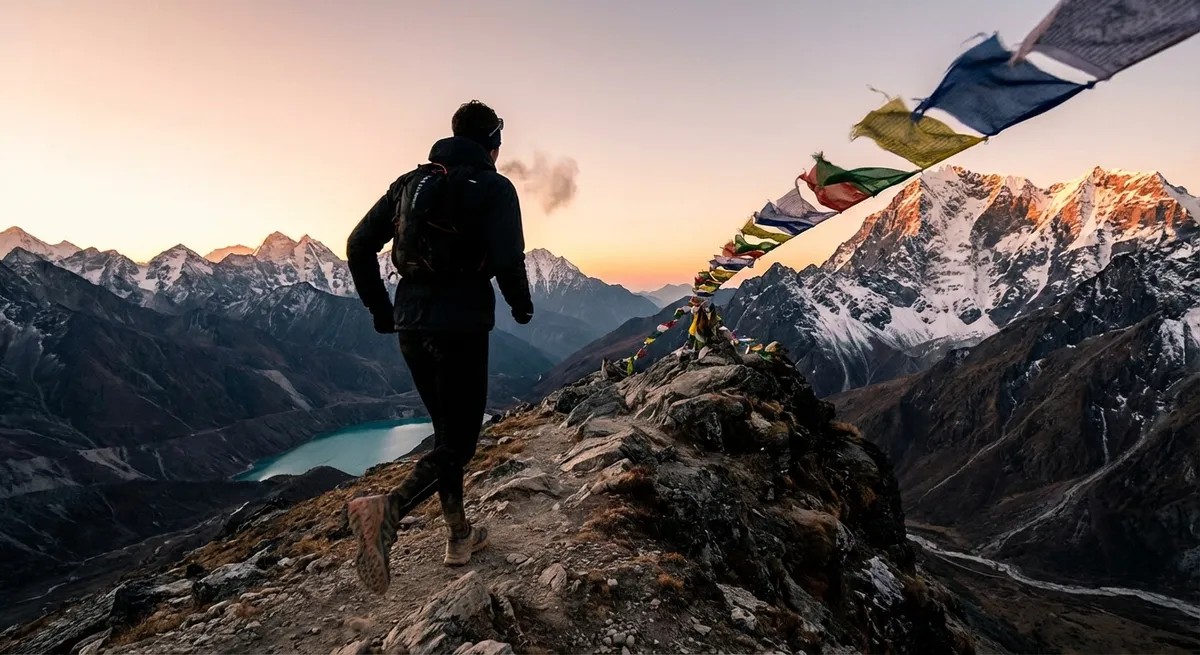
Mountains, volcanoes, and cliffside lookouts offer the kind of motivation a treadmill never will: a summit panorama waiting as your reward. Whether you’re tackling Table Mountain in Cape Town, the emerald hills of Ireland’s Dingle Peninsula, or a sunrise ascent up Indonesia’s Mount Batur, incline becomes a lot more fun when every vertical meter is a step closer to a world-class view.
Hiking is also an ideal way to combine low-impact cardiovascular training with strength work for your legs and core. Varied terrain challenges stabilizer muscles, while the altitude (in some regions) adds an extra cardio push. Pack light but strategically: water, a simple first-aid kit, a layer for wind or rain, and nutrient-dense snacks that keep you climbing.
Active Travel Tip #2: “Pick a Peak Before You Go”
Before booking a trip, choose one iconic hike or climb as your “anchor challenge” for the destination. Train for it at home—walk hills, climb stairs, or hit the stair machine—so that when you reach that trailhead, you’re ready to enjoy the journey instead of just surviving it.
3. Follow the Water: Coasts, Rivers, and Lakes as Training Partners
Coasts and waterways offer built-in adventure workouts that feel more like play than training. Picture yourself running along the Bondi to Coogee coastal walk in Sydney, swimming pre-breakfast laps in Croatia’s Adriatic coves, or paddling a kayak on Canada’s Lake Louise with glacier-capped peaks watching over you.
Sand running challenges your stabilizers and calves, open-water swimming builds powerful endurance, and paddling torches your core and upper body. Many waterfront towns have affordable kayak, SUP (stand-up paddleboard), or surfboard rentals—so you can turn any calm morning into a full-body session with a view.
Active Travel Tip #3: “Book One Water-Based Activity Per Trip”
Build your itinerary around at least one water-centric workout: a SUP session in Lisbon’s Tagus River, a surf lesson in Costa Rica, or a kayak tour in the Norwegian fjords. These sessions are high on adventure and low on monotony, making them perfect for travelers who want memories and muscles in the same package.
4. Let Local Culture Set the Pace of Your Movement
Active travel isn’t just about landscapes; it’s about how people move around the world. Use local activities and traditions as your training sessions. In Tokyo, start your morning with a gentle jog through Ueno Park before joining locals for group stretching near shrines. In Rio de Janeiro, join a samba class or beach volleyball game. In Marrakech, weave walking routes through the medina instead of negotiating taxi rides.
This approach not only keeps your heart rate up, it plugs you into the rhythm of local life. From walking food tours to biking between temples in Chiang Mai, you’ll discover flavors, rituals, and community energy that no gym can replicate. Movement becomes a conversation—with the place, its people, and your own curious body.
Active Travel Tip #4: “Schedule One Local Movement Experience”
Every destination gets at least one culturally rooted activity: a traditional dance class, a community run, a guided walking tour, or a bike excursion led by locals. It doubles as a workout and a cultural deep dive, and you’ll often leave with new friends and insider tips.
5. Build Micro-Workouts Around Sunrises and Sunsets
Adventurous days can be unpredictable: delayed trains, irresistible bakeries, and spontaneous detours. A powerful way to stay consistent with your fitness goals is to anchor short “micro-workouts” to sunrise and sunset—two daily events that happen no matter where you are.
At sunrise, hit a 15–20 minute bodyweight session on a balcony, rooftop, or quiet park: think squats, lunges, push-ups, mountain climbers, and planks with the world waking up around you. At sunset, opt for a mobility flow or gentle jog along a waterfront promenade, city wall, or ridge trail. These bookend sessions keep your training alive without hijacking your itinerary.
Imagine: lunges on a terrace in Santorini as the Aegean glows, yoga on a Balinese beach as fishermen return with the day’s catch, or a slow jog along Amsterdam’s canals under pastel skies. The scenery elevates simple movements into sacred rituals of presence.
Active Travel Tip #5: “The 20-Minute Non-Negotiable”
No matter how packed your day is, dedicate at least 20 minutes at either sunrise or sunset to deliberate movement. The rule: it has to be enough to raise your heart rate or deepen your breath, but not so long that it steals time from exploration. This balance keeps your training consistent and your adventures wide open.
Conclusion
Active travel is not about hitting pause on your fitness—it’s about rewriting what training can look like. It’s stair sprints in ancient fortresses, sunrise planks beside quiet harbors, and long walks that turn into accidental marathons through cities you’ve never seen before.
When you let your body lead the adventure, destinations stop being backgrounds and become collaborators. Your lungs learn the altitude of new mountains, your legs memorize foreign cobblestones, and your heart learns to beat in sync with places you once only dreamed about.
Pack your shoes, your curiosity, and a promise to keep moving. The world is wide, your body is ready, and the horizon is calling your name.
Sources
- World Health Organization – Physical Activity Fact Sheet - Overview of health benefits of regular physical activity, relevant to maintaining movement while traveling
- CDC – Travel Health: Tips for Travelers - Guidance on staying healthy and active while on the road
- Harvard T.H. Chan School of Public Health – Benefits of Physical Activity - Evidence-based breakdown of how different forms of movement support long-term health
- National Park Service – Hiking Basics - Practical advice for planning safe and effective hiking adventures
- Adventure Travel Trade Association – Research & Trends - Data and insights on the growth and nature of active and adventure-based travel