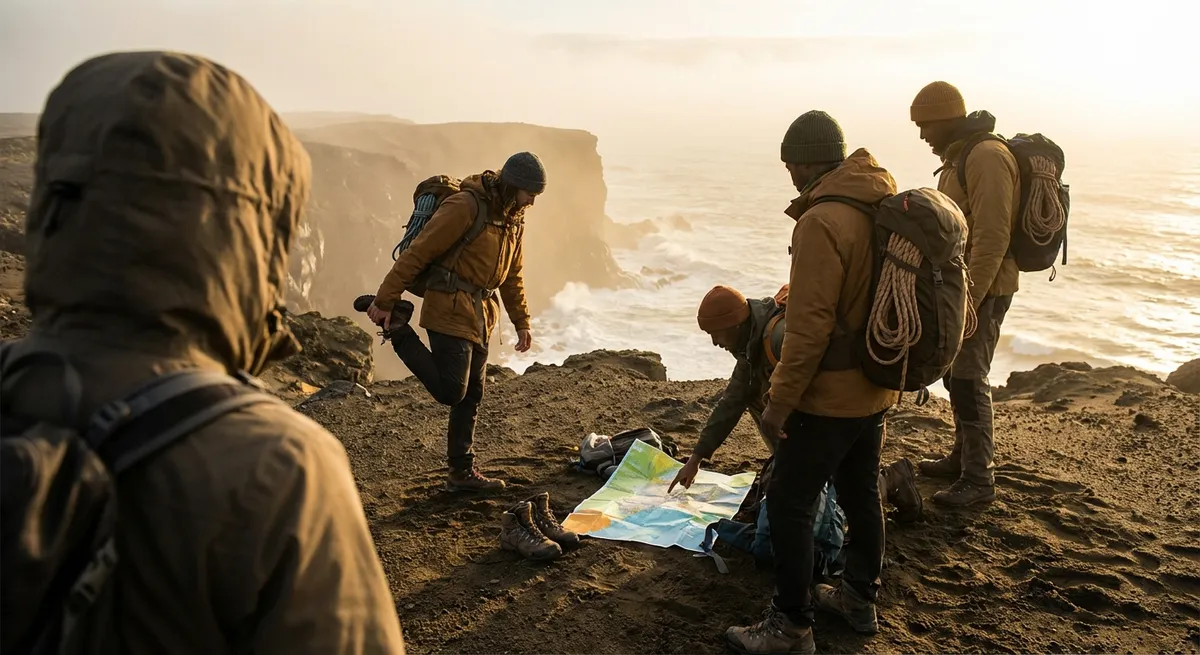
This guide is your invitation to turn every trip into a living, breathing training ground—without losing the joy of discovery or the thrill of spontaneity.
What Adventure Fitness Really Means on the Road
Adventure fitness isn’t just “staying in shape while traveling.” It’s weaving movement into the soul of your journey.
Instead of penciling in a quick hotel workout, you plan your day around a sunrise hike above Cape Town, a surf session in Costa Rica, or a stair-sprinting climb through the alleyways of Lisbon. You’re training, but you’re also exploring, tasting, hearing, and feeling a place at full volume.
Think of it as performance travel: you arrive home stronger, sharper, and more alive than when you left. Your long runs become citywide treasure hunts. Your strength sessions become improvised playgrounds using park benches, rocks, and resistance bands. Your “rest day” might even be a slow bike ride through wine country or a paddle across a glassy alpine lake.
Adventure fitness thrives on three ideas:
- Curiosity: Let the landscape choose your workout.
- Adaptability: Trade rigid plans for playful, effort-based sessions.
- Presence: Use your breath, stride, and effort as a way to fully experience the world around you.
Destinations That Turn Workouts into Wild Memories
Some places seem designed for the traveler who packs running shoes before anything else. If you’re craving movement-rich escapes, these destinations are natural playgrounds:
- Queenstown, New Zealand – “The Adventure Capital”
Skydive above glacier-carved valleys in the morning, trail run along Lake Wakatipu in the afternoon, then recover in geothermal waters. The combo of rugged mountains, lakes, and well-marked tracks makes every day a new training block.
- Chamonix, France – Alpine Endurance Paradise
At the base of Mont Blanc, you’re surrounded by world-class trail runs, via ferrata routes, and glacier treks. Thin air, steep climbs, and jaw-dropping vistas will test your lungs and legs while rewarding you with some of the most iconic scenery on Earth.
- Banff & Lake Louise, Canada – Strength in the Rockies
Hike from turquoise lakes up into high passes, where you can add bodyweight circuits at viewpoints. Canoe in the morning, scramble in the afternoon, and let your heart rate calm under skies crowded with stars.
- Madeira, Portugal – Island of Vertical Miles
Terraced hillsides, coastal cliffs, and ancient levada paths create ready-made interval sessions. You can start your day with a sunrise ridge run, then descend into small villages to refuel on local food.
- Cape Town, South Africa – Ocean Meets Elevation
Run the Sea Point Promenade at dawn, then power-hike up Lion’s Head or Table Mountain before lunch. Afternoon? Surf, kitesurf, or simply swim laps in tidal pools while watching the sun drop behind the Atlantic.
You don’t need to hit the world’s most famous hotspots to live this way—but it’s hard to deny that some landscapes practically beg you to move.
5 Power Tips for Active Travelers Who Crave Movement
These tips aren’t about squeezing in one token workout; they’re about designing trips where adventure and fitness are inseparable from the experience.
1. Plan Your Days Around One “Anchor Movement”
Instead of asking, “When can I work out?” ask, “What’s today’s big movement experience?”
Your anchor movement might be:
- A sunrise trail run overlooking a fjord
- A long bike ride connecting two small villages
- A stair-climb challenge up a hilltop fortress
- A guided kayak trip to a hidden cove
Build meals, sightseeing, and downtime around that anchor session. This keeps your training consistent without feeling like you’re sacrificing exploration. In cities like Barcelona or Tokyo, your anchor could even be a self-guided running tour that hits major landmarks before the crowds arrive.
2. Pack a Micro Gym That Fits in Your Daypack
Your environment is your primary gym—but a few compact tools can turn any park, beach, or guesthouse courtyard into a serious training spot.
Consider packing:
- Light resistance band: For pulls, rows, hip work, and warm-ups.
- Mini loop band: Great for glute activation before hikes or runs.
- Jump rope: High-intensity cardio in tiny spaces.
- Collapsible soft flask or small bottle: To keep hydration locked in during long sessions.
With these, you can stack quick, powerful sessions anywhere: think 20–30 minutes of band circuits at a mountain viewpoint or a sunset jump-rope finisher on a quiet beach.
3. Use Terrain as Your Personal Coach
Adventure fitness thrives when you let the landscape dictate your training style.
- Hills: Perfect for short, intense intervals. Run, hike, or power walk up; walk down to recover. Great in places like San Francisco, Lisbon, or the Scottish Highlands.
- Sand: Natural resistance for your calves and core. Do sprints, walking lunges, or barefoot strides along beaches in Mexico, Australia, or Greece.
- Stairs: City staircases, temple steps, fortress ramps—turn them into low-impact cardio and leg burners with repeats.
- Water: Lakes, oceans, and calm rivers are ideal for swim training, paddleboarding, or even mobility drills in shallow water.
Let each new environment ask you a question: “What kind of strength can you build here?”
4. Train Smart with Time Zones and Climate
Adventure fitness isn’t about reckless pushing; it’s about staying strong enough to keep exploring day after day.
- Beat the heat: In tropical or desert climates, chase dawn and dusk for intense sessions, then use mid-day for light movement (walks, easy cycling, gentle swimming).
- Respect altitude: In high places like Cusco or La Paz, scale back intensity for a few days, increase hydration, and let shorter, easier sessions acclimate your body.
- Combat jet lag with movement: After long flights, prioritize a short walk or light jog outside, plus mobility and stretching. Movement resets your body clock better than collapsing on a bed.
Treat your energy like your most valuable currency; spending it wisely gives you more adventures, not fewer.
5. Fuse Culture with Cardio (Move Like You Belong There)
The most memorable active travel days often come from saying yes to local movement traditions.
- Join a sunrise beach yoga session in Bali.
- Learn capoeira in Brazil or Muay Thai drills in Thailand.
- Rent a bike in Amsterdam and commute like a local.
- Take a dance class—salsa in Colombia, tango in Argentina, or traditional folk dance in Eastern Europe.
These experiences are workouts, but they’re also cultural deep dives. You’re not just seeing a place; you’re moving like its people move. That connection—between muscles, mind, and culture—is where adventure fitness becomes transformative.
How to Balance Training Ambition with Wanderlust
Being an adventure-focused traveler doesn’t mean turning your vacation into a bootcamp. It means aligning your training with the season of life you’re in.
- On a bucket-list expedition: You might lean into performance—chasing a big summit, a multi-day trek, or a long-distance ride.
- On a city-hopping trip: Your focus might shift to maintenance—short, sharp sessions and lots of walking, stairs, and exploration.
- On a restorative getaway: Gentle movement—ocean swims, slow hikes, yoga on a balcony—becomes your training of choice.
Let your trip’s purpose shape your intensity. The magic of adventure fitness is that it can flex: some journeys make you stronger by pushing your limits; others by teaching you to listen, recover, and move with intention.
Conclusion
Adventure fitness is a promise you make to yourself: no matter where you go, you will arrive fully—body, mind, and spirit engaged.
You’ll remember the switchback that made your legs shake, the ocean current that tested your stroke, the city stairs that had you laughing and breathless at the top. You’ll remember the meals that tasted better because you earned them, and the sunsets that felt deeper because your heart was still pounding from the climb.
Pack your curiosity. Pack your courage. Lace up your shoes. The world is waiting to see how far you’re willing to go—and who you become along the way.
Sources
- Centers for Disease Control and Prevention – Physical Activity Basics - Overview of recommended activity levels and health benefits of regular movement
- American College of Sports Medicine – ACSM’s Guidelines for Exercise Testing and Prescription - Evidence-based principles for safe and effective exercise, including travel-friendly approaches
- Harvard T.H. Chan School of Public Health – Staying Active While Traveling - Practical strategies for maintaining physical activity on the road
- New Zealand Tourism – Queenstown Adventure Activities - Official destination information highlighting outdoor and adventure opportunities
- Parks Canada – Banff National Park Visitor Information - Details on hiking, outdoor recreation, and safety in Banff’s natural environment