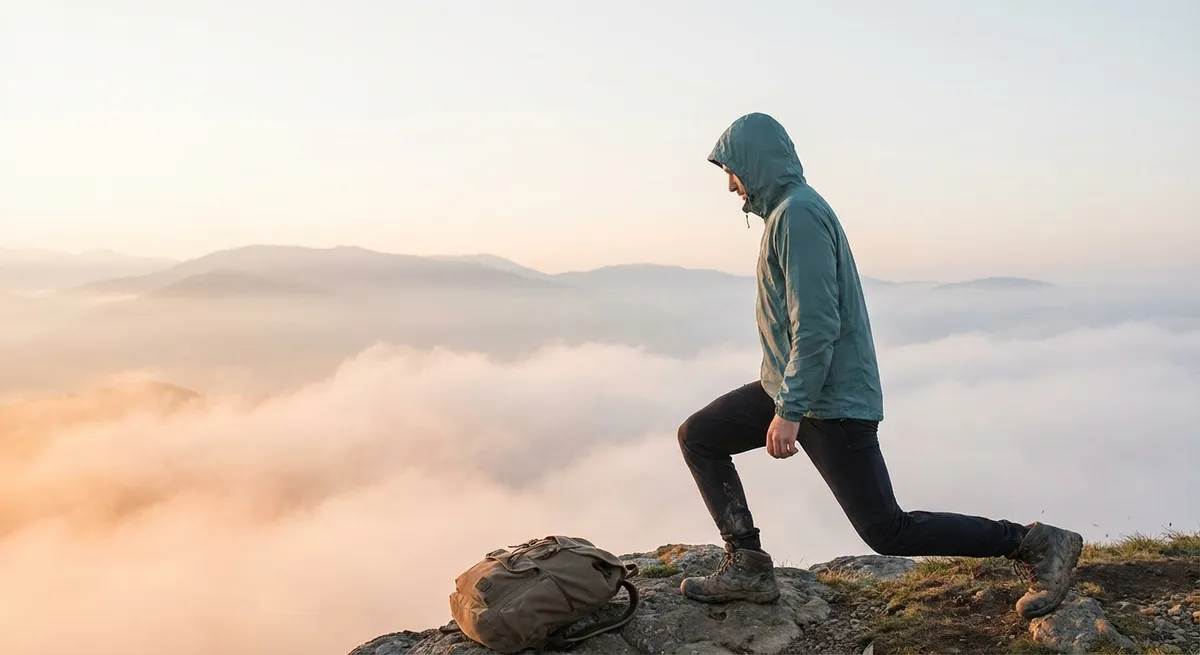
This guide is your invitation to step outside, claim the landscape as your gym, and chase the horizon—one sunrise stretch, mountain stair sprint, and coastal climb at a time.
Turning Landscapes into Your Training Ground
Forget the four walls and predictable equipment. When you’re on the move, the terrain becomes your toolkit. A hill doubles as a treadmill with a better view. A park bench stands in for a plyo box. A boardwalk becomes your interval track, and a rocky shoreline is your balance board.
Think of each destination as a different “training mode”:
- Beach towns offer soft-sand resistance and sunrise runs.
- Mountain villages bring natural altitude training and steep stair climbs.
- Old cities deliver cobblestone agility work and stair-sprint cathedrals.
- Lakeside escapes hand you flat paths for tempo runs and piers for mobility flows.
The trick isn’t finding time to work out—it’s noticing what’s right in front of you. When you start scanning a city for hills rather than happy hours (or at least, as well as happy hours), your fitness and your travels level up together.
Destination Highlights: Where Adventure Meets Sweat
Every destination holds a different kind of workout story. Here are a few ways to weave movement into iconic landscapes without turning your trip into a bootcamp:
Coastal Cities (Think: Lisbon, Sydney, Cape Town)
Follow the coastline at sunrise when the streets are empty and the air is cool. Jog along promenades, stop for bodyweight circuits at railings or steps, then cool down barefoot in the sand. Coastal wind adds natural resistance, and rolling paths give you built-in intervals without staring at a screen.
Mountain Havens (Think: Innsbruck, Queenstown, Banff)
Start with a brisk hike instead of a “quick jog.” Choose a trail with elevation gain and treat the steeper sections as push intervals. At scenic overlooks, add short strength sets: squats, push-ups, lunges, plank holds. The changing views distract from the burn, and the altitude nudges your cardio system into new territory.
Historic Cities (Think: Rome, Kyoto, Cusco)
Trade the gym treadmill for old stone stairs and winding alleys. Power walk or lightly jog between landmarks, using plazas for micro-workouts: 10 squats, 10 lunges, 10 incline push-ups on a bench before moving on. You’ll cover more ground than a standard walking tour, and “getting lost” just means a longer workout.
Island Escapes (Think: Bali, Santorini, Hawaii)
Use the heat and humidity to your advantage—short, intense sessions with longer rest. Beach sprints, barefoot balance drills on packed sand, and stair climbs back up from the shore become performance and scenery in one. Finish with mobility and breathwork while watching the sun sink into the water.
Five Active Travel Tips for Fitness-Obsessed Explorers
You don’t need a rigid plan to stay strong on the road—you just need a strategy that flexes with your itinerary. These five tips keep you ready to move, no matter where you land.
1. Pack a “Micro-Gym” That Weighs Almost Nothing
Think of this as travel-sized power:
- A light resistance band or mini-loop for pulling and glute work
- A compact jump rope for quick cardio when space is tight
- A collapsible water bottle that doubles as a light weight when full
- A pair of minimalist shoes that can handle both city miles and trail detours
These tools turn any tiny park, rooftop, or hostel courtyard into your personal training zone. They also help you hit muscles that walking and running alone might neglect.
2. Use “Location Anchors” Instead of a Rigid Schedule
Rather than stressing over a strict workout plan, tie movement to daily anchors:
- Morning: A 10–20 minute mobility or bodyweight session before breakfast
- Midday: A fast-paced walk or jog between sightseeing stops
- Evening: A short stretch or core circuit in your room before showering
Think in terms of “touchpoints” instead of one big workout. Add them up, and you’ve moved more than you realize—without sacrificing experiences.
3. Turn Transit Days into Recovery and Reset Routines
Travel days don’t have to be dead zones; they’re perfect for active recovery:
- At airports or train stations: Walk the terminals between gates, use handrails for light calf raises or supported squats.
- In-flight or on buses: Ankle circles, seated marches, neck rolls, and gentle spinal twists keep your body from stiffening.
- After arrival: A 10–15 minute “un-kink” session—hip openers, hamstring stretches, and upper-back mobility—helps you shake off the static hours and wake up your muscles for the adventures ahead.
Treat recovery as part of the adventure, not an afterthought. It keeps you ready for that surprise hike or spontaneous bike ride.
4. Map Your Moves Before You Land
Take five minutes before your trip to scout movement options, the same way you’d mark restaurants or viewpoints:
- Search “running routes in [city],” “best city stairs in [city],” or “sunrise viewpoints [city].”
- Save local parks, waterfront paths, and urban trails on an offline map.
- If you’re near water, look up places that rent kayaks, stand-up paddleboards, or bikes.
When opportunities are pinned and ready, you remove friction. You’ll be more likely to choose an early run to a viewpoint or a bike ride along a river instead of scrolling in your room.
5. Make One “Signature Sweat” Memory Per Destination
Anchor every trip to a single unforgettable movement moment. This isn’t about volume; it’s about impact. For example:
- A dawn run up to a fortress before the crowds arrive
- A cliffside stair climb to a hidden beach followed by a cold plunge
- A lakeside yoga flow as the mountains light up with first light
- A trail run that starts in town and finishes where the forest takes over
Pick that one thing, plan for it, and give it your full focus. Long after your trip, you’ll remember how your quads burned on that last step, how the wind sounded at the top, and how alive your body felt afterward.
Outdoor Workout Ideas You Can Adapt Anywhere
You don’t need a perfect setup. Use these flexible templates and plug in whatever the destination offers.
Urban Explorer Circuit (20–30 minutes)
Repeat 3–4 times while moving through a park or waterfront:
- 1–2 minutes brisk walk or light jog
- 10–15 squats
- 10–12 push-ups (on a bench if needed)
- 10 walking lunges each leg
- 20–30 seconds plank
Adjust intensity based on how much you’re sightseeing that day.
Hill or Stair Power Session (15–25 minutes)
- Warm up with 5 minutes of easy walking.
- Find a hill or set of stairs.
- 30–45 seconds hard effort uphill, walk back down to recover.
- Repeat 6–10 times.
- Cool down with light walking and stretching.
This works on castle steps, coastal staircases, or neighborhood hills—your legs don’t care where they’re climbing.
Sunrise Mobility Flow (10–15 minutes)
- Cat-cow or standing spinal waves
- Hip circles and lunges with torso twists
- Hamstring and calf stretches
- Shoulder rolls and chest openers
- Finish with 5–10 deep breaths facing the horizon
You can do this on a pier, rooftop terrace, balcony, or a quiet patch of grass. It’s a daily reset that aligns your body with the rhythm of the place you’re in.
Conclusion
Outdoor workouts aren’t a backup plan when the hotel gym falls short—they’re the main event. Every stairwell, shoreline, alley, and overlook is an invitation to move differently, breathe deeper, and collect memories that live in your muscles as much as in your camera roll.
Travel doesn’t have to derail your training. When you treat the world as your playground, each destination becomes another chapter in the story of how strong, curious, and resilient you can be. Step outside, chase the horizon, and let your next workout be the way you truly meet the place you’ve come so far to see.
Sources
- Centers for Disease Control and Prevention – Physical Activity Guidelines - Overview of recommended activity levels for adults and health benefits of regular movement
- American College of Sports Medicine – Staying Active While Traveling - Practical strategies and guidelines for maintaining fitness routines on the road
- Harvard T.H. Chan School of Public Health – Benefits of Outdoor Exercise - Evidence on how exercising outdoors can improve mental health and well-being
- Mayo Clinic – Interval Training Fundamentals - Explanation of interval workouts and how to apply them safely in different environments
- American Heart Association – The Benefits of Walking - Research-backed benefits of walking and how to integrate it into daily life, including travel