Where Oceans, Peaks, and Cities Become Your Arena
Every destination has a “hidden gym” if you know how to look for it. Think of your trip not as a break from fitness, but as a chance to train in environments your body has never met before.
In New Zealand’s South Island, the trails around Queenstown and Wanaka roll through beech forest, glacier-fed rivers, and ridgelines that seem to hang over turquoise lakes. Trail runs here test your VO₂ max while constantly tempting you to stop and stare. Trade treadmills for the Ben Lomond Track or Lake Wanaka’s Roys Peak, where switchbacks double as powerful hill training.
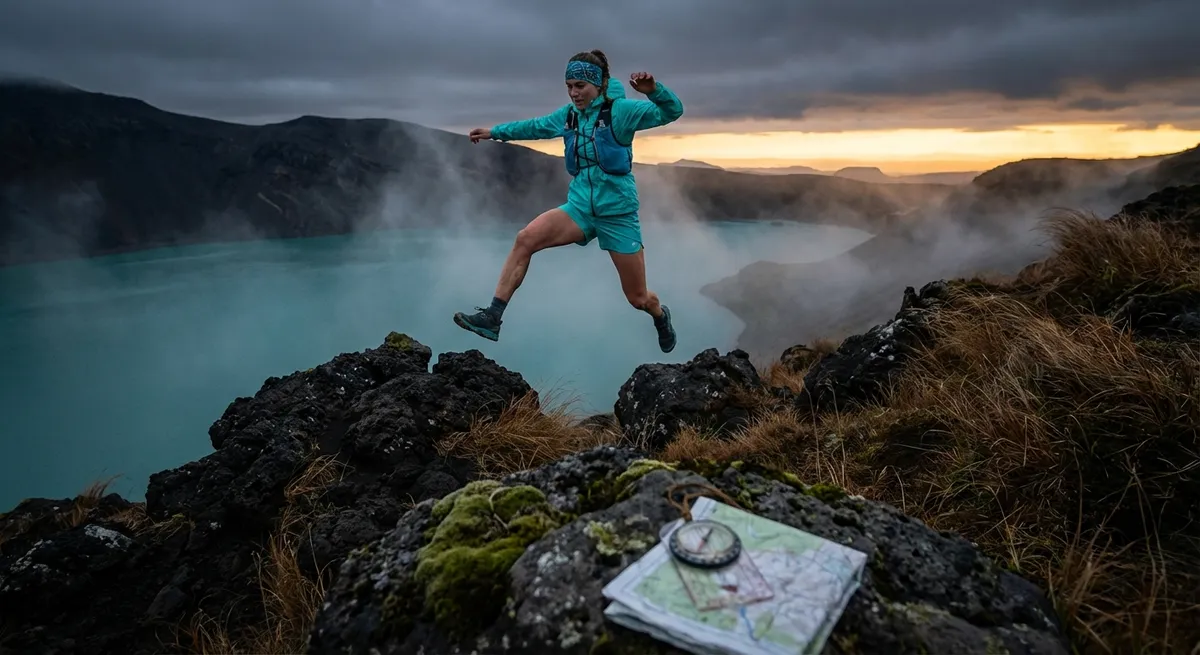
Head north to the Azores, a mid-Atlantic volcanic archipelago where crater lakes, hot springs, and cliffside trails become your playground. Hiking the rim of Lagoa do Fogo or trail running on São Miguel’s coastal paths means interval-style climbs followed by quad-burning descents, all with Atlantic swells roaring below.
Urban explorers can push their limits in places like Barcelona or Tokyo. In Barcelona, hit the steep paths and staircases of Montjuïc or the bunkers at El Carmel at sunrise for hill sprints with a sweeping Mediterranean backdrop. In Tokyo, quiet early-morning loops around the Imperial Palace offer flat, well-marked miles that mix historical views with precision pacing—perfect for tempo runs before the city truly wakes.
These are more than postcard views: they’re live-fire testing grounds for your grit, recovery, and adaptability.
Destination Highlights for the Adventure-Driven Athlete
Some places don’t just allow movement—they demand it. If your idea of a perfect trip includes sore calves and a full camera roll, these regions belong on your radar.
Patagonia, Chile & Argentina
Wind-scoured trails in Torres del Paine and Los Glaciares reshuffle your definition of “long day out.” Multi-hour treks with pack weight become progressive overload for your legs and lungs. Unpredictable patagonian gusts add resistance to every stride, forging stability and mental toughness in one shot.
Canary Islands, Spain
On Tenerife and Gran Canaria, rugged volcanic terrain and year-round mild weather make endurance training almost irresistible. Trail run across lava fields in Teide National Park, powerhike steep barrancos (ravines), or cycle mountain roads that pro riders use for winter camps. The altitude and constant elevation gain turn even moderate days into performance builders.
Banff & Jasper, Canada
In the Canadian Rockies, turquoise lakes and glacier-fed rivers cool your legs after quad-heavy days. Hike or run around Lake Louise, lace up for the Plain of Six Glaciers, then add bodyweight circuits at scenic viewpoints: step-ups on stone, push-ups on benches, isometric holds as you stare down endless pines. The combination of cold, altitude, and big vertical rewards consistent movers with huge endurance gains.
Ljubljana & Lake Bled, Slovenia
In Slovenia, you can string together bike rides through wine country, lake loops around Bled, and hikes in Triglav National Park. It’s a compact country where one long weekend feels like a full training camp: river canyon hikes, castle climbs, and lakeside speedwork sessions backed by snow-capped peaks.
Each destination asks: how far are you willing to go—on the map and in your body?
Five Trail-Tested Tips for Active Travel Adventurers
You don’t need a coach or a training camp to turn your next trip into a powerful fitness chapter. You just need intention, a bit of planning, and a willingness to sweat in unfamiliar places.
1. Program Your Week Around Terrain, Not Just Time
Instead of rigid “leg day / upper day / HIIT day,” build your training around what the location offers.
If you’re in a mountainous region, let one big ascent be your primary strength and cardio session. In coastal cities with boardwalks or promenades, reserve mornings for tempo runs or intervals while the crowds are thin. In dense urban centers, turn long exploratory walks into zone-2 cardio and tack on short, sharp stair sessions at monuments or subway stations for added intensity.
Use maps and apps (Google Maps, AllTrails, Komoot) to sketch a loose training arc for the week: one long endurance day, one high-intensity session, a couple of “movement-rich exploration” days, and a genuine rest or mobility day.
2. Carry a Minimalist “Anywhere Workout” Kit
A small, strategic kit turns every park, hotel room, or overlook into a fully functional gym.
Pack a light resistance band, a mini-loop band, and a compact jump rope. The bands handle warm-ups, glute activation, and upper-body work; the rope covers quick conditioning sessions when you’re short on time or space. Combine this with bodyweight staples—squats, lunges, push-ups, planks, burpees, step-ups—and you can hit every major muscle group anywhere.
Keep your kit in your daypack. That way, when you stumble on a quiet pier or a hillside meadow with an unreal view, you’re 30 seconds away from an unforgettable workout.
3. Let Sunrises and Sunsets Set Your Training Rhythm
Travel scrambles your schedule; use natural light to re-anchor your training.
Sunrise is perfect for focused efforts: speed work on a beachfront path, staircase repeats at a fortress, or yoga flows on a rooftop terrace while the city wakes up. Cooler temperatures and lower crowds help you push harder with less stress.
Sunsets are ideal for slower, grounding sessions: an easy jog along a river, a lakeside stretch routine, or a gentle mobility circuit in a quiet square. You’ll support better sleep, help your body adapt to new time zones, and bookend your day with intentional movement instead of screen time.
4. Eat Like a Local, Fuel Like an Athlete
Exploring regional food doesn’t have to derail your fitness—it can power it.
Use local staples as your macros backbone. In Mediterranean destinations, lean into grilled fish, olive oil, legumes, and whole grains for performance-friendly fats and carbs. In East Asia, rice, noodles, tofu, and veggie-rich dishes are natural carb and micronutrient sources that support long efforts. In Latin America, beans, corn, rice, plantains, and fresh fruit combine into endurance-ready meals.
Prioritize a substantial breakfast or post-workout meal rich in complex carbs and protein. Then let your other meals flex indulgently—yes to that gelato after a long hike, that street-food skewer after a citywide walk. The goal is a net-positive energy balance that keeps your training sustainable, not restriction.
5. Build Recovery Into Your Itinerary, Not as an Afterthought
Travel itself is a stressor. Layer big training days on top, and you’re flirting with burnout unless you recover just as intentionally.
Seek out recovery-friendly experiences in every destination: thermal baths in Budapest or Iceland, ocean swims along Portugal’s coast, hammam or onsen visits where culturally appropriate. These aren’t just “treats”—they’re low-impact circulation boosters that help your muscles bounce back.
In the evenings, do a 10–15 minute mobility session in your room: ankle circles, hip openers, thoracic spine rotations, soft tissue work with a travel-size ball or even a water bottle. Protect your sleep with a simple ritual—earplugs, a sleep mask, and limiting screens before bed—so your body can fully adapt and rebuild between adventures.
Turning the World Into Your Long-Term Training Partner
Your fittest self isn’t waiting in a perfectly designed gym; it’s scattered across ridgelines, boardwalks, back alleys, and forest trails in places you haven’t met yet. When you travel with movement in mind, every stamp in your passport becomes a training log entry. Each city, coastline, and summit teaches you a new capacity: patience on long ascents, resilience in harsh weather, joy in shared sweat with strangers who become friends.
You don’t have to be an elite athlete to train this way. You just have to be curious enough to ask, every time you land somewhere new: “How can this place change me if I let it?”
Pack your shoes. Pack your courage. Let the map be your coach—and let your next destination rewrite what you think your body can do.
Sources
- Centers for Disease Control and Prevention – Physical Activity Basics - Overview of recommended activity levels and health benefits of regular movement
- American College of Sports Medicine – Staying Active While Traveling - Practical guidance from ACSM on maintaining fitness away from home
- Harvard T.H. Chan School of Public Health – Fueling for Performance - Evidence-based advice on nutrition to support active lifestyles and training
- Mayo Clinic – Exercise and Stress Relief - Explanation of how physical activity supports mental well-being, especially under stressors like travel
- U.S. National Park Service – Hiking Safety - Official guidance on safe hiking practices, useful for planning active adventures in natural areas