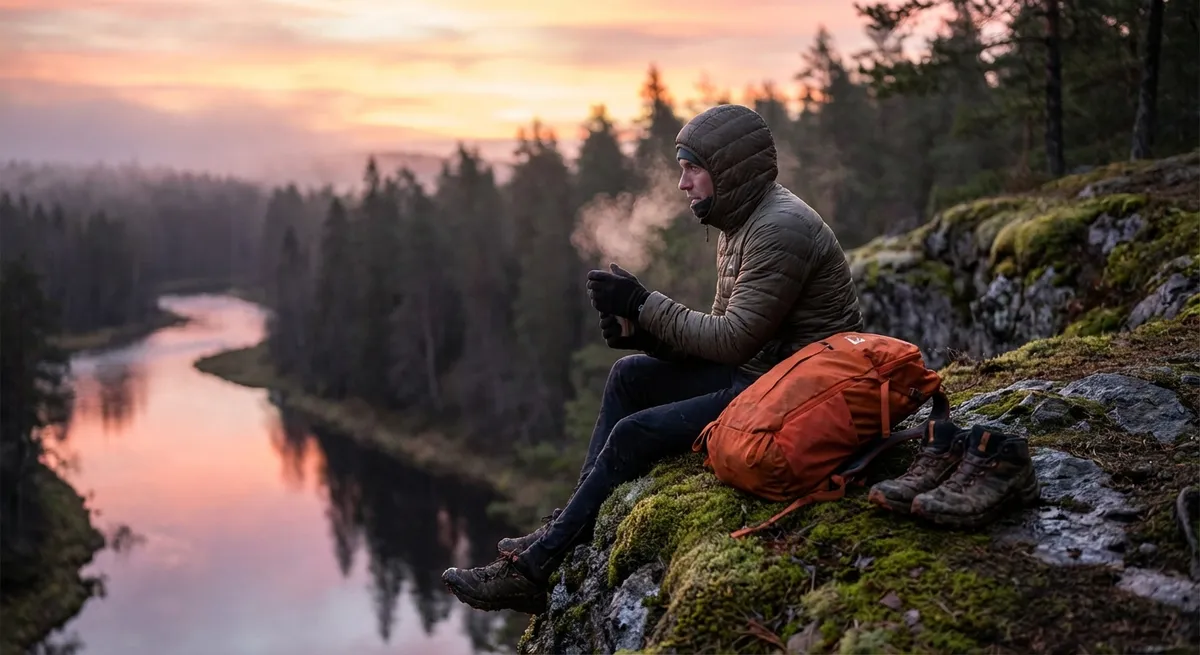
Why Your Strongest Workouts Don’t Belong in a Gym
Indoor routines are predictable; the outdoors is not—and that’s exactly where the magic happens. Uneven terrain, changing weather, and natural obstacles challenge stabilizer muscles, sharpen your balance, and crank up your calorie burn without adding a single dumbbell. Hills become resistance training, sand adds intensity to every step, and wind turns a basic jog into a full-body effort.
Beyond the physical, wild spaces hit a reset button your body didn’t know it had. Studies on “green exercise” show that moving in nature can reduce stress, boost mood, and improve focus more than indoor workouts alone. A trail run along New Zealand’s rugged coastline or a lakeside circuit in the Canadian Rockies doesn’t just work your quads—it clears mental clutter. Outdoor training also makes you more adaptable: you learn to improvise with what’s around you, to pivot when a trail is closed or the tide is high, and to squeeze power sessions into travel days that used to disappear into airport chairs and hotel elevators.
Destination Highlights: Turn Landscapes into Training Grounds
Every destination hides a workout if you know how to look for it. The key is matching the terrain to the training:
Coastal Cities – For Power and Endurance
Think Rio de Janeiro’s Copacabana, Barcelona’s Barceloneta Beach, or Bondi in Sydney. Hard-packed sand near the shoreline is perfect for tempo runs and barefoot drills, while softer sand higher up transforms lunges and sprints into strength training. Beachfront promenades offer smooth paths for intervals, and any nearby staircases or beachfront parks become ready-made circuit zones at sunrise.
Mountain Towns – For Strength and Grit
In places like Chamonix in France, Queenstown in New Zealand, or Colorado’s Front Range, your “gym” rises straight up. Hiking trails double as loaded cardio sessions when you add a backpack or fast-paced ascents. Short, steep sections are ideal for hill repeats that test your lungs and legs. Finish with bodyweight strength at the summit—push-ups, planks, and air squats with panoramic views beat any mirrored weight room.
Urban Jungles – For Agility and Speed
Cities like Tokyo, Berlin, or Mexico City are obstacle courses disguised as neighborhoods. Early mornings reveal quiet streets for fartlek runs—fast between intersections, easy to the next landmark. Staircases in metro stations, park benches, and public squares become agility and plyometric stations. Urban parks offer loops for laps, with tree branches for pull-ups if you scout carefully.
Desert and High-Plateau Landscapes – For Mental Toughness
Places like Utah’s red rock canyons, Morocco’s desert fringes, or the Atacama in Chile demand respect. Cooler dawn and sunset windows are ideal for low- to moderate-intensity runs or hikes. The open horizon is perfect for long, steady efforts that test consistency. Focus on hydration, sun protection, and controlled pacing; these environments are phenomenal for building resilience and disciplined breathing.
Wherever you land, ask one question: “If this view were a gym, what would each feature be?” Hills = incline treadmill. Stairs = step machine. Benches = plyo box. Railings or tree branches = pull-up bar. The landscape starts training you the moment you start using it.
5 Active Travel Tips for the Restless Fitness Adventurer
You don’t need a 40-minute hotel gym slot to stay powerful on the road. You just need a mindset that hunts for movement. These five tips will keep your training adventurous, efficient, and unforgettable.
1. Program Your Trip Around Movement, Not Just Checklists
Instead of squeezing workouts between tourist stops, let movement design your days. Choose at least one “active anchor” per destination—a sunrise hike in Madeira, a bike loop around Amsterdam’s canals, or a trail run in Cape Town’s Table Mountain reserve. From there, layer culture on top: finish your run at a local market, end your hike at a neighborhood café, or cool down while exploring a historic district on foot.
Practical move: Before you book, search “[destination] running routes” or “[destination] hiking near city center.” Save 2–3 realistic options in your map app so travel delays don’t derail your plan.
2. Pack a Micro-Gym That Fits in Your Daypack
Your passport isn’t the only powerful document you carry—your training gear can be just as strategic. A single resistance band, a lightweight jump rope, and a compact suspension trainer or tow strap can turn any park, hostel courtyard, or beach into a training zone. These tools add pulling, pressing, and explosive options you can’t always replicate with bodyweight alone.
Use resistance bands for rows anchored to a railing on a Greek island ferry, jump rope intervals in a quiet plaza in Lisbon, and suspension trainer push-ups and rows on a jungle lodge balcony in Costa Rica. The point isn’t to lug equipment—it’s to carry pieces that multiply what the environment already offers.
3. Let Local Terrain Dictate Your Training Focus
Travel cycles naturally through different landscapes; let your training cycle with it. In flat cities like Copenhagen or Singapore, emphasize speed and volume: 5K or 10K runs, long walks, and stair or bench circuits. In hilly capitals like Edinburgh or San Francisco, lean into power: hill sprints, loaded backpack hikes, and walking routes that intentionally pick the steepest streets.
On islands or coastal routes—think Azores, Canary Islands, or Hawaii—blend both. Use coastal paths for interval runs and rocky coves or boardwalks for strength sessions that alternate push movements (push-ups, dips) with legs (lunges, step-ups) and core (planks, hollow holds). Your body begins to “remember” places through movement patterns, turning geography into muscle memory.
4. Build a 20-Minute “Anywhere Circuit” for Travel Days
Layovers and long transit days don’t have to be dead zones. Create one go-to 20-minute outdoor circuit that needs no gear and can be done in any park, side street, or hostel terrace. For example:
- 1 minute: fast walk or light jog
- 10 push-ups
- 15 air squats
- 10 walking lunges each leg
- 20-second plank
- 20-second side plank each side
Repeat this sequence 4–6 times, moving briskly and resting only as needed. Slot it into early mornings in Rome, ferry decks in Croatia, or quiet courtyards in Marrakech. The routine stays the same while the backdrop changes—your body gets consistency; your brain gets adventure.
5. Train Like a Local: Join the City’s Outdoor Culture
Every destination has a signature way its people move. Find it—and join in. In Buenos Aires, locals fill parks in the evening for jogging and calisthenics. In Sydney, early-morning ocean swims and coastal path runs are a ritual. In Seoul, mountain trails just outside the city buzz with hikers at dawn. The fastest way to discover these scenes is to ask: hotel staff, hostel hosts, baristas, or local running stores.
Look for outdoor running clubs, free yoga in the park, community bootcamps, or public fitness zones. Not only does this keep you honest with your training, it plugs you into the city’s rhythm. A single group run or sunrise circuit can teach you more about a place than any guidebook—how locals breathe, pace, and treat their shared spaces.
Conclusion
Your strongest memories rarely come from perfectly controlled environments—and neither do your strongest bodies. When you turn the world into your workout space, you stop “squeezing in” fitness and start weaving it into the very fabric of your journey. Hills become your coaches, oceans your recovery rooms, and unfamiliar streets your track.
You don’t have to choose between being a traveler and an athlete. You can land in a new city with your heart racing for reasons that have nothing to do with jet lag. Pack your curiosity, a minimal kit, and a willingness to let the terrain teach you. Step outside, feel the ground under your feet, and let the world train you back.
Sources
- American Council on Exercise – Benefits of Outdoor Exercise – Overview of physical and mental advantages of outdoor workouts
- Harvard Health – A Prescription for Better Health: Go Alfresco – Discusses how exercising outside can boost mood and overall well-being
- Stanford University – Nature Experience Reduces Rumination – Research on how time in natural environments impacts mental health markers
- U.S. National Park Service – Healthy Parks Healthy People – Details the health benefits of spending active time in parks and green spaces
- Runner’s World – How to Run Safely in a New City – Practical travel-running tips for exploring destinations while staying safe