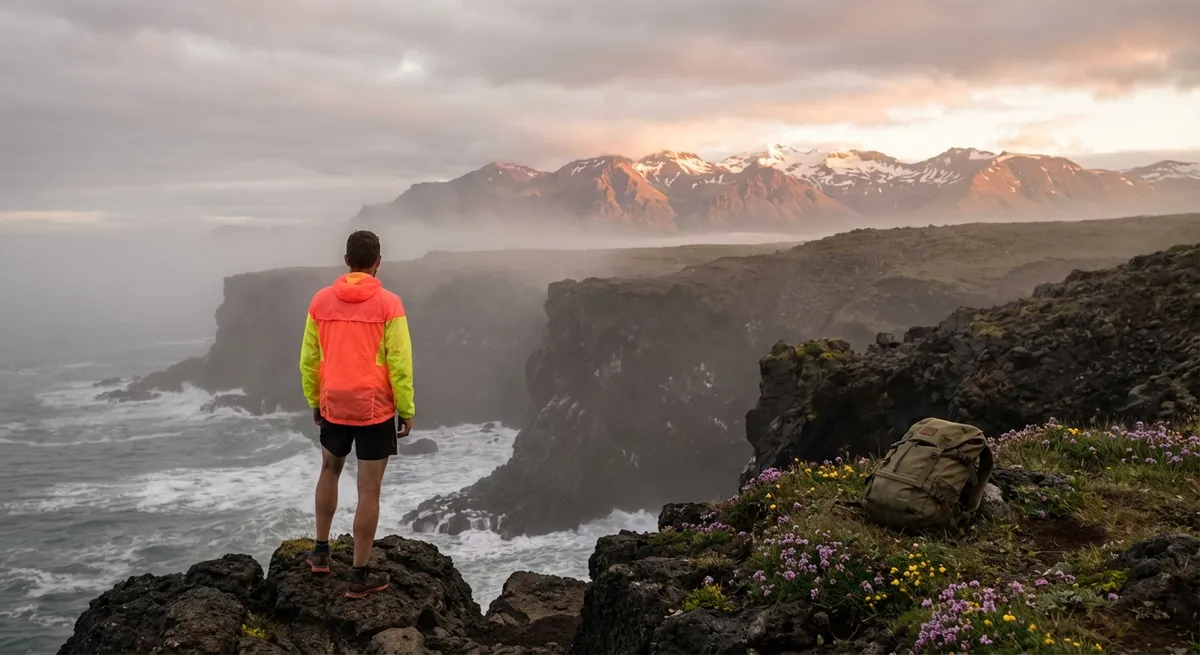
Welcome to the kind of journey where your passport and your pulse are equally important.
Where the Ocean Trains You: Coastal Fitness Escapes
Coastlines are natural training grounds, sculpted by wind and tide into outdoor arenas. Imagine sprinting along Portugal’s Algarve cliffs at dawn, sand resisting every step as Atlantic swells pound the rocks beneath you. Soft sand running demands more from your calves and core, turning a simple jog into a serious strength session with a view.
Head to Australia’s Bondi to Coogee coastal walk and you’ll find a rolling route of stairs, inclines, and lookout points—each a perfect excuse for intervals, bodyweight circuits, or yoga flows overlooking the Pacific. In California, the Santa Monica and Venice beachfront paths become dynamic playgrounds: lifeguard towers for step-ups, benches for triceps dips, and open sand for agility drills and beach volleyball.
Coastal destinations reward the daring with cross-training built into the environment. Stand-up paddleboarding in Hawaii forces your stabilizer muscles to fire as you balance over reef and swell. Snorkeling in the Maldives becomes a low-impact cardio session when you lengthen your kicks and move deliberately through currents. The ocean doesn’t care about your comfort zone; it asks you to meet it where it is—powerful, unpredictable, alive.
Mountains That Make You Stronger: High-Altitude Training Grounds
Mountains have a way of stripping life down to its essentials: breath, footing, and focus. At higher altitudes—think the Andes near Cusco, the Alps around Chamonix, or the Rockies in Colorado—every step tests your endurance a little more. Less oxygen means your heart and lungs work overtime, and over days, your body adapts by producing more red blood cells to carry that oxygen. This isn’t just a hike; it’s a physiological upgrade.
Picture trekking toward Peru’s Rainbow Mountain as the air thins and the landscape explodes in bands of mineral color. Or trail running under the jagged skyline of the Dolomites, where every switchback reveals another valley begging to be explored. In the Himalayas, even shorter treks around places like Pokhara offer a potent blend of cultural immersion and elevation gains that ignite your legs and lungs.
Mountain towns understand movement. You’ll find local guides, marked trails, climbing crags, and bike routes that welcome you into a community that sees the landscape as a training partner. Recovery feels sacred here: stretching on lodge decks at sunset, hydrating more than you thought possible, and sleeping deeply in the cool, thin air. You leave with stronger legs, a bigger engine, and a new respect for how far your body can carry you when the path tilts skyward.
Cities That Never Sit Still: Urban Destinations for Active Explorers
Some destinations pulse with a kinetic energy that makes stillness feel impossible. These are the cities that train you simply by asking you to keep up. In Tokyo, you can start the day running around the Imperial Palace loop, sharing the route with local runners before diving into the organized chaos of its neighborhoods on foot. The city becomes your cardio: subway stairs, street crossings, and endless walking.
In Copenhagen or Amsterdam, pedaling is practically a cultural rite. Rent a bike and you’ve joined a rolling river of commuters, students, and families. Your “rest day” becomes two-wheeled commuting to parks, waterfronts, and cafes—low-intensity, high-freedom movement that adds up over days. Meanwhile, New York and London reward those who explore on foot; skipping taxis and trains in favor of walking between neighborhoods turns sightseeing into stealth endurance training.
Urban parks are hidden gems of city fitness. Berlin’s Tempelhofer Feld—an old airfield turned public park—offers runways for speed work, kite skating, and inline skating. Singapore’s network of park connectors threads greenery through its urban core, giving you safe, scenic routes for running or cycling in the tropics. In these cities, your step count climbs, your curiosity stays lit, and the line between “workout” and “wandering” blurs beautifully.
Wild Spaces, Wild Hearts: Nature-First Fitness Journeys
Beyond beaches and cities lie wilder spaces where the terrain writes your workout. In Costa Rica, jungle trails demand agile footwork as you weave between roots and rocks, humidity turning every moderate hike into a sweat-drenched challenge. River rafting trips double as full-body fitness sessions: paddling hard through rapids, stabilizing through your core, and hauling gear over riverbanks between camps.
National parks across the globe are essentially natural training complexes. In the U.S., Zion, Yosemite, and Glacier park trails range from mellow loops to thigh-burning ascents. In New Zealand’s Fiordland, multi-day “Great Walks” blend backpacking, stair-like climbs, and river crossings into a slow-burning test of endurance. South Africa’s Drakensberg mountains draw hikers and trail runners seeking rugged routes and big, open skies.
These destinations demand respect. Sun protection, hydration, and terrain awareness become as critical as your gear. But they reward you with something the gym never will: the feeling of being utterly small beneath a canyon wall, utterly strong as you haul yourself up the last ridge, and utterly awake to the wild world you’re moving through.
5 Active Travel Tips for the Never-Sit-Still Adventurer
Here are five road-tested tips to keep your adventures powerful, safe, and unforgettable:
Program Your Trip Like a Training Cycle
Think of your journey in phases: arrival (light movement, acclimation), build (harder hikes, intense sessions, long exploratory days), and taper (gentler activities before big travel days). This keeps you progressing without burning out halfway through your trip and helps you time demanding efforts—like summit days or long rides—when your body is ready.
Pack Multi-Use Gear That Earns Its Space
Choose items that work hard and do double duty: a lightweight resistance band that works for strength sessions and mobility; trail runners that can handle both city streets and rocky paths; a compact jump rope for hotel-room cardio or warm-ups. Prioritize gear that supports recovery too—a lacrosse ball or mini massage ball can rescue tight calves after steep climbs or long walking days.
Anchor Your Days With One Non-Negotiable Movement Ritual
Instead of planning elaborate workouts you may never do, commit to one small, daily anchor. It could be 10 minutes of morning mobility, a short hotel-room strength circuit, or a sunset walk wherever you are. This ritual keeps your body online, reduces stiffness from flights and buses, and creates a familiar rhythm even as everything around you changes.
Fuel Like You’re Training, Not Just Traveling
Adventure burns more energy than you think. Prioritize a solid breakfast with protein, complex carbs, and some healthy fat before long days. Keep portable snacks—nuts, fruit, energy bars, jerky—on hand so hunger doesn’t dictate your choices. Hydrate aggressively, especially in hot or high-altitude destinations, and learn how local foods can power your efforts (rice bowls in Asia, grain-based dishes in the Mediterranean, plantains and beans in Latin America).
Plan Movement Around Sunrises and Sunsets
Early and late hours are magic for fitness travelers: cooler temperatures, softer light, fewer crowds, and unforgettable scenery. Schedule runs along the waterfront at sunrise, hikes that summit as the sun drops, or yoga overlooking city skylines at dusk. Let the sky dictate your session timing, and your workouts become experiences you’ll remember long after you’ve forgotten your average heart rate.
Conclusion
The world is full of places that don’t just host your workouts—they transform them. From salt-stung coastal paths to lung-testing mountain trails, bike-rich cities, and remote wilderness, each destination offers a new way to test your limits and rewrite what “fit” feels like.
You don’t need perfect conditions or perfect planning. You just need a body willing to move, a curiosity for the unfamiliar, and the courage to say yes when the trail, the tide, or the skyline invites you to push a little farther. Every stamp in your passport can be a chapter in the story of your strongest self.
Pack your grit. Pack your wonder. Then step into a world where every journey trains you for the next one.
Sources
- Centers for Disease Control and Prevention – Physical Activity Basics - Overview of aerobic and muscle-strengthening activity guidelines, helpful for planning active travel days
- American College of Sports Medicine – High Altitude Training - Explains how altitude affects performance and acclimatization, relevant for mountain destinations
- Harvard T.H. Chan School of Public Health – The Nutrition Source: Healthy Eating Plate - Evidence-based guidance on building balanced meals, useful for fueling adventure days
- National Park Service – Plan Your Visit - Official tips on preparing for outdoor activity and safety in U.S. national parks
- World Health Organization – Physical Activity - Global recommendations and benefits of physical activity, reinforcing the health impact of active travel