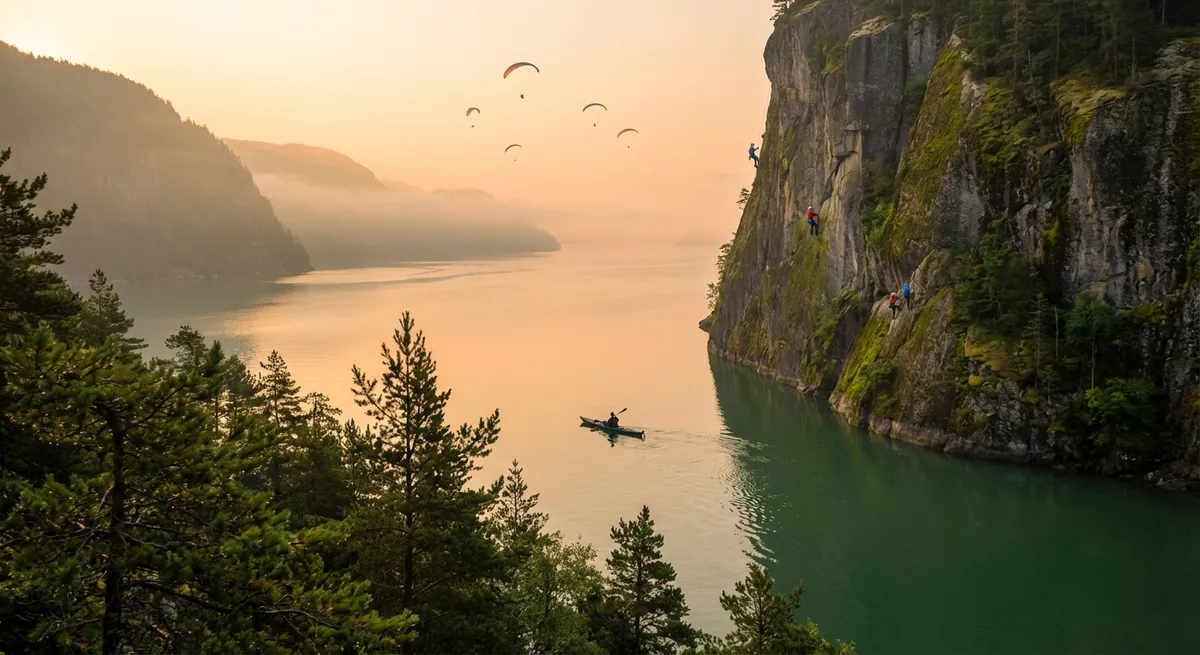
This guide is for the traveler who wants more than a sun lounger. You want your heart pounding on an Andean ascent, your legs humming after a coastal cycle in Portugal, and your lungs full of crisp New Zealand air after a sunrise paddle. Let’s turn your next trip into a living, breathing adventure that makes you stronger, braver, and wildly alive.
Build Your Trip Around a Movement Theme
Instead of choosing a destination first, start with how you want to move. Do you crave the steady grind of long-distance trekking, the rhythm of cycling, the adrenaline of canyoning, or the full-body flow of paddle sports? Once you know the movement, you can target destinations that are naturally built for it: hut-to-hut hikes in the Dolomites, bikepacking the coast of Croatia, or kayaking between fjords in Norway. This approach transforms your itinerary into a training arc—you’re not just “fitting in workouts,” you’re designing a journey where every day advances your stamina and skill. A movement theme also helps you pack smarter, train with a goal in mind beforehand, and keeps your focus on experiences rather than checklists. Your memories won’t be “I saw a mountain”; they’ll be “I climbed three passes and felt my legs catch the sunrise.”
Turn Transit Days Into Moving Adventures
Long travel days don’t have to be dead zones for your body. With a little intention, transit becomes part of the adventure. Landing in Tokyo? Instead of immediately diving into the subway, walk between neighborhoods and discover hidden shrines and park staircases that double as instant glute burners. In Cape Town, plot an active transfer from city center to beach via a run along the Sea Point Promenade, watching the Atlantic crash to your left as Table Mountain towers behind you. In places like Vancouver, Oslo, or Melbourne, swap taxis for shared bikes or e-scooters and wind your way through waterfront paths and urban parks. By reframing transit as a chance to move, you keep your energy high, beat jet lag faster, and layer in mini-missions—like hunting for the steepest hill in town or the longest riverside path—before your “real” adventures even begin.
Use Local Terrain as Your Training Partner
Every destination has a natural “gym” if you know how to read the landscape. Coastal towns like Lagos in Portugal or Santa Teresa in Costa Rica offer beach sprints on soft sand, dune climbs, and surf sessions that torch your core and shoulders. Mountain villages in places like Zermatt or the Atlas Mountains naturally pull you upward with zig-zagging trails and stair-filled streets that test your lungs. In jungle regions like Borneo or the Osa Peninsula in Costa Rica, humid canopy hikes become slow-burn endurance training, rewarding every drenched step with waterfalls and wildlife encounters. Treat these terrains as training partners, not backdrops: design micro-workouts around them—hill repeats on cobbled alleyways in Lisbon, bodyweight circuits on a quiet pier in Auckland, or yoga and mobility work on a rooftop in Medellín as thunderstorms roll across the valley. The land shapes you, and you leave stronger than when you arrived.
Let Sunrise and Sunset Set Your Training Rhythm
In adventure-rich destinations, light is your secret performance tool. Instead of fighting time zones and packed itineraries, sync your body to the sun. In places like Patagonia or the Lofoten Islands in Norway, long golden hours give you endless light for extended hikes or trail runs that feel almost otherworldly. In tropical spots like Bali or Thailand, early sunrise missions help you beat the humidity—think dawn ridge hikes above Ubud’s rice terraces or a pre-breakfast run along Railay’s limestone-framed beach. Sunset sessions in Morocco’s Sahara region could mean sandboarding down glowing dunes before a short strength workout next to your desert camp. Aligning your movement with sunrise and sunset doesn’t just yield epic photos; it steadies your sleep, sharpens your mood, and carves out sacred windows of focused effort that anchor each travel day in something powerful and memorable.
Design “Recovery Days” That Still Feel Epic
Active travel isn’t about breaking yourself on day one—it’s about sustaining adventure across the whole journey. That’s where intentional recovery days come in, especially in destinations that tempt you to go hard daily. After a multi-day trek in Peru’s Sacred Valley or a series of surf-heavy mornings in Ericeira, Portugal, plan a “soft movement” day instead of collapsing completely. Think gentle stand-up paddleboarding on Slovenia’s Lake Bled, slow city cycling along the Danube in Vienna, or a casual snorkel session off the shores of Hawaii’s Big Island. Add in stretching on a quiet rooftop, a soak in hot springs in Iceland, or a hammam visit in Turkey to let your muscles decompress. These days keep your body awake rather than stiff, reduce injury risk, and still feel like rich, immersive experiences—not a pause button on your adventure, but a quieter verse in the same bold song.
Conclusion
Active travel is less about how many miles you log and more about how deeply you inhabit each one. When your journeys revolve around movement, every trail, alleyway, coastline, and ridgeline becomes a chapter in a story your body is telling. You return home with more than souvenirs—you bring back stronger legs, a clearer mind, and a sense of courage you can feel in your bones.
Your next ticket isn’t just a trip; it’s a training ground for the kind of life you want to live. Choose the movement, chase the horizon, and let the world be the wildest gym you’ve ever known.