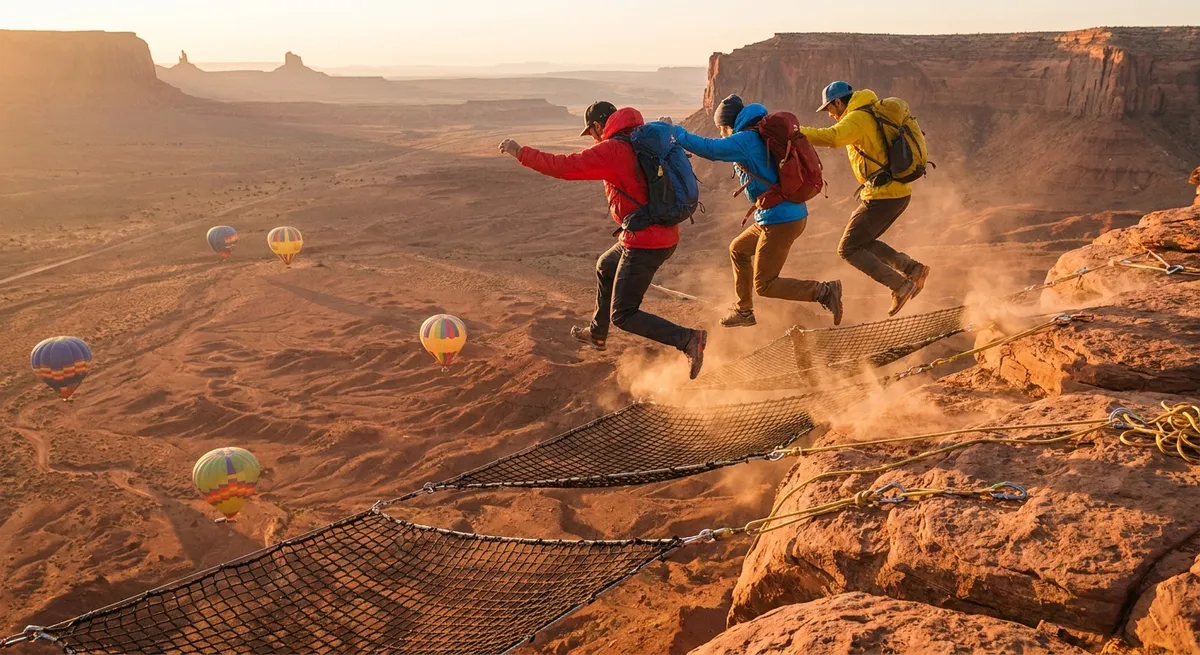
Why Active Travel Feels Like A Superpower
Active travel taps into something deeper than steps counted or miles logged. When you hike that ridge in Patagonia instead of just photographing it from the roadside, your lungs memorize the altitude and your legs remember every switchback. When you cycle along the coast of Portugal or through Japan’s countryside, you notice the smell of local bakeries, the sound of village chatter, the texture of the wind.
Moving through a place—rather than just being transported—slows you down and sharpens your senses. You become more present, more connected, and often more respectful of the landscapes and cultures you’re moving through. Your body becomes your vehicle, your pace becomes your itinerary, and your memories are etched not only in photos, but in sore calves, sun-kissed skin, and that delicious post-adventure fatigue that feels like earned freedom. Active travel isn’t an escape from your life; it’s a way to expand it.
Active Travel Tip #1: Let Terrain Decide Your Training
Instead of forcing your usual gym routine into a new destination, let the local terrain rewrite your workout.
In the Swiss Alps, your “leg day” might become a long ascent to a panoramic hut trail, with steep alpine paths doing more for your quads and glutes than any squat rack. In Bali, your cardio blast could be sunrise stair sprints up to a jungle temple, followed by a yoga flow facing rice terraces. On the Azores islands, volcanic caldera trails and rugged coastal paths double as natural obstacle courses for trail runs and power hikes.
Approach each destination like an adventure coach:
- Mountains? Focus on elevation gain, hiking, trail running, or rock scrambling.
- Coastlines? Mix open-water swimming, paddleboarding, and beach runs on soft sand.
- Cities? Turn urban exploration into a tempo walk or run from neighborhood to neighborhood, adding bodyweight circuits at parks and plazas.
When you let the land lead, every workout becomes a story only that place could tell.
Active Travel Tip #2: Build “Move More” Into Your Itinerary Design
Don’t tack movement onto your trip like an afterthought. Design it into the bones of your journey from the start.
Choose accommodations that make movement almost unavoidable: a seaside guesthouse right on a running path in Sydney, a mountain lodge next to trailheads in Banff, or a riad in Marrakech within walking distance of bustling markets. Swap taxis for walking or biking whenever safe and feasible; a 20-minute stroll through historic streets in Lisbon or Kyoto can be more memorable than any guided tour.
Plan movement as your primary mode of exploration at least once a day:
- Book a guided hike to a lesser-known waterfall instead of a bus excursion.
- Join a local running club meet-up to see parks and neighborhoods you’d never find alone.
- Rent a bike for the full day in cities like Amsterdam, Copenhagen, or Vancouver and treat distance as discovery.
When you engineer motion into your agenda, you return home with both a stronger body and a richer map of the places you visited.
Active Travel Tip #3: Pack Like A Minimalist Athlete, Not A Tourist
Your gear should empower movement, not anchor you to the ground. Think light, versatile, and adventure-ready.
Start with one carry-on-friendly setup that can do it all: quick-dry tops, moisture-wicking socks, and a pair of hybrid shorts or leggings suited for everything from trail runs to café detours. Choose a supportive pair of all-terrain trainers that can handle cobblestones in Rome and dirt paths in Costa Rica, and if you’re heading somewhere water-centric like Hawaii, Greece, or Thailand, consider lightweight water shoes for rocky shores and canyon streams.
Add a compact “micro-gym” to your pack: a resistance band, jump rope, and maybe a collapsible travel roller. These weigh almost nothing but turn hotel courtyards, beach promenades, and hostel rooftops into training zones. A small daypack with a hydration bladder or bottles lets you carry snacks, layers, and essentials on longer adventures without slowing you down.
Every item you pack should answer one question: “Will this help me move more freely?” If not, it’s just extra weight between you and your next summit.
Active Travel Tip #4: Fuel Like An Explorer, Not A Vacationer On Pause
Your body is your passport to every ridge, reef, and river on your itinerary—treat it like essential travel gear.
Use local cuisine as both cultural immersion and performance fuel. In the Mediterranean, lean into fresh fish, olive oil, tomatoes, and whole grains to power long cycling days along the coast. In Japan, load up on rice, miso, grilled fish, and veggies that support sustained energy without the crash. In Mexico or Peru, colorful fruits, corn-based dishes, and beans become delicious glycogen refills after mountain hikes or surf sessions.
Hydration is your secret weapon, especially in hot or high-altitude destinations like Morocco’s desert fringes or Colorado’s Rockies. Carry a reusable bottle and sip steadily, not just when you feel thirsty. Seek out fresh markets not only for budget-friendly snacks, but for nutrient-dense discoveries: bananas and nuts for trail energy, local yogurt or cheese for protein, and seasonal fruits you’ve never even seen at home.
You’re not “cheating” on your fitness when you savor local food—you’re recharging the engine that lets you experience more of the world at full throttle.
Active Travel Tip #5: Chase Moments, Not Metrics
Active travelers love data, but some of the most transformative adventure days can’t be tracked in steps or split times.
On a long trek through Patagonia’s Torres del Paine or Nepal’s Annapurna region, your watch might lose GPS, your phone might die, and your pace might crumble with the altitude and terrain. None of that diminishes the magic of hearing glaciers creak or prayer flags whipping in the wind. In the surf towns of Portugal’s Algarve or Costa Rica’s Pacific coast, waiting for the right wave can mean long stretches of stillness between brief, explosive effort—an experience your fitness app will never fully understand.
Use metrics to support your adventure, not define it. Maybe you keep a gentle movement streak, or track elevation gain just to watch your confidence climb. But also keep a different kind of log:
- “First time hiking above the clouds.”
- “Shared a sunrise swim with sea turtles.”
- “Turned a rainy day into a muddy trail run that ended in a village café.”
Those are the stories you’ll retell years from now, not your exact heart rate zone at the summit.
Destination Sparks: Where The World Invites You To Move
If you’re ready to build your next journey around motion, some places almost beg to be explored in sweat and wonder.
In New Zealand, the South Island’s Great Walks weave through fjords, alpine passes, and ancient forests, creating multi-day hikes where each hut-to-hut segment feels like leveling up in a real-life adventure game. Iceland surrounds you with geothermal valleys, black sand beaches, and glacier tongues—perfect for days that mix rugged hikes with hot-spring recovery soaks.
Head to Canada’s national parks—like Banff and Jasper—for turquoise lakes that seem designed for paddleboarding and kayaking, while craggy trails rise into the Rockies for summit scrambles and all-day treks. On the other side of the world, Slovenia’s Julian Alps and emerald Soča River invite you to combine whitewater rafting, mountain biking, and high-country hikes in a compact, incredibly scenic playground.
These destinations aren’t just backdrops. They’re co-conspirators in your transformation.
Conclusion
Active travel asks something bold of you: Don’t just go see the world—go feel it. Let steep city staircases in Lisbon burn your calves as church bells echo overhead. Let alpine air in the Dolomites expand your lungs while the sun melts snowcaps into rushing streams at your feet. Let the ocean tug at your board, your kayak, your body, and remind you how alive you are in motion.
You don’t need to be an elite athlete to travel this way. You just need a curious heart, a willing body, and the courage to trade passive sightseeing for full-contact life. Choose your next destination, pack light, and promise yourself one thing: wherever you land, you’ll meet that place not just with your camera—but with every moving part of you.
Sources
- U.S. National Park Service – Benefits of Physical Activity in Nature - Overview of how outdoor activity supports physical and mental health
- Centers for Disease Control and Prevention – Physical Activity Basics - Guidelines on recommended activity levels and health benefits
- Harvard T.H. Chan School of Public Health – Staying Active While Traveling - Practical strategies for incorporating movement into trips
- New Zealand Department of Conservation – Great Walks - Official information on New Zealand’s premier multi-day hiking routes
- Parks Canada – Banff National Park Visitor Information - Details on trails, routes, and outdoor activities in Banff National Park