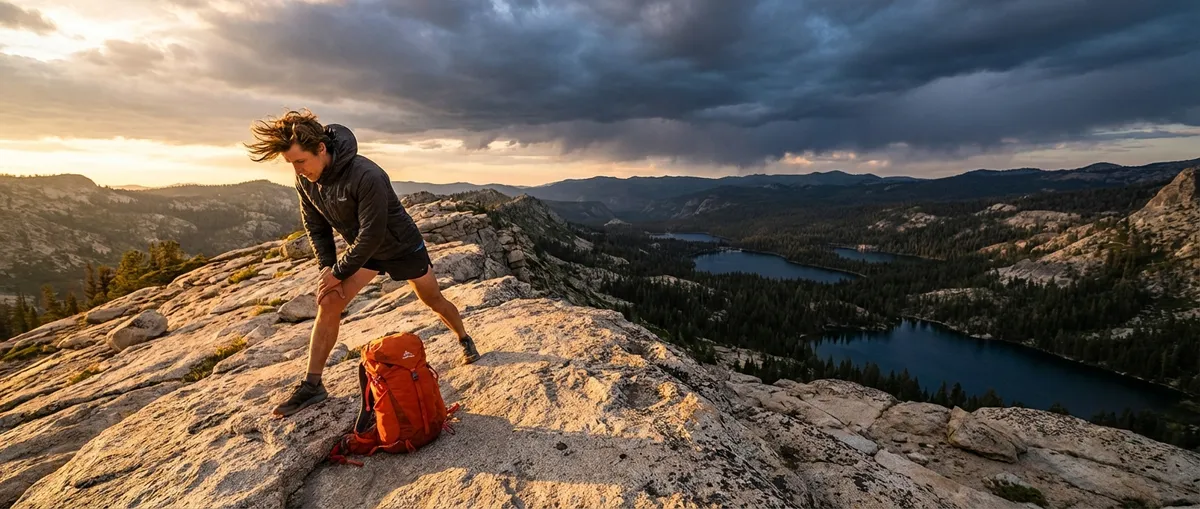
Why Training Hits Different Under an Open Sky
There’s a reason your legs feel lighter and your lungs feel bigger when you move outside. Natural light helps sync your body clock, outdoor terrain challenges more muscles than flat gym floors, and the constant stream of new sights keeps boredom at bay. Your brain gets a hit of novelty, your body adapts to uneven ground, and suddenly “cardio” feels less like punishment and more like play.
Research backs this up: outdoor exercise is linked with better mood, reduced stress, and higher enjoyment compared to indoor training. Add in fresh air, natural scenery, and the subtle challenge of wind, hills, and changing surfaces, and you’ve got a training environment that keeps both your body and your curiosity awake. Adventure isn’t just a backdrop; it becomes the engine of your fitness.
Destinations That Turn Movement Into Memory
Every landscape invites a different way of moving. Instead of asking, “Where’s the nearest gym?” start asking, “What does this place make my body want to do?”
- Coastal cities and islands call for sunrise beach runs, sand sprints, and bodyweight circuits on boardwalk railings. Soft sand torches your calves and core, while ocean air makes every deep breath feel earned. Picture interval sprints on Copacabana in Rio or a sunset jog along Bondi to Bronte in Sydney.
- Mountain towns are built for lung-busting climbs and quad-burning descents. Switchbacks near Chamonix, the Rockies around Banff, or the volcanic ridges of the Canary Islands transform hiking into a full-body strength session. Add rock steps, log jumps, and pack-loaded climbs for a natural strength workout.
- Historic cities come with stone staircases, plazas, and riverside paths that double as training playgrounds. Think stair intervals on Montjuïc in Barcelona, bodyweight flows along the Seine in Paris, or tempo runs on Prague’s riverside paths. Architecture becomes your equipment.
- Desert and canyon regions like Moab or the Wadi Rum reward early risers with cooler temps and cinematic landscapes. Short, intense circuits on rock slabs or guided canyon hikes push your endurance while the scale of the landscape resets your sense of what’s possible.
- Forest and lake regions invite trail runs, paddle sessions, and mobility work on soft ground. From the lake-dotted trails in Finland to the Pacific Northwest, the combination of trees, water, and uninterrupted paths makes it easier to log longer, quieter miles.
Where you go shapes how you move—so start choosing destinations that make your body itch to explore.
Five Active Travel Tips for the Relentless Fitness Adventurer
You don’t have to choose between epic travel and serious training. Use these five tips to keep your wanderlust and your workouts feeding each other, not fighting for calendar space.
1. Build a “No-Excuse” Travel Workout Kit
Pack light, but pack smart. A tiny kit can turn any rooftop, park, or quiet alley into a legit training zone.
Include:
- A light resistance band for rows, pull-aparts, and hip activations
- A mini-loop band for glute work and warm-ups
- A jump rope for high-intensity cardio in tight spaces
- A collapsible water bottle that doubles as a light weight when filled
- A microfiber towel to use on park benches, stairs, or sandy ground
With this setup, you can mix sprints, jump rope intervals, band strength work, and core flows anywhere—from a balcony in Lisbon to a park in Tokyo. The rule: if you can stand there, you can train there.
2. Let the Terrain Design Your Workout
Instead of forcing your usual gym routine onto a new environment, let the environment call the shots.
- Hills = hill sprints, power hikes, loaded backpack climbs, walking lunges uphill
- Stairs (hotel, stadium, monuments) = interval climbs, double-step power sets, calf burner reps
- Parks and plazas = bench step-ups, incline pushups, triceps dips, walking lunges, lateral shuffles
- Beaches = sand sprints, barefoot drills (if safe), walking lunges, bear crawls, side planks
Example: If you land in a city built on hills—like San Francisco, Lisbon, or Valparaíso—skip the flat jog and design a “three-hill circuit”: climb hard, walk down easy, repeat on three different streets, and finish with bodyweight strength at a lookout point. You’ll leave with a workout and a mental map of the city’s contours.
3. Anchor Your Day with a 20-Minute “Arrival Ritual”
Travel scrambles routines, but a short, non-negotiable workout ritual can steady you, fight off jet lag, and lock in your active identity wherever you land.
Within a few hours of arriving:
- Get outside in daylight if possible.
- Move for 20 uninterrupted minutes—walk, jog, cycle, or stair climb at an easy pace.
- Finish with a 5–10 minute mobility flow: hip circles, lunges with rotation, thoracic spine openers, and calf stretches.
This ritual tells your body, “We move here.” It resets stiffness from flights, helps your sleep clock adjust, and makes it easier to stack bigger adventures—like long hikes or rides—on the days that follow.
4. Train With the Locals, Not Just Beside Them
Every destination has its own movement culture. Tap into it instead of hovering on the sidelines.
- Join a local running group for a weekly community run—many big cities have free events and open club nights.
- Drop into an outdoor bootcamp or park workout class; they often welcome visitors.
- Try the destination’s signature activity: surf lessons in Bali, bouldering in Fontainebleau, paddleboarding in Vancouver, cycling in Girona, or outdoor yoga in Ubud.
You’ll get training plus insider tips, route recommendations, and maybe a coffee invite afterward. Movement is one of the fastest ways to step out of “tourist mode” and into the local pulse of a place.
5. Chase Views, Not Just VO₂ Max
You’re not only building fitness; you’re building a highlight reel of moments your future self will remember when motivation runs thin. Use scenery as a training partner.
- Pick view-based goals: sunrise at a lookout, summit of a nearby peak, a full loop of a coastal path, or a run that connects three iconic landmarks.
- Turn photo stops into interval breaks: run or hike hard to the next scenic point, then stop to breathe, stretch, and capture the view.
- Schedule at least one “anchor adventure” workout per trip—the kind that scares you a little and excites you a lot: a demanding ridge hike, a long city run at dawn, or a guided climbing session.
Later, when you’re home staring at gray skies or a familiar neighborhood route, those memories become fuel. You’re no longer training for an abstract goal—you’re training for your next view from above the clouds.
Balancing Push and Pause on the Road
Outdoor workouts on the move can easily turn into an “always on” mindset—one more hike, one more run, one more climb. But your body doesn’t care how epic the backdrop is; it still needs recovery to adapt and get stronger.
On active trips:
- Rotate intense days (long hikes, fast runs, big climbs) with lighter days (easy walks, gentle mobility, casual cycling).
- Prioritize sleep and hydration as seriously as you would your long run or strength session; travel, altitude, and heat all add hidden stress.
- Check the local conditions—altitude, UV index, temperature, and terrain difficulty—especially if you’re pushing harder than usual.
Listening to your body on the road isn’t about playing it safe; it’s about preserving your ability to keep saying yes to adventure.
Conclusion
Your training is not something you pause for a plane ticket; it’s the engine that lets you say yes to steeper trails, longer days, and wilder detours. When you treat the world as your performance partner—not just your backdrop—outdoor workouts stop being box‑checking exercises and become stories you’ll tell for years.
Pack your bands, lace your shoes, and step outside with intent. Let hills design your intervals, let locals guide your routes, and let landscapes push you to new gears. The next stamp in your passport can also be the next breakthrough in your fitness. Out there, under an open sky, is where your strongest chapters are waiting to be written.
Sources
- Harvard Health Publishing – Exercising Outdoors Has Many Mental Health Benefits - Explains how outdoor activity improves mood, stress, and overall mental well-being
- American Council on Exercise (ACE) – The Benefits of Exercising Outdoors - Details physical and psychological advantages of training outside versus indoors
- Centers for Disease Control and Prevention – Travel Health: Stay Healthy and Safe - Provides guidance on staying safe and healthy while being active during travel
- National Park Service – Hiking Safety - Offers practical safety tips for outdoor adventures such as hikes and trail workouts
- Mayo Clinic – Exercise: How to Stay Motivated - Discusses strategies to maintain motivation, relevant to sustaining active habits while traveling