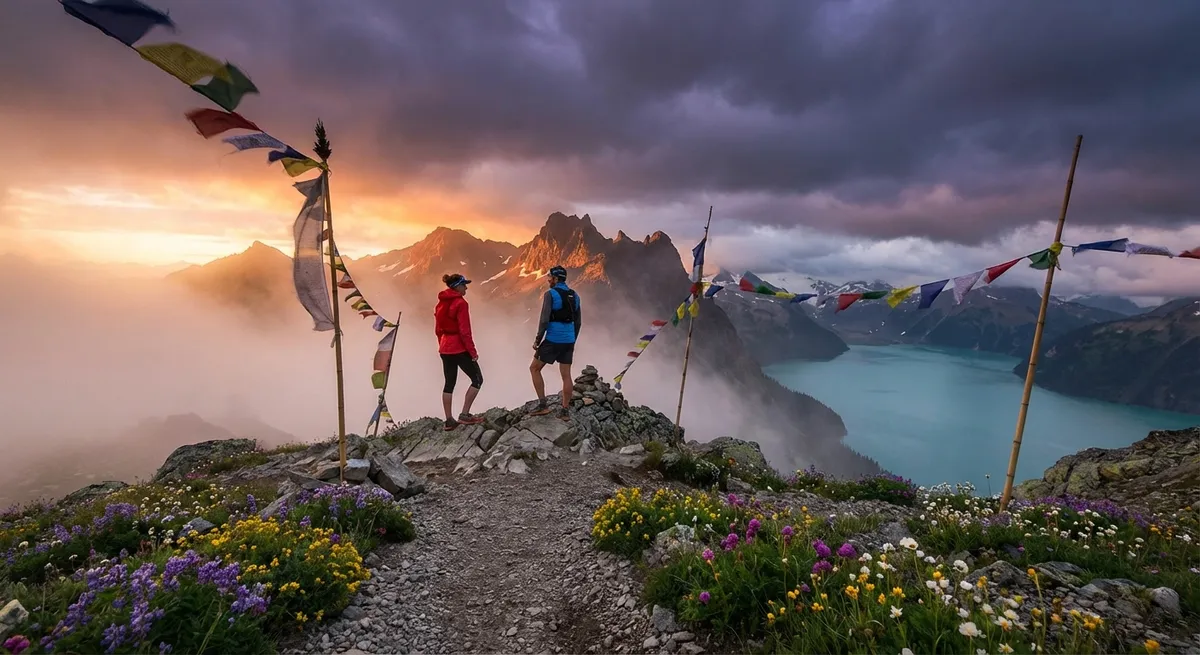
Why Move-First Travel Hits Different
When you design a trip around movement, the whole experience shifts. Your days aren’t dictated by tour buses and ticket times; they’re carved by trailheads, tide charts, and mountain weather. You’re not just looking at landscapes—you’re breathing hard inside them.
Active travel anchors you to a place. Your legs remember the steep alleys of Lisbon long after you’ve forgotten which café had the best espresso. Your shoulders recall the pull of a kayak against the currents off Vancouver Island more clearly than any souvenir shop. Moves become memories.
Physically, it pushes your cardio, strength, and mobility in ways a gym can’t replicate. Mentally, it forces presence: you can’t doom-scroll on a ridgeline, and you can’t ruminate about emails mid–whitewater rapid. You’re there, fully, in the churn of your adventure.
And the best part? You get to write your own rules. Whether it’s multi-day treks in Patagonia or city cycling in Tokyo, active travel scales to your fitness level and ambition. Let’s turn that energy into a plan.
Tip 1: Choose Destinations That Reward Sweat
If movement is the star of your trip, the destination has to play along. Look for places where the terrain practically begs you to get outside.
Think of:
- Interlaken, Switzerland – A playground wedged between lakes and peaks, with paragliding, canyoning, trail running, and climbing routes that start steps from town. You can hike a ridgeline in the morning and paddle a glacier-fed lake by late afternoon.
- Queenstown, New Zealand – Self-branded as the “Adventure Capital of the World,” it’s surrounded by trails, bike parks, via ferrata routes, and wild rivers. Every horizon line around you is an invitation.
- Madeira, Portugal – A volcanic island laced with levada (irrigation channels) trails, sheer cliffs, and ridgelines. You can run cloud forests at sunrise and cool down in natural ocean pools at sunset.
- Banff & Lake Louise, Canada – High-alpine trails, turquoise lakes, and year-round activity: hiking, scrambling, snowshoeing, ski touring, and more, all backed by well-marked routes and safety infrastructure.
When you’re researching, don’t just search “best things to do in X.” Instead, search:
- “X hiking routes beginner/intermediate/advanced”
- “X cycling paths / trail running / paddle routes”
- “X mountain guides / outdoor clubs / climbing gyms”
Pick destinations where you can walk out your front door and straight into a workout, instead of needing a tour bus to find adventure.
Tip 2: Build Your Itinerary Around Daily “Anchor Activities”
Instead of packing your schedule with a random mix of tours, design each day around one anchor activity—a main burst of movement that sets the tone.
Examples of anchor activities:
- A sunrise summit hike above Cusco, Peru to acclimatize before Machu Picchu
- Ocean kayaking between sea caves near Lagos, Portugal
- A full-day cycling loop through rice terraces and villages outside Ubud, Bali
- A canyoning descent in the gorges of Slovenia’s Soča Valley
- An afternoon urban stair-climb exploring Valparaíso, Chile’s steep, colorful hills
Around that anchor, layer lighter experiences:
- Slow café breakfasts for fuel
- Evening mobility sessions or gentle yoga
- Short neighborhood walks to explore food markets and local life
- Sunset viewpoints that double as cooldown strolls
This approach keeps your trip sustainable. You still push your limits—but in a way that respects recovery, jet lag, and the fact you might want to, you know, enjoy where you are. Aim for a rhythm like:
- 3–4 high-output days (long hikes, cycles, paddles)
- 2–3 lighter days (shorter routes, yoga, walking tours)
- 1 full rest or ultra-light activity day (swims, slow walks, stretching in a park)
The result: you leave stronger and more energized, not wrecked and needing a vacation from your vacation.
Tip 3: Train With the Terrain in Mind
The most rewarding active trips are the ones your body is ready to meet halfway. A bit of focused prep turns “barely surviving” into “fully thriving.”
Start 6–8 weeks before you go and tailor your training to the destination:
- Mountain or high-elevation trips (e.g., the Dolomites, Colorado Rockies)
- Prioritize: hill repeats, stair climbs with a pack, single-leg strength (lunges, step-ups), and long walks or hikes on weekends.
- Bonus: practice hiking with the shoes and daypack you’ll use on the trip.
- Cycling-heavy adventures (e.g., bikepacking in Croatia, road cycling in Girona)
- Prioritize: 2–3 rides per week (mix of endurance and hill intervals), core strength, and hip mobility.
- Build up to back-to-back riding days to mimic your travel schedule.
- Water-based trips (e.g., sea kayaking in Norway, surf weeks in Costa Rica)
- Prioritize: shoulder stability, upper-back strength (rows, pull-ups), and swimming technique.
- Add breathwork and short pool sessions if possible.
- Urban exploration (e.g., Tokyo, Barcelona, Istanbul)
- Prioritize: walking volume. Rack up 10,000–15,000 steps on practice days, with some faster intervals and stairs.
- Focus on foot and ankle strength to handle long days on hard surfaces.
Think of it as a dress rehearsal for your adventure. Training with intent not only reduces injury risk—it sets you up to say “yes” to the spontaneous invites that make trips unforgettable: that extra ridge, that longer route, that surprise detour down a side canyon.
Tip 4: Pack Like an Athlete, Not a Tourist
The right gear can turn almost any destination into your personal movement lab. Focus on versatility, light weight, and multi-use items.
Core essentials to consider:
- Footwear with purpose
- One pair of durable, lightweight trail shoes can often handle city streets, moderate hikes, and light runs.
- If you’re doing serious trekking, add a more supportive hiking shoe or boot—but test it at home first.
- Movement-ready clothing
- Quick-dry shorts or leggings, moisture-wicking tops, and a compact waterproof shell.
- At least one outfit you can “dress up” that still allows you to walk, climb stairs, or hop on a borrowed bike without feeling restricted.
- Recovery tools (micro-sized)
- A mini massage ball or lacrosse ball (weighs almost nothing, saves your calves and feet).
- Lightweight resistance band for activation and mobility work in your room or at the airport.
- Compact adventure gear
- Collapsible water bottle or soft flask.
- Foldable daypack for hikes, markets, and spontaneous detours.
- Simple headlamp if your plans might brush up against dawn or dusk.
And don’t underestimate the power of analog tools: a small notebook to log your daily miles, climbs, swims, and standout moments. Tracking your movement turns your trip into a personal “expedition report” you can look back on—and build from—later.
Tip 5: Let Local Culture Shape Your Movement
Active travel isn’t just about landscapes; it’s also about how people in each place move through them. Tapping into local habits turns your fitness into a cultural exchange.
A few ways to do it:
- Join what’s already happening
- In Copenhagen, rent a bike and commute at rush hour like a local.
- In Rio de Janeiro, try a beachfront workout station or a casual game of footvolley if invited.
- In Seoul, hit late-night hiking trails lit up with locals chasing city views.
- Book movement-based experiences with local guides
- Trail running tours through Cape Town’s Table Mountain foothills.
- Climbing with local guides in Kalymnos, Greece or Railay, Thailand.
- Stand-up paddleboard tours with a local naturalist in Vancouver or Sydney.
- Explore traditional or regional practices
- Tai chi or qigong in parks in Taipei or Hong Kong.
- Traditional dance or capoeira lessons in Salvador, Brazil.
- Rowing, paddling, or canal-boat activities in cities where water is central to life.
Ask questions. Learn why people move the way they do here—how the climate, history, and terrain shaped those habits. You’ll come home with more than photos; you’ll carry new ways of understanding your own body in motion.
Conclusion
Active travel isn’t a niche style of vacation—it’s an invitation to live your days at full voltage. When you center your journeys around movement, you don’t just see more of the world; you feel more of it, in your lungs, your legs, and your sense of what you’re capable of.
Choose places that reward effort. Build your days around a single powerful burst of activity. Train with the terrain in mind, pack like an athlete, and let local culture rewire how you think about fitness. Your next trip doesn’t have to be an escape from your routine; it can be the catalyst that rewrites it.
The map is wide open. Where will your next mile, paddle stroke, or summit push take you?
Sources
- U.S. National Park Service – Benefits of Physical Activity in Nature - Overview of how outdoor activity supports physical and mental health
- Centers for Disease Control and Prevention – Physical Activity Basics - Evidence-based guidelines for aerobic and muscle-strengthening activity, useful for planning active trips
- Harvard T.H. Chan School of Public Health – Walking for Health - Research-backed benefits of walking and how to incorporate more into daily life and travel
- Adventure Travel Trade Association – Industry Snapshot Report - Data and trends on adventure and active travel worldwide
- Swiss Tourism – Outdoor Activities in Interlaken - Example of a destination with diverse, well-documented active experiences