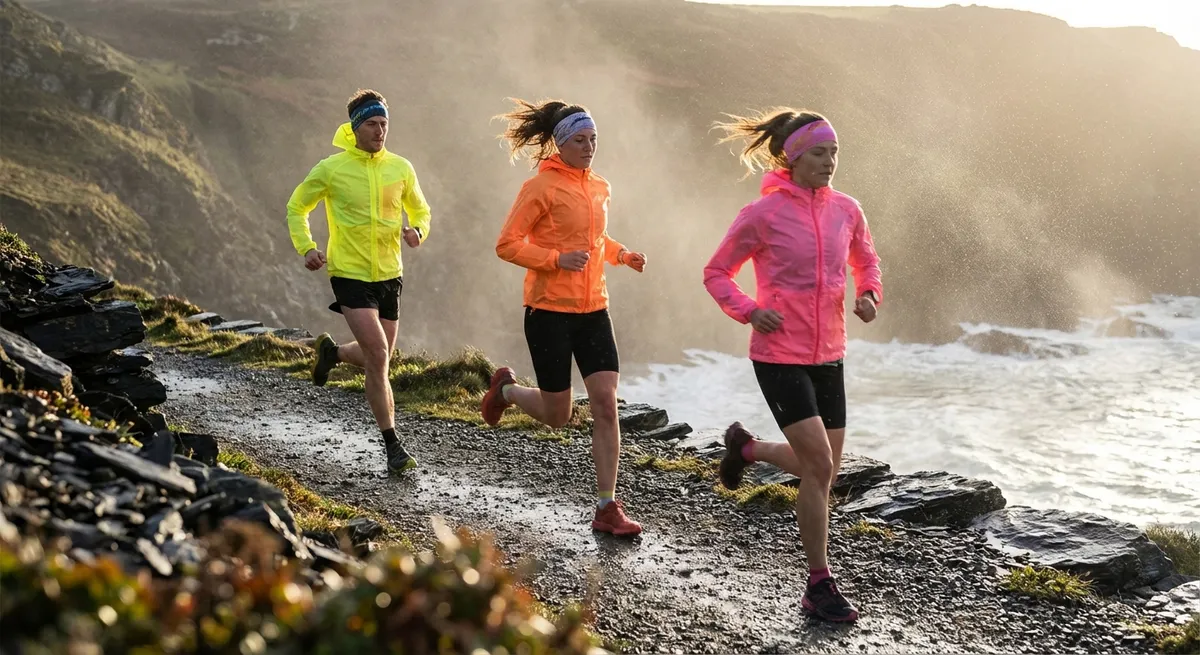
This isn’t about perfection or “no days off.” It’s about landing in a new place and asking: How can I move here in a way I’ll never forget?
Welcome to kinetic escapes—where your passport, your sneakers, and your curiosity all get stamped.
Move With the Landscape, Not Against It
The secret to adventure fitness on the road isn’t squeezing your regular gym routine into unfamiliar spaces; it’s letting the environment dictate the way you move.
In a mountain town like Chamonix or Queenstown, your “leg day” becomes a steep ridge hike with switchbacks and scrambling sections that light up every stabilizer muscle. In coastal cities such as Lisbon or Valparaíso, the endless staircases and hills naturally build your cardio and glutes. Desert landscapes like Joshua Tree or Wadi Rum invite bodyweight flows on warm rock, balance work on uneven sand, and long, meditative hikes across open horizons.
Instead of asking, “Where’s the gym?” ask, “What does this place make easy, and what does it make challenging?” If you’re in Amsterdam, lean into cycling culture. In Bali or Costa Rica, embrace surf sessions as your high-intensity interval training and ocean swims as your active recovery. By syncing your training with local terrain and traditions, you keep workouts fresh, culturally connected, and far more memorable than another treadmill session.
5 Active Travel Tips for the Restless, Roaming Athlete
These five tips are built for travelers who get itchy after sitting still too long and want each destination to leave a mark on their muscles as much as their memories.
1. Anchor Each Day With a “Signature Sweat”
Pick one intentional movement session each day that defines your destination. Think of it as your travel day’s “signature sweat,” the core story you’ll remember.
- In Cape Town, that might be a sunrise hike up Lion’s Head or a trail run on Table Mountain.
- In Tokyo, it could be a pre-dawn run along the Imperial Palace loop before the city fully wakes.
- In Rio, a beach circuit at Ipanema—sprints on the sand, walking lunges at the water’s edge, push-ups where the waves can reach your hands.
This doesn’t need to be long. Even 25–40 focused minutes of place-specific movement gives your day structure, boosts energy, and helps beat jet lag. Plan it like you’d plan a tour or a restaurant reservation—you’re far more likely to follow through when it has a place on your schedule, not just your intentions.
2. Pack a “Micro-Gym” That Weighs Almost Nothing
You don’t need dumbbells in your bag to stay strong. A minimalist travel kit can turn any balcony, courtyard, park, or hostel rooftop into a training space.
Consider this ultra-portable micro-gym:
- Mini resistance bands: Perfect for glute activation, shoulder work, and core variations.
- A light long band with handles: For rows, presses, and assisted mobility drills.
- A jump rope: Pocket-sized cardio that works in alleys, rooftops, and quiet plazas.
- Compact suspension trainer or gymnastics rings (optional): If you’re serious about strength, they hook onto doors, beams, or sturdy trees.
Focus on compound movements that hit multiple muscle groups—banded rows, squats, hip hinges, presses, carries with your backpack filled with water bottles, and core rotations. This setup works in a tiny hotel room in Manhattan, an Airbnb courtyard in Seville, or a lakeside dock in Banff. The less you need, the more you move—because you can train almost anywhere without friction or excuses.
3. Turn Transit Time Into Mobility Time
Adventure travel often means cramped flights, bus rides, and train seats that leave your hips and spine begging for mercy. Instead of arriving stiff and sluggish, use transit as a rolling mobility workshop.
Before boarding and during layovers:
- Walk the terminal instead of sitting at the gate—every 15–20 minutes of gentle walking helps.
- Use a wall or pillar for calf stretches, hip flexor stretches, and chest openers.
- Try controlled articular rotations (CARs) for your hips, shoulders, and ankles to maintain joint range of motion.
- Practice seated ankle circles and pumps to support circulation.
- Gently twist your spine side-to-side and lengthen upward to decompress.
- Stand, walk, and stretch whenever breaks are possible.
On long rides (when safe and allowed):
When you arrive, commit to a 10-minute “arrival reset”: hip openers, forward folds, cat-cow, and deep squats. This quick reset can be the difference between dreading a hike the next day and feeling ready to claim that summit or city exploration.
4. Chase Local Movement Culture, Not Just Tourist Sights
Every destination has its own movement DNA—sports, rituals, and daily rhythms that shape how people use their bodies. Tapping into that is one of the most rewarding forms of active travel.
Look for:
- Local sports and classes: Muay Thai in Bangkok, capoeira in Salvador, yoga in Rishikesh, or tango in Buenos Aires.
- Community runs, cycle groups, or open-water swims where visitors are welcomed.
- Outdoor fitness parks—common in cities like Barcelona, Singapore, and many European capitals—with pull-up bars, dip stations, and parallel bars.
Ask locals or your host: “If I wanted to move like people who grew up here, what would I try?” You’re not just burning calories; you’re stepping inside a culture through its favorite ways to push, play, and sweat. Those experiences stick much deeper than another museum queue.
5. Let Your Itinerary Taper and Peak Like a Training Plan
Athletes know not to schedule their heaviest workout the day before a big race. Apply that same wisdom to your travel.
Think of your trip in phases:
- Arrival phase: Lighter, mobility-focused days to adapt to time zones, altitude, or climate. Walk a lot, keep your “signature sweat” short and easy.
- Peak adventure phase: Plan physically demanding days—summit hikes in the Dolomites, canyoning in Slovenia, long cycling days in the Loire Valley, or multi-hour kayak trips in the Norwegian fjords—when you’re acclimated and well-rested.
- Taper and recovery phase: As you near the end, shift to less intense but still active days—gentle coastal walks, yoga on the beach, paddleboarding, or easy city strolls.
This pacing keeps you from burning out by day three of a two-week trip or risking injury by stacking your most intense adventures back-to-back. You’ll return home not just with strong memories, but with a body that feels trained—not trashed—by your journey.
Destination Highlights for the Movement-Obsessed Traveler
While you can turn almost anywhere into an adventure fitness playground, some destinations seem designed for those who can’t resist chasing effort and elevation.
- Interlaken, Switzerland – A base camp for hikers, trail runners, paragliders, and canyoners. Lake circuits double as recovery walks, and alpine trails provide natural intervals that’ll challenge even seasoned athletes.
- Queenstown, New Zealand – Often called the adventure capital of the world, with options from mountain biking and bungee jumping to steep hiking and kayaking. Every direction holds another way to lift your heart rate with sweeping views.
- Madeira, Portugal – A volcanic island with dramatic cliffs, levada (irrigation channel) walks, ridge trails, and ocean access. You can combine stair-slaying urban walks in Funchal with lung-burning summit hikes and ocean swims.
- Vancouver, Canada – Urban trails, waterfront runs, North Shore mountain hikes, and year-round access to outdoor movement. You can start your morning with a seawall run and end it with a forested stair climb or light trail session.
- Chiang Mai, Thailand – Mountain temples at the top of stair climbs, easy access to jungle trails, and a strong yoga and Muay Thai culture. It’s a perfect blend of intense physical practice and mindful recovery.
You don’t have to be a pro athlete to embrace these places. Scale each adventure to your level, but let them nudge your edge. The point isn’t to dominate the landscape; it’s to collaborate with it.
Conclusion
Adventure fitness isn’t a rigid doctrine; it’s a mindset. It’s choosing stairs over escalators in a centuries-old town, carrying your own pack up a ridge for the view, or waking up early to watch the sunrise from the highest point you can reach under your own power.
When you weave movement into your itinerary—through signature sweats, minimalist gear, smart pacing, and a curiosity for local ways of moving—you stop “fitting in workouts” and start living a story your body is writing with every step.
The world is full of summits, shorelines, back alleys, temple steps, and forest paths waiting to be felt, not just seen. Pack your curiosity, lace your shoes, and let your next trip train you into a stronger, more awake version of yourself.
Sources
- Centers for Disease Control and Prevention – Physical Activity Basics - Overview of recommended activity levels, useful for planning realistic movement goals during travel
- Harvard T.H. Chan School of Public Health – Staying Active While Traveling - Evidence-based tips for maintaining activity on the road
- American Heart Association – Benefits of Physical Activity - Details on cardiovascular and overall health benefits that support adventure-focused travel
- Visit Switzerland – Hiking in Switzerland - Official information on trails and mountain activities around destinations like Interlaken
- Tourism New Zealand – Adventure Activities - Overview of adventure options in New Zealand hubs such as Queenstown