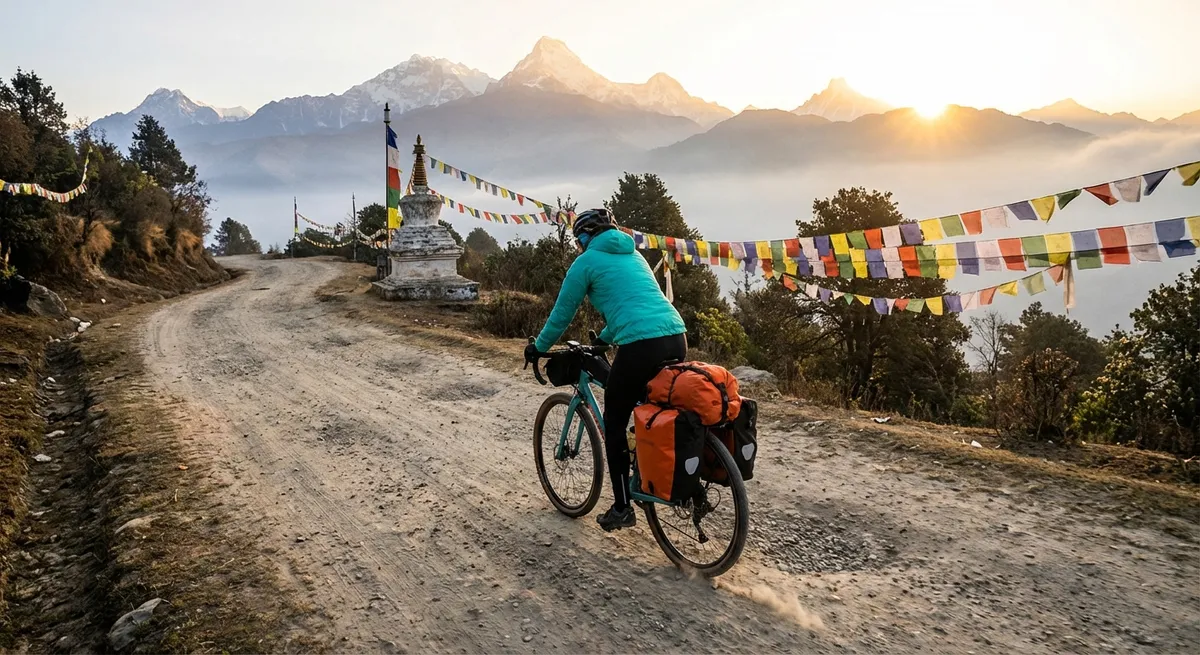
This isn’t about chasing perfection or elite performance. It’s about chasing aliveness—using motion to dive deeper into each destination, one climb, paddle, and step at a time.
Why Active Travel Hits Different
Active travel doesn’t just add workouts to your itinerary; it rewires what travel means to your body and brain.
When you hike instead of hopping on a tour bus in the Swiss Alps, you feel the altitude in your lungs, the crunch of glacial gravel beneath your boots, the way the wind cuts around jagged peaks. When you cycle Portugal’s Atlantic coast, the coastline stops being a backdrop and becomes a course you navigate, hill by hill. When you paddle between limestone cliffs in Thailand’s Krabi region, the ocean isn’t just a view—it’s your training partner.
This kind of movement amplifies:
- Immersion: You hear local languages at trailheads, in village bakeries, on early-morning running paths—far from tourist funnels.
- Resilience: Jet lag, unfamiliar schedules, and different terrain challenge your body in ways a predictable gym never will.
- Memory: Your brain tags effort with emotion. That steep cobblestone climb in Lisbon? You’ll never forget the café at the top.
- Connection: Shared struggle—sweaty climbs, tough switchbacks, windy summits—fast-tracks friendships and deepens relationships.
Active travel isn’t an add-on; it’s a lens that transforms the entire journey into an expedition of strength, curiosity, and discovery.
Tip 1: Let Terrain Shape Your Training (Not the Other Way Around)
The magic of active travel begins when you stop forcing your usual routine onto unfamiliar ground and start letting the landscape coach you.
In Patagonia, long glacial valleys invite all-day treks with loaded packs and unpredictable weather—an ideal playground for endurance, mental toughness, and layering strategy. In Tokyo, the urban sprawl becomes a living track: sunrise runs past the Imperial Palace, stair sprints in metro stations, impromptu walking marathons through neon districts.
To adopt a terrain-first mindset:
- Scan maps, not just gym listings. Look for contour lines, waterfronts, public parks, ridgelines, and greenways. These are your real training zones.
- Match modality to landscape.
- Coastal towns: run on boardwalks, swim in open water (with local safety checks), rent a kayak or SUP.
- Mountain regions: hike, scramble, trail run, or snowshoe instead of staying indoors.
- Historic cities: create “elevation tours” by linking staircases, hilltop viewpoints, and cathedral steps.
- Embrace imperfection. Your “workout” might be a half-day of slow, loaded walking through Morocco’s Blue City of Chefchaouen or climbing endless stone steps to monasteries in Greece’s Meteora—both are serious leg days disguised as sightseeing.
The more you surrender to the terrain, the more you’ll leave with: stronger joints, varied movement patterns, and a deeper mental map of the places you’ve explored.
Tip 2: Build a Minimalist Adventure Kit That Travels Light
You don’t need a trunk full of gear to turn the world into your training ground—you just need a smart, portable setup that disappears in your backpack but shows up when it matters.
Consider packing:
- Mini resistance bands: Perfect for glute, hip, and shoulder activation in cramped hotel rooms or airport corners.
- A compact suspension trainer or long resistance band: Attach it to a sturdy door or tree branch in Bali, Banff, or Barcelona and you’ve got a full-body strength station.
- Collapsible water bottle: Essential for staying hydrated during long days of walking, hiking, or cycling in dry climates like the Atacama Desert or Arizona.
- Packable trail or hybrid shoes: Light enough to carry, stable enough for mixed terrain—ideal for trail-hopping from Costa Rica jungles to Scottish highlands.
Then, build a simple “anywhere session” you can deploy in 15–20 minutes when the day is packed:
- 5 minutes of mobility (hips, ankles, thoracic spine)
- 10 minutes of strength (push, pull, hinge, squat) with bands or bodyweight
- 5 minutes of core and breath work to downshift your nervous system
Think of this kit as your portable base camp. It doesn’t compete with your destination adventures—it keeps your body durable enough to say “yes” when that last-minute volcano trek or dawn kayak appears.
Tip 3: Chase Sunlight and Landmarks Instead of Treadmills
One of the biggest advantages of active travel is how naturally it aligns with circadian rhythm and curiosity. Instead of logging anonymous miles on a hotel treadmill, let your movement be guided by light and landmarks.
Use early mornings and golden hours:
- Sunrise scouting:
- In Cape Town, a pre-dawn hike up Lion’s Head rewards you with a panoramic view of the city and Table Bay awakening below.
- In Florence, a jog up to Piazzale Michelangelo turns into a private viewing of the city bathing in first light.
- Dusk wind-downs:
- Evening walks along the Danube in Budapest or Singapore’s Marina Bay provide low-impact volume while letting you soak in architecture and nightlife from the sidelines.
Replace “3-miles easy” with “explore for 30 minutes”:
- Pick a single landmark—like Barcelona’s Parc de la Ciutadella or Vancouver’s Stanley Park seawall—and move outward in loops or out-and-backs.
- Let instinct and interest choose your turns: follow street art, local runners, green spaces, or whatever catches your eye.
- Stop guilt-tripping yourself if the pace is slow. Curiosity-driven movement still builds an aerobic base while keeping your sense of wonder wide awake.
Landmark-based sessions keep you oriented, safe, and endlessly entertained. They also transform “exercise” into a living, breathing tour that no guided bus can match.
Tip 4: Eat Like an Explorer, Not a Restrictive Tourist
Active travel burns more energy—but it also hands you access to some of the world’s most soulful, nourishing food cultures. The goal isn’t to micromanage every calorie; it’s to fuel your movement with local flavor and smart anchors.
Build simple rules that travel well:
- Anchor every main meal with protein + plants.
- In Vietnam, that might be a bowl of phở loaded with herbs and veggies.
- In Greece, grilled fish, a slab of feta, olives, and a horiatiki salad.
- Use street food strategically.
- Treat high-carb, high-fat snacks (empanadas in Argentina, churros in Spain) as fuel around big days of hiking or cycling, not late-night mindless munchies.
- Hydrate like it’s your job.
- Traveling through high-altitude zones like the Andes or Rockies? Combine water with electrolytes, especially if you’re hiking, skiing, or trail running.
Don’t fear the “hearty” local dishes: a post-hike raclette in the French Alps, a steaming hotpot in Taiwan, or a tagine in Morocco can all be perfect recovery meals when you’ve earned them on the trail.
Let food become part of your training story: each meal fueling climbs, swims, and long rambles through markets and old-town alleys.
Tip 5: Program Recovery Like an Athlete on Expedition
The biggest trap for fitness-focused travelers is believing that “more” is always better—more steps, more peaks, more sessions squeezed into every day. Active travel is intense by default, and your body is also juggling jet lag, new foods, unfamiliar beds, and time zone shifts.
Treat your trip like a mini-expedition: performance requires intentional rest.
Build in:
- Low-impact exploration days:
- After summiting a volcano in Guatemala or hammering bike routes in Mallorca, spend the next day wandering local markets, museums, or thermal baths at a leisurely pace.
- Simple nightly mobility rituals:
- 5–10 minutes of calf, hip flexor, hamstring, and upper-back work before bed helps offset long flights, bus rides, and big elevation days.
- Sleep protection:
- Use eye masks, earplugs, or white-noise apps in noisy cities like Bangkok or New York.
- Align your movement with daylight on arrival—short walks or easy runs in the sun to help reset your body clock.
Recovery isn’t laziness—it’s what allows you to stack full, vivid days without crashing halfway through your journey. The goal is to return home tired in the best way: satisfied, not wrecked.
Destination Sparks for Your Next Active Escape
If you’re craving ideas, here are a few destinations that practically beg you to move:
- New Zealand’s South Island: Glacier hikes in Aoraki/Mount Cook National Park, ridge-line trails in Queenstown, and kayaking in Milford Sound.
- Slovenia: Run or cycle around Lake Bled at sunrise, hike the Julian Alps, then paddleboard emerald rivers like the Soča.
- Japan’s Kii Peninsula: Walk the ancient Kumano Kodo pilgrimage routes, combining spiritual stillness with steady, meditative days on foot.
- Norway’s Fjord Country: Stair-climb your way to iconic views like Pulpit Rock, trail run in the valleys, or sea-kayak beneath towering cliffs.
Let these places spark your imagination—but remember: active travel is a philosophy, not a single bucket-list destination. The same mindset can turn a weekend in a nearby mountain town or a coastal city into a full-body odyssey.
Conclusion
Active travel is the art of letting your muscles, lungs, and curiosity carry you deeper into the world. It’s saying yes to the long way around, to the steep staircase instead of the elevator, to the chilly sunrise paddle or the final switchback even when your legs are already humming.
You don’t need perfect conditions, ideal fitness, or weeks off-grid to live this way. You only need the courage to move with intention—through airports, alleyways, summit trails, and seaside promenades—and to treat every journey as both an adventure and a training ground for a stronger, more awake version of you.
Pack your minimalist kit. Pick a destination that makes your heart beat faster just thinking about it. Then go test yourself against its hills, waves, and winds.
Your next PR might not be a number—it might be a place you never thought your body could carry you to.
Sources
- Centers for Disease Control and Prevention – Physical Activity Basics - Overview of health benefits of regular physical activity and recommended guidelines for adults
- Harvard T.H. Chan School of Public Health – Staying Active While Traveling - Evidence-based tips for maintaining activity on the road
- World Health Organization – Physical Activity - Global recommendations and data on physical activity and health
- Sleep Foundation – How Travel Affects Sleep - Explains jet lag, schedule disruption, and strategies for better rest during travel
- American College of Sports Medicine – Hydration and Physical Activity - Guidance on fluid and electrolyte needs when active, including in hot or high-altitude environments