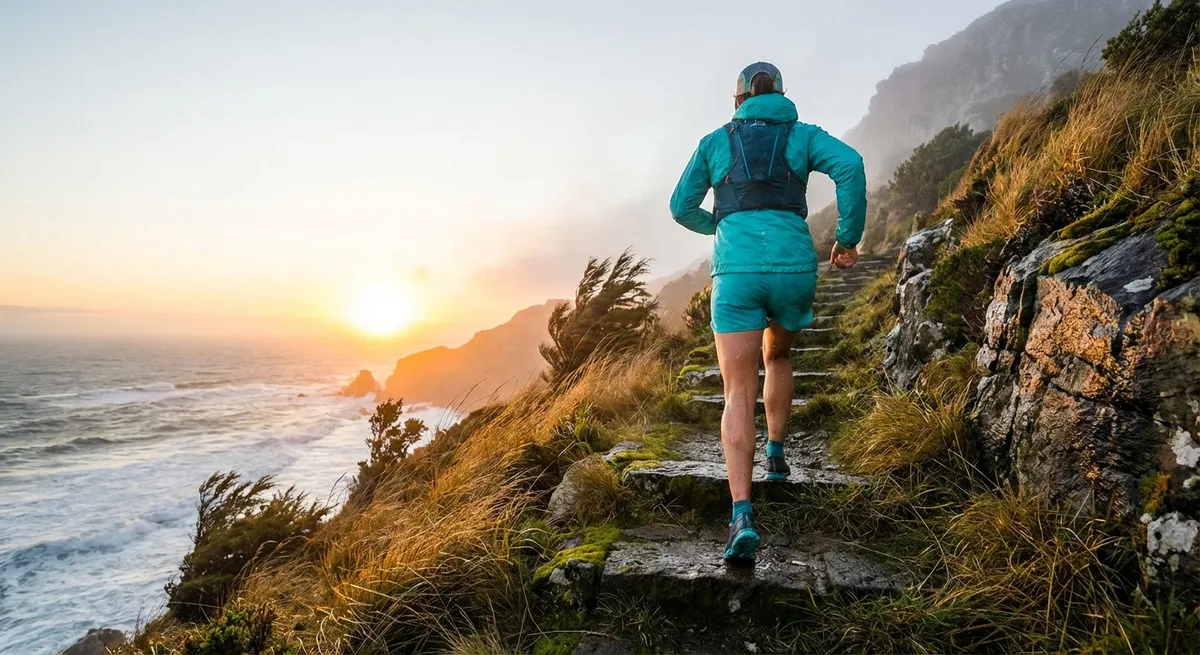
When Your Destination Is Also Your Training Partner
Some places don’t just look epic—they train you while you’re standing in awe of them. Think of destinations as personalities in your fitness story:
- Lisbon, Portugal is a city built on hills and staircases. Each viewpoint (miradouro) is a mini summit finish. Power-walk or jog between Alfama’s steep lanes and you’ve built yourself a brutal, beautiful hill session with pastel de nata as your victory prize.
- Queenstown, New Zealand is like an adventure sports playground turned up to maximum. Trail runs along Lake Wakatipu, mountain bike routes in the Ben Lomond area, and lakeside strength circuits at sunrise create days that feel like an outdoor training camp with glacier views.
- Buenos Aires, Argentina brings movement to the streets. Morning runs through Palermo’s parks, bodyweight sessions under giant trees, and late-night tango lessons transform the city into a blend of cardio, coordination, and culture.
- Chamonix, France sits in the shadow of Mont Blanc and practically dares you to move more. Hike or run balcony trails, use cable cars to access altitude training, and cool down with a stroll through alpine villages that seem pulled from a postcard.
- Kyoto, Japan rewards early risers with quiet shrine steps, forested trails leading to temples, and long, meditative walks between bamboo groves. Your heart rate rises, but so does your sense of calm—fitness and mindfulness in a single route.
In each of these places, the “workout” is inseparable from the view. Your itinerary becomes a training plan disguised as a bucket list.
Building an Itinerary That Doubles as a Training Plan
Instead of adding workouts on top of your travels, design your trip so movement is wired into every day.
Begin with your current fitness goals: building endurance, improving strength, sharpening mobility, or reclaiming consistency. Then choose destinations and activities that feed those goals. If you’re chasing endurance, countries with long-distance walking trails (like Spain’s Camino routes or the UK’s national trails) turn day-long hikes into a rhythm of forward motion. If you’re craving power and strength, cities surrounded by short but steep climbs—such as Cape Town’s Lion’s Head and Table Mountain—offer natural interval training.
Layer your days with one anchor activity that demands effort (a sunrise hike, long bike ride, coastal run, or multi-hour urban exploration on foot). Then add one low-intensity complement: a casual evening walk along the waterfront, gentle yoga in a park, or a relaxed swim where locals gather. This pattern keeps you training without tipping into exhaustion.
Think like an athlete and a traveler at the same time. Check local running or cycling clubs, see if public parks have outdoor fitness equipment, and scan maps for green belts, riverside paths, and pedestrian-only streets. The more your transportation depends on your body—walking, running, cycling, climbing stairs—the more your days quietly transform into endurance adventures.
Destination Highlights for the Adventure-Fit Traveler
Alpine Lines: The High-Heart-Rate Realm
In mountain towns like Innsbruck (Austria), Banff (Canada), or Zermatt (Switzerland), every view is uphill from somewhere. Beginner-friendly valley paths morph into steep switchbacks, while mountain huts offer natural progress markers. You can treat each hut or overlook as an interval target—hike or run hard to it, recover with a view, then repeat.
Altitude subtly turns ordinary efforts into VO₂ max work, especially for seasoned runners and hikers. But even if you’re newer to fitness, shorter, slower climbs still build powerful legs and iron lungs. On rainy days, many alpine towns have climbing gyms and wellness centers, so you can cross-train indoors and recover in saunas or hot pools.
Coastal Motion: Where Every Horizon Is a Route
Coastal regions like Amalfi (Italy), Madeira (Portugal), Byron Bay (Australia), and Big Sur (USA) invite a different rhythm. Here, your training is a blend of cliffs, sand, and sea:
- Climb endless seaside stairways that link villages or beaches.
- Use beach runs and sand sprints to tax stabilizing muscles.
- Swim in coves or along lifeguarded beaches for low-impact cardio.
- Paddleboard or kayak as upper-body strength sessions with scenery.
Ocean air, changing tides, and variable terrain keep your body guessing—and engaged.
Urban Grit: Cityscapes as Steel-and-Stone Gym Floors
In cities like Barcelona, Vancouver, Singapore, or Seoul, fitness hides in plain sight. Riverside promenades become tempo run tracks. Public staircases evolve into leg-day battlegrounds. Outdoor gyms, cycling lanes, rooftop courts, and long urban parks string together like stations in one enormous circuit.
Choose accommodation near big parks or waterfront paths and look for “green corridors” on city maps. You’ll start to see how a morning 5K can loop through markets, past monuments, and along rivers—all before breakfast. Even museum days can become walking marathons if you lean into moving between neighborhoods on foot instead of a taxi or rideshare.
5 Active Travel Tips for the Never-Sit-Still Adventurer
You don’t need a rigid training schedule to stay strong on the move. These five strategies keep the adventure high and the excuses low.
1. Treat Transit Days as Mobility Missions
Long flights, train rides, and bus journeys can leave you stiff and sluggish. Turn these “lost days” into stealth recovery sessions:
- Walk the airport before boarding; aim for a few thousand steps instead of sitting at the gate the entire time.
- Use simple in-seat mobility: ankle circles, seated figure-four stretches, neck rolls, and shoulder shrugs.
- After arrival, avoid collapsing immediately on the bed. Take a 10–20 minute walk around the neighborhood and finish with a short stretch session.
This keeps joints happy, blood flowing, and your body ready for the next big outing instead of feeling like you’ve aged a decade in one flight.
2. Pack a Minimalist “Adventure Kit”
You don’t need a portable gym—just a few items that multiply what you can do:
- Light resistance band for rows, pull-aparts, glute work.
- Mini loop band for hip warm-ups, monster walks, and lateral steps.
- Jump rope for high-intensity cardio almost anywhere.
- Travel-friendly shoes that can handle both city walks and light trails.
With these, a patch of flat ground becomes a complete training zone. Park benches become step-up platforms, railings become anchors, and hotel rooms transform into strength studios before sunrise.
3. Make “First Light” Your Fitness Window
Early hours are gold for active travelers. Streets are quieter, trails less crowded, and temperatures cooler—perfect for movement. Commit to one non-negotiable rule: earn your breakfast with motion.
Whether it’s a 20-minute stair session in a hilly neighborhood, a lakefront run, or a yoga flow on your balcony, the habit anchors your days. Even if plans change later—unexpected downpours, long dinners, or museum marathons—you’ve already logged deliberate movement. Those early sessions compound over a week into real training volume.
4. Let Local Culture Shape Your Workouts
The most memorable sessions are the ones you could only have done there.
- Join a Capoeira class in Brazil for agility, rhythm, and coordination.
- Try Muay Thai in Thailand for conditioning and striking discipline.
- Take a surf lesson in Costa Rica for balance, core strength, and mental grit.
- Learn tango or salsa in Argentina or Colombia for footwork and cardio disguised as nightlife.
You’re not just burning calories; you’re plugging into the local heartbeat. These experiences build skills, not just soreness—and they’re the stories you’ll still be telling years later.
5. Build Recovery into Your Adventure, On Purpose
Training hard in new environments is exhilarating—but so is burnout if you never switch off. Recovery doesn’t mean “doing nothing”; it means choosing gentler forms of motion and intentional rest:
- Schedule slower days with only easy walks, gentle swims, or mobility work.
- Use local wellness traditions—onsen in Japan, hammams in Morocco or Turkey, thermal baths in Hungary or Iceland—to enhance relaxation and circulation.
- Stay hydrated and prioritize sleep, especially after big hikes, long rides, or intense classes.
Think of recovery as your secret weapon for sustaining adventure. The more you respect rest, the more you can say “yes” when the trail sign or mountain peak calls your name.
Conclusion
There’s a different way to travel—one where your strongest self isn’t something you put on pause at the departure gate. From alpine ridges to coastal staircases and electric city streets, the world is rich with places that don’t just welcome your movement—they elevate it.
Let your next trip be more than a collection of photos. Let it be a living training log stamped with sunrises you chased, hills you conquered, waves you paddled through, and streets you danced down. When your journey doubles as your gym, you don’t come home with just souvenirs. You come home rewired—stronger, braver, and already plotting the next destination where your passport and pulse get to wander together.
Sources
- CDC – Physical Activity Guidelines for Adults - Overview of recommended activity levels and health benefits that underpin active travel habits
- American College of Sports Medicine – ACSM’s Global Recommendations - Evidence-based guidance on exercise, endurance, and strength that supports training while traveling
- Harvard T.H. Chan School of Public Health – Benefits of Walking - Explains why walking-heavy itineraries can significantly improve health and fitness
- U.S. National Park Service – Hiking Safety & Preparation - Practical advice for safely tackling trails and elevation in national parks and mountain destinations
- World Tourism Organization (UNWTO) – Tourism and Health - Context on how travel and physical activity intersect and why active tourism is a growing trend