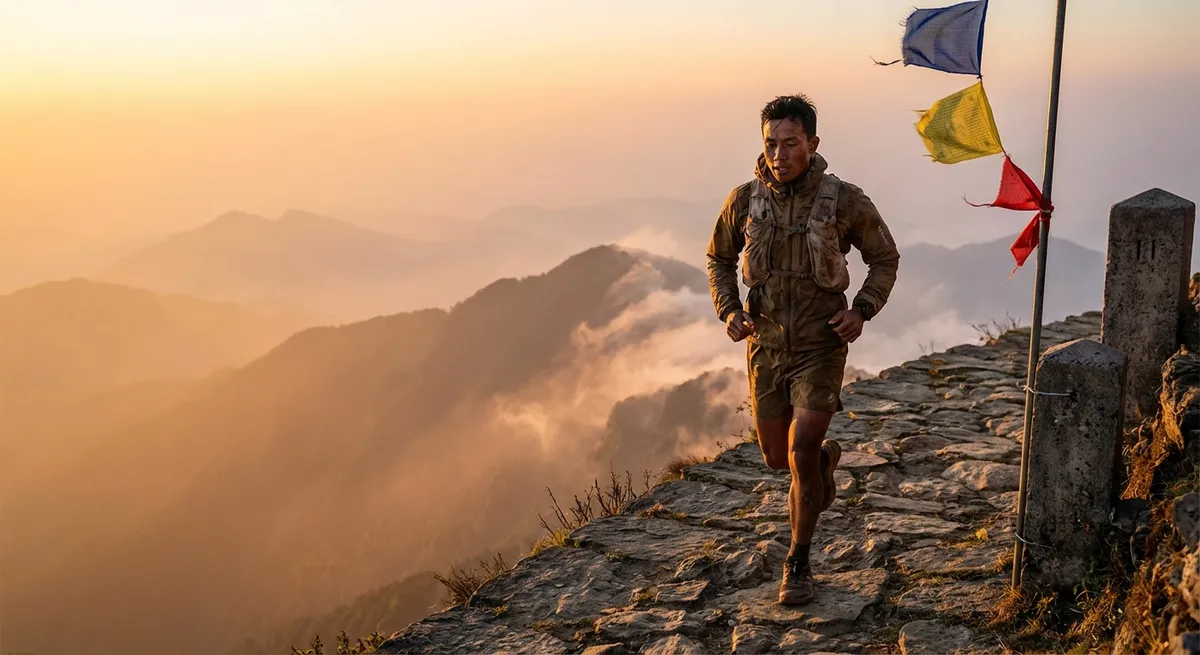
Below you’ll find five powerful active travel tips, each anchored in real destinations where your fitness and curiosity can roam wild together.
Redefine “Day One”: Land and Move With Purpose
Most travelers treat arrival day as a write-off. Adventure athletes treat it like a warm‑up lap for the trip.
Instead of collapsing into a hotel chair, lace up and give your body a chance to shake off the flight. In Lisbon, climb the cobbled hills from Baixa to the Castelo de São Jorge—your quads will wake up as the city unfurls in orange rooftops below. In Tokyo, swap a taxi for a twilight walk around the Imperial Palace loop, a favorite track for local runners, as the city lights spark to life.
This “arrival activation” doesn’t have to be an all‑out effort; think 30–45 minutes of easy, steady movement. You’re flushing out stiffness, recalibrating your internal clock with natural light, and telling your nervous system: we’re not just here to sit and scroll. The payoff: better sleep that first night, less jet lag, and a mindset locked in on movement from the moment you arrive.
Let the Landscape Choose Your Workout
You don’t need a gym when the terrain is doing the programming for you.
In Cape Town, Table Mountain is both your stair climber and your strength coach. The Platteklip Gorge trail is a relentless stone staircase that turns your glutes and calves into engines, while the summit offers flat rock slabs perfect for bodyweight circuits with a panorama of two oceans as your backdrop. In Queenstown, New Zealand, mountain biking the trails above Lake Wakatipu becomes interval training whether you planned it or not—the climbs spike your heart rate, the descents sharpen your focus and coordination.
When you arrive somewhere new, ask yourself: Is this a city of stairs? A coastline of sand? A region of ridges and valleys? Let that answer shape your training. Sand becomes resistance for sprints in Tulum at sunrise, alpine altitude becomes a natural VO₂ max booster in Chamonix, and urban parks in Berlin or Vancouver turn into your open‑air conditioning floor. You’re not forcing a routine onto a destination—you’re letting the destination design a stronger version of you.
Pack Like an Athlete, Roam Like an Explorer
The right gear turns almost any corner of the world into a training zone—without burying you under luggage.
Start with shoes: versatile trainers that can handle cobblestones in Rome, a sunrise run along Barcelona’s waterfront, and a functional workout in a tiny Airbnb living room. Add a lightweight jump rope, a pair of mini resistance bands, and a collapsible water bottle. Suddenly, a quiet courtyard in Marrakech or a balcony in Chiang Mai becomes your own micro‑gym.
Clothing matters, too. Moisture‑wicking layers make humid climbs in Hong Kong’s Dragon’s Back trail more manageable, while a packable wind shell keeps you exploring Icelandic coastal paths even when the North Atlantic breeze kicks up. By packing a “movement capsule”—a small, intentional kit—you’re never at the mercy of a hotel fitness room or the excuse of “no equipment.” Your workouts fit inside your carry‑on, and your potential expands with your baggage allowance.
Train With Locals, Not Just Beside Them
The fastest way to unlock a city’s spirit—and elevate your fitness—is to sweat in step with the people who live there.
In Rio de Janeiro, join a dawn beach workout on Copacabana, where locals string TRX straps to palm trees and sprint barefoot on the sand as the sky turns gold. In Barcelona, sign up for an outdoor calisthenics class at Parc de la Ciutadella, using the public bars and benches alongside street workout regulars who treat the park as their personal performance stage. In Bali’s Canggu, drop into a surf‑strength class before paddling out to ride the waves that just torched your shoulders.
Look for local running clubs on social apps, drop‑in classes at climbing gyms in places like Seoul or Munich, or community yoga flows in parks from San Francisco to Sydney. You’ll discover trails you never would have found alone, pick up technique tips that shave time off your efforts, and gain a sense of belonging that turns an unknown city into a home gym with a heartbeat.
Turn Every Itinerary Into a Movement Map
Your trip plan is more than a schedule—it’s a training blueprint in disguise.
Instead of stacking back‑to‑back museum visits with long taxi rides in between, design your days around active transit. In Amsterdam, stitch together canals, markets, and galleries by bike, turning easy pedaling into a full day of low‑intensity cardio. In Kyoto, link temples and shrines with walking routes that take you through bamboo forests and up gentle hills, converting sightseeing into sustained movement.
Build in “anchor efforts” a few times per week: a pre‑dawn run up to Montjuïc in Barcelona before the city wakes, a half‑day hike along the Cinque Terre paths in Italy, or a paddleboarding session on Vancouver’s English Bay to cap off a day of exploration. Layer micro‑sessions around them—10 minutes of mobility while you wait for laundry, stair sprints up your guesthouse steps, balance drills on a quiet pier.
Over a week, these choices stack. What could have been an inactive vacation becomes a training block disguised as the best trip of your year—miles walked, hills climbed, bodies of water crossed, all logged without a single treadmill screen.
Conclusion
Adventure fitness isn’t about chasing the most extreme feat; it’s about choosing movement every time the journey gives you the option. When you land and move with purpose, let landscapes choose your workouts, pack like an athlete, train with locals, and treat your itinerary as a movement map, you don’t just collect stamps—you collect strength, stamina, and stories carved into your muscles.
Your passport is already a ticket. The rest is up to how fiercely you’re willing to move through the world.
Sources
- World Health Organization – Physical Activity Guidelines - Overview of recommended activity levels and health benefits of regular movement
- U.S. Department of Health & Human Services – Physical Activity Guidelines - Evidence-based recommendations supporting active lifestyles at home and while traveling
- Harvard T.H. Chan School of Public Health – Benefits of Physical Activity - Research-backed insights on how consistent activity improves overall health and longevity
- CDC – Travel Health: Staying Healthy While You Travel - Practical strategies for staying healthy and active during trips
- American Council on Exercise (ACE) – Portable Workout Equipment Guide - Recommendations for lightweight, travel-friendly fitness gear