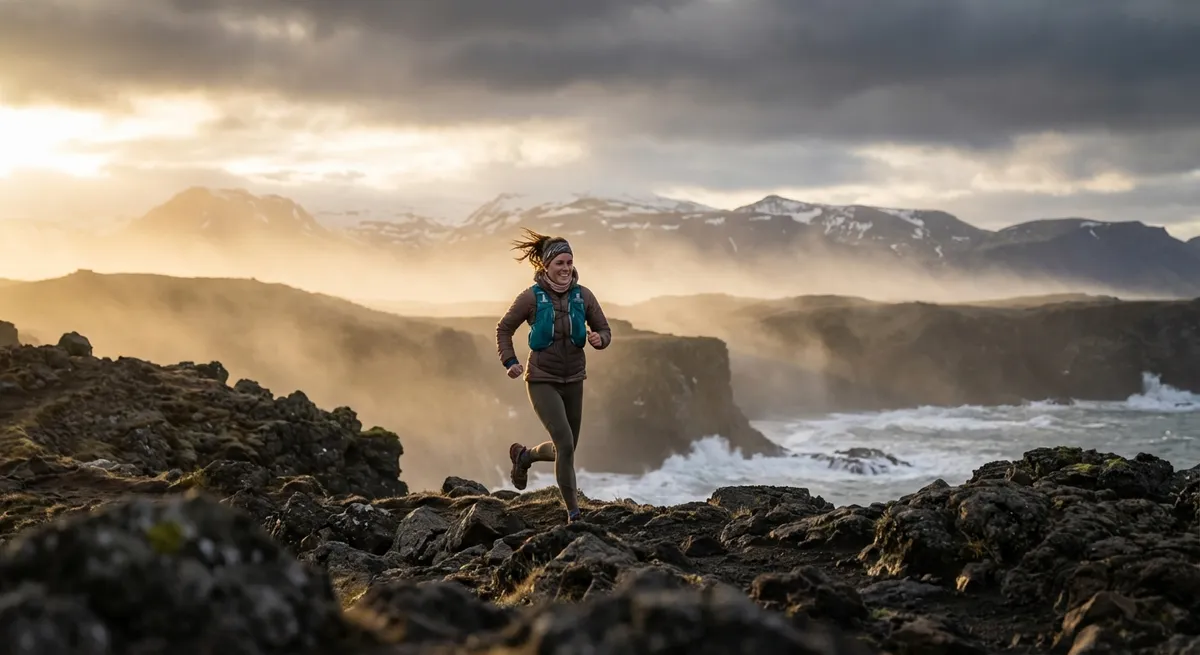
Welcome to the kind of travel where your memories are measured in elevation gained, trails conquered, and sunrises earned.
Why Active Travel Hits Different
Active travel is more than an itinerary—it’s a reset button. When you trade tour buses for bike pedals or walkways for ridgelines, you experience places with a kind of intensity you just can’t get behind glass.
Your senses switch on: the burn in your legs hiking above Innsbruck, the salty air in your lungs during a sunrise run along Rio’s Copacabana, the drum of your heartbeat as you paddle across Norway’s mirror-flat fjords. These moments hardwire themselves into your memory because your body is fully involved in the story.
Physically, active travel boosts cardiovascular health, improves mood, and helps counter the usual “vacation sluggishness.” Mentally, it cuts through travel fatigue and jet lag, anchoring your brain in the present moment. Instead of coming home feeling like you need a vacation from your vacation, you return stronger, clearer, and more grounded.
And the best part? You don’t need to be an ultra-athlete. Active travel is a spectrum—from city walking safaris and coastal cycling to summit pushes and multi-day treks. You choose the dial. The world provides the playground.
Destination Highlights for the Movement-Obsessed
From city streets to high-altitude passes, some destinations practically beg you to lace up and move. Here are a few to spark your next Fit Voyaga escape:
1. Dolomites, Italy – Stairway to the Sky
Jagged limestone spires, via ferrata routes with iron ladders, and high-altitude meadows make the Dolomites a dream for hikers and climbers. You can string together hut-to-hut journeys, waking up above the clouds, quads singing from steep ascents and descents. Afternoons mean refueling on hearty alpine cuisine before chasing another ridge.
2. Queenstown, New Zealand – Adrenaline Capital
If your training thrives on adrenaline, Queenstown is your arena. Trail runs along Lake Wakatipu, lung-busting hikes up Ben Lomond, mountain biking through pine forests, and then, if you dare, bungee jumps or canyon swings as your “cool-down.” This is where your comfort zone goes to get redefined.
3. Kyoto, Japan – Mindful Miles
Kyoto offers an entirely different style of active travel: slow, deliberate, and deeply present. Run or walk through bamboo forests in Arashiyama at sunrise, cycle along the Kamo River, then climb the endless red torii gates at Fushimi Inari. Your movement becomes a moving meditation—equal parts sweat and serenity.
4. Patagonia, Chile & Argentina – End-of-the-World Endurance
Towering granite peaks, roaring winds, and vast glaciers turn every hike here into an epic. The W Trek in Torres del Paine or day hikes around El Chaltén test endurance, pack-carrying strength, and mental grit. When the clouds part and the peaks ignite in pink and gold, you remember exactly why you came.
5. Vancouver, Canada – Mountains, Ocean, Momentum
Few cities make it easier to stay active. Start with a seawall bike ride around Stanley Park, then climb the Grouse Grind (“Nature’s StairMaster”) or trail run in the North Shore mountains. Paddleboarding at sunset ties strength training and balance drills to shimmering water and distant snow-capped peaks.
5 Active Travel Tips for Fitness Adventurers
You’re already wired for movement; these tips help you channel that energy into unforgettable, sustainable adventure.
1. Train for the Terrain, Not Just the Trip
Don’t just “get in shape”—get in destination-specific shape.
If you’re heading to the Dolomites or Patagonia, prioritize hill repeats, step-ups with a weighted pack, and long walks or hikes on uneven terrain. For bike-centric trips—say, coastal rides in Portugal or island hopping in Croatia—build up to back-to-back riding days with moderate mileage. Urban explorers focusing on cities like Lisbon or Istanbul can emphasize walking volume, stair workouts, and core strength to handle long days on foot.
Match your training to the elevations, surfaces, and distances you’ll face. That way, when you arrive, your body can handle the demands and your mind can fully enjoy the views instead of counting down the minutes until it’s over.
2. Let “Active First” Shape Your Itinerary
Instead of tacking workouts onto a sightseeing plan, flip the script: design your days around movement.
- In coastal towns, plan a sunrise run along the waterfront before cafes open.
- In mountain regions, build your day around a summit hike with photo or picnic breaks intentionally scheduled at viewpoints.
- In cities, create “movement loops”: walkable or bikeable routes connecting parks, markets, viewpoints, and neighborhoods.
If you’re short on time in a place like Vancouver or Cape Town, choose one anchor activity (a big hike, a long paddle, a trail run) and let everything else orbit around that. Meals, coffee stops, and sightseeing become well-earned bonuses—not distractions from your training.
3. Pack Like a Minimalist Athlete
You don’t need a full home gym in your backpack—just the right tools.
Prioritize:
- Versatile footwear: One pair of trail-to-town shoes that can handle city streets and light trails; if your trip is hike-focused, then add a dedicated pair of hiking boots or shoes.
- Lightweight training gear: A mini resistance band, a compact jump rope, or a light suspension trainer can turn hotel rooms, parks, or beach fronts into instant workout zones.
- Fast-drying clothing: Moisture-wicking layers that dry overnight so you can rewear them on multi-day adventures.
- Supportive extras: A collapsible water bottle, electrolytes, and a small first-aid kit for blisters, scrapes, and muscle soreness.
Every item should earn its place by doing double duty—training and travel. The goal is to be nimble, not weighed down.
4. Treat Recovery as Part of the Adventure
When you travel actively, recovery is not a luxury; it’s survival—and it can be just as memorable as the hard efforts.
Use your destination’s culture and landscape to support your recovery:
- In Japan, soak in an onsen (hot spring) after long days exploring trails and temples, letting warm mineral water ease your muscles.
- In Nordic countries, alternate sauna sessions with cold plunges in lakes or the sea to help circulation and reduce soreness.
- In coastal or riverside areas, end your day with gentle shoreline walks or easy swims to flush tired legs.
Keep a simple recovery routine: light stretching or yoga in the morning or evening, consistent hydration, and at least one “lighter” activity day on longer trips. You’ll go further, feel better, and avoid burning out halfway through your journey.
5. Anchor Your Days Around One Intentional Move
Travel can get chaotic—delayed trains, weather shifts, irresistible pastries. Instead of chasing a perfect training week, set one daily non-negotiable movement anchor.
Examples:
- 20–30 minutes of bodyweight mobility and strength every morning before you leave your room.
- A daily 5–8 km walk/run exploration loop from your accommodation, no matter where you are.
- 10 minutes of stair climbing in cities (hotel stairs, public stairways, or uphill streets) to keep your legs honest.
This anchor ensures you keep your fitness thread running through the trip without strangling the spontaneity that makes travel magical. If you add a big hike, ride, or paddle on top? That’s a bonus, not a burden.
Weaving Fitness Into the Story of Your Travels
Active travel isn’t about chasing the most extreme challenge; it’s about choosing to participate fully in the places you visit. It’s feeling the gradient of a city in your calves, the altitude of a mountain in your lungs, the texture of a coastline in your stride.
You’ll come home with more than souvenirs. You’ll bring back a recalibrated sense of what your body can do, a deeper connection to the landscapes you moved through, and a mental highlight reel filled with moments you didn’t just watch—you earned.
Pack your curiosity, your grit, and your favorite pair of shoes. The world is waiting, and it wants to see what you’re made of—one kinetic journey at a time.
Sources
- Centers for Disease Control and Prevention – Physical Activity and Health - Overview of the health benefits of regular physical activity, relevant to active travel training
- Harvard T.H. Chan School of Public Health – Physical Activity Guidelines - Explains how different types of movement support long-term health and endurance
- American College of Sports Medicine – Preparing for Activity - Practical guidance on building up to sustained activity, helpful for trip preparation
- Travel Alaska – Outdoor Adventure & Responsible Travel - Example of how destinations frame outdoor activities and safety considerations
- National Park Service – Hiking Safety Tips - Evidence-based advice for safe and effective hiking, applicable to many active travel adventures