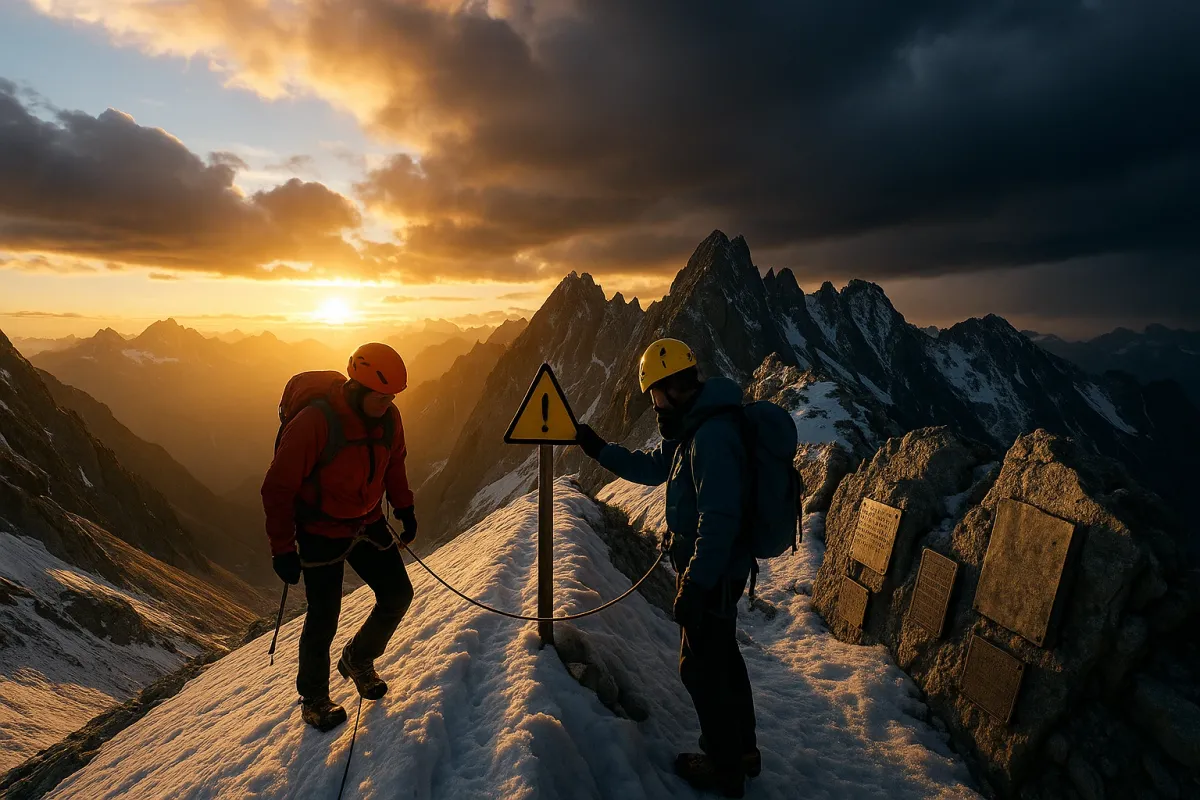
A chilling story out of Austria has shaken the global hiking and climbing community. Officials finally identified 33‑year‑old Kerstin Gurtner, who was abandoned by her boyfriend on Austria’s highest peak, Großglockner, and later died from exposure. He now faces negligent homicide charges. It’s the kind of story that makes every adventure traveler pause: where is the line between “pushing your limits” and “crossing into danger”—and how do we make sure our epic days in the mountains don’t turn into headlines?
This isn’t about fear. It’s about stepping into every alpine sunrise and ridgeline run stronger, smarter, and more fiercely committed—to your own life and to the people you travel with. If you dream in contour lines and live for the burn in your legs on a climb, these active‑travel principles are your new non‑negotiables.
Build A “No One Left Behind” Pact Before You Hit The Trail
The Großglockner tragedy is a stark reminder that who you travel with can be as important as the route you pick. Before you lace up your boots in the Alps, the Rockies, or the Himalayas, create a clear, spoken pact with your group: no one gets abandoned, ever. If someone is struggling—altitude, cold, fatigue—the entire plan adjusts to protect the most vulnerable member.
On demanding routes with exposure and harsh weather, this pact isn’t just emotional support; it’s a survival strategy. Decide in advance what you’ll do if conditions deteriorate: who leads, who monitors pace, when you turn back, what’s “non‑negotiable danger” (whiteout, severe wind, visible hypothermia signs). Practice hiking or trail running together on smaller objectives before committing to big summits like Großglockner, Mont Blanc, or Kilimanjaro. The strongest athlete in the group isn’t the one who goes the fastest—it’s the one who’s mentally prepared to slow down, share weight, or call it off so everyone comes home.
Train For The Mountain You’re Climbing, Not The One In Your Imagination
Photos of Austria’s snow‑capped giants or Peru’s high passes can make anyone feel invincible from the comfort of a couch. But high‑altitude, cold‑weather travel is brutal on an underprepared body. Kerstin’s story underscores how quickly fatigue and cold can turn deadly when you’re above treeline.
Start training at least 8–12 weeks before a serious alpine trip. If you’re heading to peaks like Großglockner (3,798 m), focus on three pillars: endurance (long hikes or runs with elevation gain), strength (loaded step‑ups, lunges, core work), and resilience (back‑to‑back training days to simulate multi‑day efforts). Add a pack and gradually increase weight until you’re comfortable carrying what you’ll need in the mountains. If you don’t live near elevation, use stairwells, treadmills with incline, or hill repeats. Then layer in “cold exposure practice” where it’s safe: short runs or hikes in winter conditions with all your gear so you know how your body and mind react when the wind bites and visibility drops. The mountain you respect in training is the mountain that will respect you back.
Treat Weather And Turn‑Around Times As Sacred, Not Suggestions
On high peaks across Europe, from Großglockner to the Zugspitze, guides and rescue teams repeat the same mantra: “The summit is optional. Returning is mandatory.” Yet many accidents happen because people cling to summit fever, pushing on despite warnings—fatigue, incoming storms, plummeting temperatures.
Before every active travel mission—be it a glacier hike in Austria, a volcano run in Guatemala, or a winter trek in Japan—lock in a turn‑around time based on daylight, forecast, and your slowest group member. If you hit that time and you’re not in a safe position to continue, you turn back—no debate. Check multiple forecasts (local alpine services, hut wardens, national mountain rescue sites) and assume things can change faster than predicted at altitude. Pack as if the worst version of the forecast will happen. When clouds slam into peaks like Großglockner, wind chill can dive, visibility can vanish, and navigation becomes a life‑or‑death game. The most seasoned adventurers aren’t the ones who got “lucky”; they’re the ones who practiced disciplined retreat, again and again.
Pack For Survival, Not Just For Instagram
A lot of viral alpine photos hide a harsh reality: people stepping into true high‑risk environments in city sneakers, cotton hoodies, and zero backup. In Kerstin’s case, exposure and freezing temperatures were fatal. Cold does not care how fit you are; it cares how prepared you are.
For any serious mountain or winter trek, build a non‑negotiable kit: insulating layers (base, mid, and waterproof shell), hat and gloves, emergency bivy or space blanket, headlamp with extra batteries, high‑energy snacks, and at least one hot drink in a thermos if conditions warrant it. On glaciated or technical routes, that kit scales up to crampons, ice axe, helmet, and harness—ideally with a certified local guide if you’re new. Practice using every piece before your trip so when the wind picks up on a ridge in the Austrian Alps or the Patagonian Andes, you’re not fumbling with frozen fingers and unfamiliar gear. Remember: the photo lasts a second. The decisions you make about gear can determine the rest of your life.
Choose Courage Over Ego: Make Turning Back Part Of Your Adventure Story
Negligent homicide charges in the Großglockner case are a brutal reminder that indecision—or worse, selfish decision‑making—at altitude has consequences far beyond the summit log. For active travelers, this is a call to rewrite what “bravery” looks like. It’s not macho posturing at 3,500 meters. It’s calling out danger, even when the group is hyped. It’s saying, “We’re done for today,” and owning that choice.
Before you set off on any big trek or climb—whether that’s an Austrian four‑thousand‑meter giant, Nepal’s high passes, or Colorado’s winter fourteeners—define your personal red lines: numb hands that won’t rewarm, uncontrollable shivering, confusion, sudden dramatic fatigue, rapidly closing weather. Tell your partner or group your lines and invite them to share theirs. Then make a pact to honor those lines without judgment. When you get back to the valley—hot shower, warm meal, lungs still full of mountain air—you’ll realize something powerful: the most meaningful adventures aren’t the ones where you scared yourself the most; they’re the ones where you came back wiser, closer, and fiercely alive.
Conclusion
The identification of Kerstin Gurtner and the charges against her boyfriend are more than a tragic news story from Austria’s highest peak—they’re a flare in the sky for every trail runner, mountaineer, and adventure traveler who chases altitude for joy. The mountains will always be wild. That’s why we go. But wild doesn’t have to mean reckless.
As you plan your next summit—from snowy Großglockner to the sunlit spines of your local range—carry this with you: adventure is not about how far you can push past your limits; it’s about how deeply you can honor them, and how fiercely you protect the people who trust you with their journey. Move your body, chase the horizon, climb high—but write a story where every ending is the same: everyone comes home.