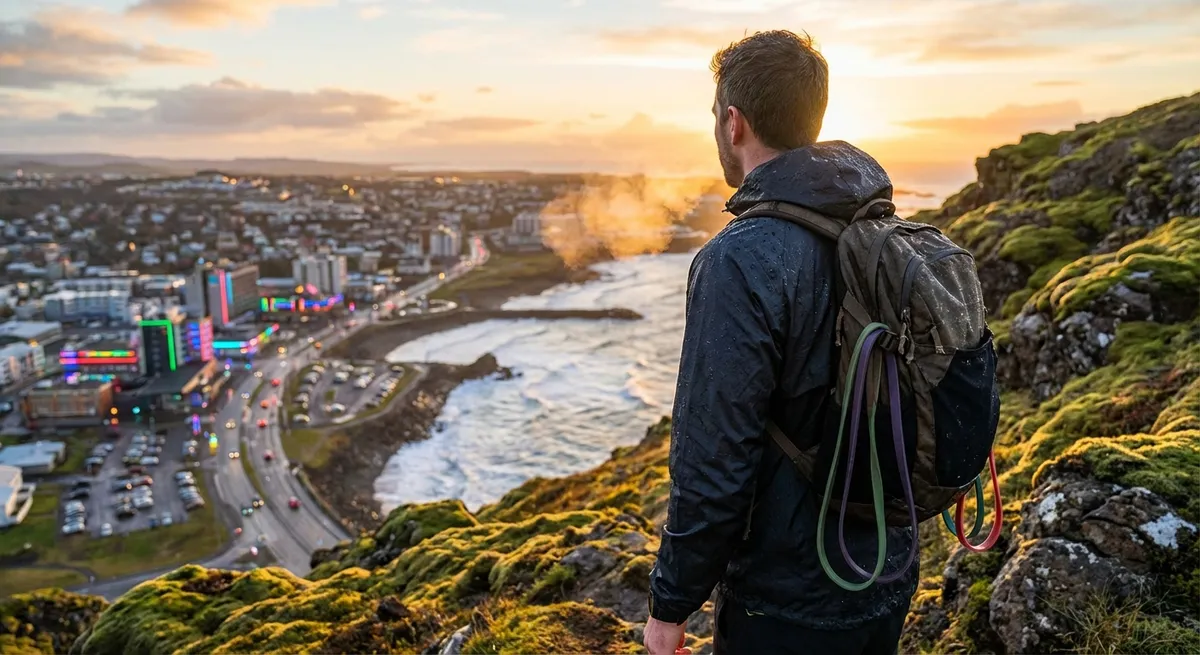
Why Active Travel Feels So Electric
When you move your body in a new place, everything is amplified: the colors, the sounds, the effort. Your heart rate spikes while your senses do too. That sunrise jog along Barcelona’s waterfront isn’t just cardio—it’s an immersion in sea breeze, street music, and the hum of a waking city. A steep stair climb in Istanbul isn’t just about quads; it’s the rhythm of history under your feet.
Active travel taps into something primal. Humans are built to explore on foot, to climb, to swim, to roam. When you pair movement with exploration, your workouts stop feeling like tasks and start becoming stories. You remember the hill in Cape Town that set your lungs on fire, the glacial lake in Banff that chilled your post-hike dip, the alleyways in Kyoto that turned a simple walk into an unfolding maze of shrines and tea houses. Fitness becomes a passport stamp in your own muscles.
Destination Highlights for the Movement-Obsessed
Think of the world as a vast, living circuit workout—each region offering its own flavor of movement:
- Alps, Europe – High-altitude hiking, trail running, and mountain biking with panoramic ridgelines, alpine lakes, and villages where you can refuel with hearty local food. The elevation turns every climb into a leg and lung test.
- Queenstown, New Zealand – Known as the adrenaline capital, you can pivot from lakeside runs to canyon swings, bungee jumps, and epic day hikes. The terrain keeps your training playful and your courage dialed up.
- Cusco & Sacred Valley, Peru – Walk ancient Incan paths, train your lungs at altitude, and let the stone steps of historic sites double as your interval routine. Every ascent offers a blend of culture and conditioning.
- Norwegian Fjords – Hike towering cliffs, kayak glassy waters, or cycle coastal roads that weave between mountains and sea. The landscape pulls you outdoors whether you feel like it or not.
- Cape Town, South Africa – Trail runs up Lion’s Head, hikes on Table Mountain, surf sessions in Muizenberg, oceanside bike rides along Chapman’s Peak. Mountains meet ocean, and your training toggles between waves and rock.
These aren’t just backdrops—they’re training partners. Each place pushes you differently: altitude, terrain, climate, and culture all shape how you move.
5 Active Travel Tips for Fitness Adventurers
1. Pack Like an Athlete, Think Like an Explorer
Your gear should be light enough to roam, but intentional enough to keep you moving. Instead of stuffing your bag with “just in case” outfits, build around movement:
- Quick-dry, versatile shorts and tops that can handle both a café stop and a trail.
- One pair of reliable, multi-purpose trainers that work for runs, gym sessions, and city exploration.
- Lightweight resistance bands or a compact jump rope to create instant workouts in small spaces.
- A collapsible water bottle and small daypack for spontaneous hikes or long walks.
Travel becomes more adventurous when your bag is ready for detours—like ditching the taxi for a 30-minute power walk across the city or saying yes to a last-minute bike tour.
2. Let Your Itinerary Double as Your Workout Plan
Instead of forcing “gym time” into your trip, design your days so movement is built in:
- Swap short transit rides for walking or cycling between attractions.
- Choose accommodations within running or walking distance to parks, waterfronts, or trails.
- Plan at least one movement-based experience per stop: a morning hike, a stand-up paddle session, a walking food tour, or a local dance class.
Treat your destination as a giant playground. That means you can skip the guilt of missed traditional workouts—your “training” is baked into your adventure, often without you even noticing.
3. Train Smart With the Terrain, Not Against It
Every location has its own “natural gym.” Lean into it:
- In coastal towns, use long beachfronts for sunrise runs, sand sprints, and bodyweight sessions.
- In hill-heavy cities like Lisbon or San Francisco, turn staircases and steep streets into your leg-day challenge.
- In forest or mountain regions, let hikes become your long endurance days, with stops for push-ups, planks, or squats at scenic viewpoints.
Instead of trying to replicate your exact gym routine, adapt it. Your body loves variety: uneven paths build stabilizing muscles, hills demand power, and long active days boost stamina in ways the treadmill can’t.
4. Keep Recovery Sacred—Even On the Road
Adventure is addictive, and it’s tempting to stack your days with nonstop exertion. But performance (and enjoyment) skyrockets when you respect recovery:
- Prioritize sleep by using earplugs, an eye mask, and a consistent wind-down ritual—even if your time zone changes.
- Stretch or do 5–10 minutes of mobility work at night to reset muscles after long flights, hikes, or walking-heavy days.
- Stay hydrated and mix in electrolyte-rich drinks, especially at altitude or in hot, humid destinations.
- Schedule at least one lighter day for casual strolling, gentle yoga, or a slow bike ride so your body can adapt and recharge.
You’re not just collecting experiences—you’re building a durable engine for many trips to come. Recovery is how you protect that.
5. Anchor Each Trip With a Personal “Movement Mission”
Give your journey a physical goal that excites you more than any souvenir:
- Summit one meaningful peak, like a volcano in the Azores or a ridge in the Dolomites.
- Run a short local race or park run in a country you’ve never visited.
- Learn a place-specific skill: surfing in Portugal, rock climbing in Thailand, or Nordic skiing in Finland.
- Walk the length of a city’s riverfront or complete a multi-day hut-to-hut trek.
When you attach a mission to your travels, your training before the trip gains purpose, and every day on the road feels like a step toward something bold. The goal doesn’t have to be extreme—just meaningful enough that you’ll remember the effort years from now.
Crafting Your Own Legend of Motion
Active travel is more than a style of vacation; it’s a mindset. It’s choosing stairs over elevators in a medieval town, taking the long way through a new neighborhood just to see what’s around the bend, and saying “yes” when the trail, tide, or skyline silently invites you out.
You don’t need perfect fitness to start. You need curiosity, a pair of shoes, and a willingness to let your heart rate rise along with your sense of wonder. Somewhere out there is a ridgeline you haven’t climbed, a boardwalk you haven’t sprinted, a coastline you haven’t cycled.
Let your next trip be the one where your memories aren’t just photos on a screen but strength in your legs, confidence in your lungs, and stories etched into every mile.
Sources
- CDC – Physical Activity and Health – Overview of health benefits linked to regular physical activity
- Harvard T.H. Chan School of Public Health – Benefits of Physical Activity – Evidence-based insights on how movement supports long-term health
- American Council on Exercise – Fitness on the Road: Staying Active While Traveling – Practical strategies for maintaining fitness routines away from home
- UNWTO – Tourism and Adventure Travel – Background on the growth and characteristics of adventure and active tourism
- National Park Service – Hiking Tips – Safety and preparation guidance for hikes and trail-based activities