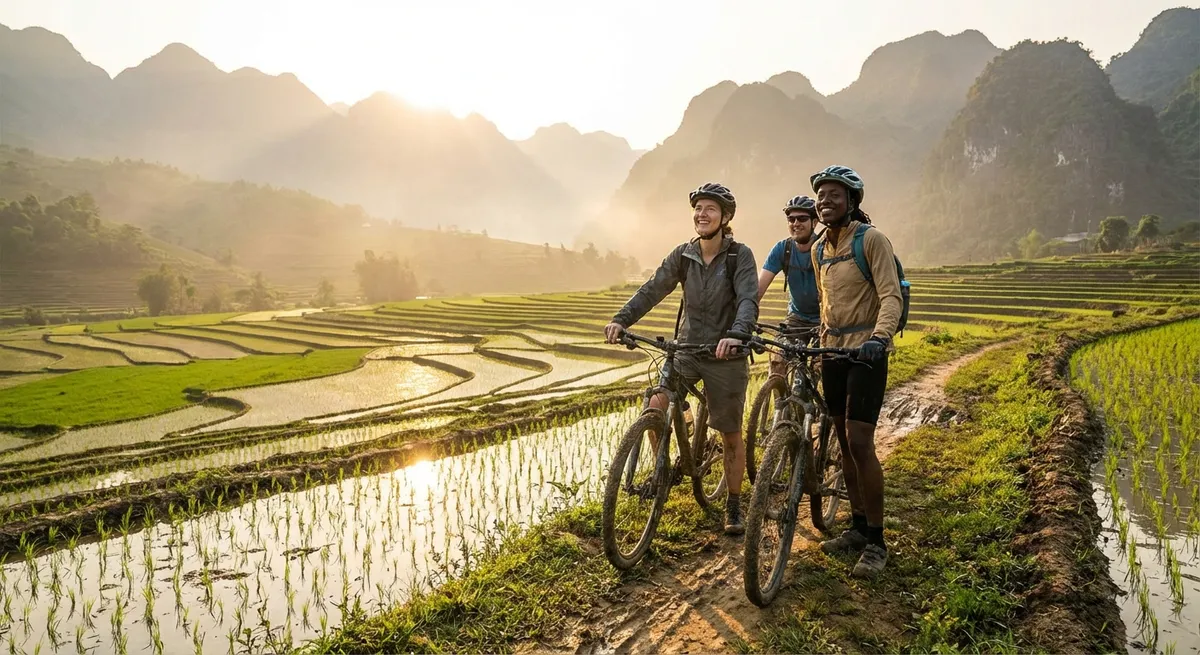
This guide will show you how to turn any trip into a moving adventure, with five powerful tips for fitness-focused travelers and destination ideas to spark your next escape.
Turn Your Itinerary Into a Movement Map
Most itineraries are built around restaurants and landmarks. Flip the script: build yours around routes, elevation, and elements.
Start with a map and look for natural features—rivers, coastlines, hills, parks, and long boulevards. In Paris, that might be a dawn run along the Seine and bodyweight circuits in the Tuileries. In Cape Town, it could be a morning trail up Lion’s Head and an afternoon ocean swim at Camps Bay. Think in “movement windows”: a 30–60 minute block in the morning, one in the afternoon, and bonus time at sunset.
Walk whenever you can, and use public transit to extend your range instead of replacing your steps. In cities like Tokyo, London, and New York, hopping off the subway a few stops early turns your commute into a purposeful urban hike. Treat every transfer, layover, and stroll as an opportunity to move more—and you’ll finish your trip with a deeper sense of place than any bus tour could offer.
Tip 1: Train With the Terrain, Not Against It
Every destination has a natural “training personality.” Instead of forcing your usual gym routine, let the landscape design your workout.
- Mountain towns (e.g., Innsbruck, Queenstown, Banff): Embrace hiking, trail running, and stair climbing. That steep alley? That’s your hill sprint. Those gondola-access trails? Your downhill quad test.
- Coastal escapes (e.g., Oahu, Algarve, Gold Coast): Blend beach runs, open-water swims, surfing lessons, and soft-sand strength work. Running on sand challenges stabilizers you forgot you had.
- Historic hill cities (e.g., Lisbon, Valparaíso, Dubrovnik): Turn endless steps and cobblestone climbs into a legs-and-lungs festival. Power walk every incline, jog the flats, use plazas for push-ups and core.
- Forest and lake regions (e.g., Lake Bled, Canadian Rockies, Finnish Lakeland): Paddle, hike, cycle, and practice outdoor yoga on docks or clearings for balance and breath.
Match your effort to altitude, heat, and humidity. Higher elevation (like Cusco or La Paz) demands slower pacing and more hydration. Tropical heat (like Bali or Costa Rica) asks for earlier starts and plenty of shade. Training with the environment means better performance, fewer injuries, and richer memories.
Tip 2: Pack a “Micro-Gym” That Fits in Your Daypack
You don’t need a trunk full of gear to stay strong on the road. A minimalist “micro-gym” can turn any hotel rooftop, lakeside pier, or quiet courtyard into a training zone.
Consider packing:
- A light resistance band for rows, presses, and hip work
- A mini loop band for glute activation and leg strength
- A compact jump rope for quick conditioning sessions
- A collapsible water bottle that doubles as a light weight when full
- A travel yoga mat or towel for grip and comfort
With these, you can create full-body circuits in tiny spaces: band rows anchored to a rail on a balcony in Santorini, squat and lunge variations in a Kyoto garden, core work on a dock in the Norwegian fjords. Aim for 15–30 minutes, 3–5 times per week. These micro-sessions keep your strength and mobility topped up so you can fully enjoy the bigger, more epic adventures outside.
Tip 3: Let Local Culture Shape Your Movement
Some of the best active experiences are hidden inside local traditions. Instead of searching only for “gyms near me,” look for movement that locals love.
- In Seoul, join sunrise hikers heading up Bukhansan or Namsan; mountain walking is part of everyday life.
- In Rio de Janeiro, try a beach volleyball game on Copacabana or Ipanema; you’ll get cardio, agility, and instant community.
- In Copenhagen or Amsterdam, rent a bike and move like the locals on two wheels, exploring canals, markets, and waterfronts.
- In Bali or Tulum, join sunrise or sunset yoga on the beach; it’s as much about the atmosphere as the asanas.
- In Zurich or Munich, swim in rivers and city lakes in summer; it’s normal to see commuters with swim bags and goggles.
Ask your host, hotel staff, or barista: “How do people here stay active?” Their answers might lead you to a local running club, a park workout group, a community dance class, or a weekly group hike. You’ll leave with a stronger body and a deeper sense of how movement is woven into everyday life around the world.
Tip 4: Use Adventure as Your Training Goal
Instead of thinking, “How do I fit workouts into my trip?”, flip it to: “What adventure do I want this trip to prepare me for?”
Choose a destination and give yourself one marquee challenge:
- Trek the Laugavegur Trail in Iceland or the Tour du Mont Blanc in Europe
- Cycle a section of Portugal’s Atlantic Coast or California’s Pacific Coast Highway
- Paddle a multi-day route in Sweden’s archipelago or Canada’s lake country
- Complete a hut-to-hut hike in New Zealand’s South Island
- Sign up for a destination race—a half marathon in Valencia, a triathlon in Noosa, or a trail event in Chamonix
Once you commit, your entire trip becomes a celebration of preparation. Short city runs become tune-ups, beach swims become confidence builders, and every stair climbed is a rehearsal. You’re not just “staying fit while traveling”—you’re living out the training you’ve been doing for months.
This goal-oriented approach also helps you prioritize: you’ll naturally say yes to early nights, nutrient-dense meals, and extra mobility work when you know there’s a mountain, finish line, or crossing with your name on it.
Tip 5: Recover Like an Athlete, Explore Like an Adventurer
Active travel can push your body harder than your normal routine—especially if you’re walking 20,000+ steps a day and layering on hikes, swims, or rides. Recovery isn’t a luxury; it’s what keeps you exploring day after day.
Build recovery into your adventure:
- Sleep first: Protect 7–9 hours whenever possible. That sunrise hike in Patagonia feels a lot better when you aren’t running on fumes.
- Hydrate constantly: Long flights, heat, and altitude all dehydrate you. Carry a bottle and make water your travel default.
- Stretch in transit: Use layovers and train rides to mobilize hips, ankles, and spine. Think lunges, calf stretches, and gentle twists.
- Refuel with local whole foods: Mediterranean destinations shine with olive oil, fish, and vegetables; Southeast Asia offers fresh fruit and lean proteins; Central America brings you beans, rice, and plantains.
- Use rest days as “slow days”: Trade peak hikes for gentle walks through markets in Marrakech, museum-hopping in Vienna, or thermal bath soaks in Budapest.
Listen closely: if your legs feel like concrete in the Dolomites or your heart rate is unusually high in Cusco, dial back. The aim of active travel is to finish your trip more energized and inspired—not burned out on day three.
Destination Sparks: Where the World Becomes Your Training Partner
Need ideas to match your next fitness mood?
- For trail chasers:
Explore the Pyrenees between Spain and France, hop between alpine villages in Switzerland, or tackle the Cinque Terre trails in Italy with cliffside views and stair-filled villages.
- For water lovers:
Island-hop in Greece with sunrise swims and SUP sessions, kayak Norway’s fjords, or surf and snorkel your way down Australia’s East Coast.
- For city explorers:
Run the waterfront loops in Vancouver, climb the viewpoints of Lisbon, or stair-sprint your way up to viewpoints in Hong Kong, then soothe your legs with night markets and street food.
- For culture + cardio fans:
Cycle the temple routes around Angkor in Cambodia, walk the Camino routes in Spain at your own pace, or jog past monuments at dawn in Rome before the crowds arrive.
Wherever you go, ask one question as you plan: “How can I feel this place in my lungs, my legs, and my heartbeat?” That’s the spirit of active travel.
Conclusion
The world doesn’t have to be a backdrop to your fitness—it can be your co‑coach, your training partner, and your biggest source of motivation. When you turn streets into tracks, trails into classrooms, and coastlines into swimming lanes, every journey becomes a chance to test yourself, surprise yourself, and return home a little stronger than you left.
Pack your micro-gym, choose terrain that excites you, move like the locals, anchor your trip to a bold adventure, and recover like the athlete you are. Your passport will fill with stamps, your camera with views—but your body will carry the deepest proof that you were truly there.
The next chapter of your training isn’t in a gym. It’s out there—where your next boarding pass leads.
Sources
- U.S. Centers for Disease Control and Prevention – Physical Activity Guidelines - Overview of recommended weekly activity levels and benefits for adults
- World Health Organization – Physical Activity Fact Sheet - Global guidance on physical activity and its impact on health
- Harvard T.H. Chan School of Public Health – Staying Active While Traveling - Practical strategies and health context for movement on the road
- National Park Service – Hiking Tips - Safety, preparation, and hydration advice for trail-based adventures
- American College of Sports Medicine – Hydration and Physical Activity - Evidence-based recommendations for staying hydrated during exercise and travel