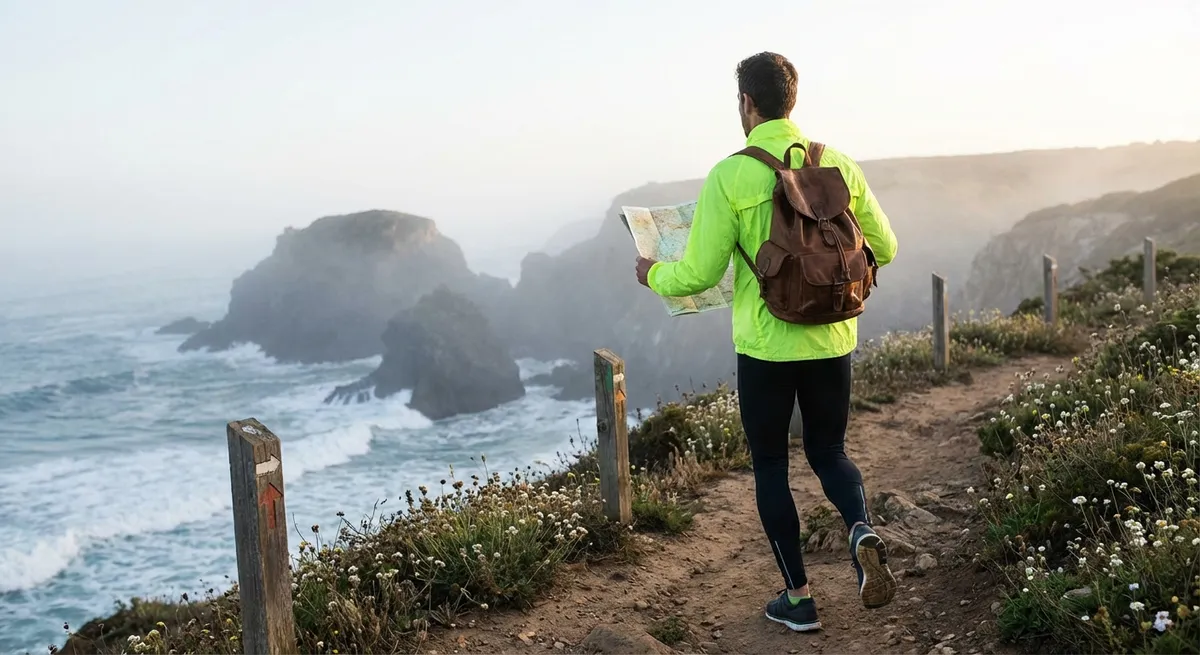
What Adventure Fitness Really Means
Adventure fitness is more than hiking on vacation or squeezing in a hotel gym session—it’s the mindset that every destination is a chance to move differently, breathe deeper, and test your limits in unfamiliar terrain. You’re not just counting reps; you’re counting sunrises over new horizons, altitude gains instead of elevator rides, and ocean swells instead of treadmill miles.
Think trail runs along New Zealand’s alpine lakes, sunrise stair sprints in Lisbon’s old quarters, paddleboarding past limestone cliffs in Thailand, or sand dune power hikes in the Moroccan Sahara. Your training adapts to whatever the landscape offers: elevation, temperature, surface, and culture.
When you travel like this, fitness stops being a chore and becomes a story. Your leg strength remembers Peruvian switchbacks. Your lungs remember Icelandic wind. Your core remembers holding steady on a board in choppy Greek waters. The more you move through the world, the more capable—and curious—you become.
Destination Highlights: Landscapes That Train You Back
Certain destinations practically coach you just by being there. Think of these places not as backdrops, but as co-trainers:
1. Dolomites, Italy – Vertical Endurance Lab
Jagged limestone spires, via ferrata routes, and high-altitude trails turn your legs and lungs into mountain machines. Long ascents build slow-burn stamina, downhill technical sections sharpen balance and ankle strength, and altitude gently pushes your cardiovascular limits.
2. Costa Rica – Jungle Power & Ocean Flow
One day you’re pushing your heart rate with humid rainforest hikes to hidden waterfalls; the next, you’re paddling out for surf sessions on the Pacific. Uneven, root-tangled trails recruit stabilizer muscles, while surfing drills balance, explosive power, and core control—all with a soundtrack of howler monkeys and crashing waves.
3. Kyoto & Surrounding Hills, Japan – Quiet Grit in Sacred Stairways
Temple stair climbs, forested pilgrimage paths, and gentle mountain trails let you layer mindfulness over movement. Long stair ascents become leg-burning intervals; downhill sections become practice grounds for joint-friendly technique and foot placement. Every shrine gate feels like a checkpoint in your own internal journey.
4. Patagonia, Chile & Argentina – Wind-Tested Resilience
Here, the wind is your training partner. Multi-hour hikes past turquoise lakes and hanging glaciers demand steady pacing, robust gear choices, and mental steadiness. Heavy gusts challenge your core and balance, while constantly shifting weather teaches you to be prepared, strategic, and flexible.
5. Cape Town, South Africa – Coast, Cliffs, and City Hustle
Trail runs on Lion’s Head, summit missions on Table Mountain, coastal road cycling along Chapman’s Peak, and ocean swims in the Atlantic—this city is a full-body training ground. The transitions from urban streets to rocky ridgelines keep your body guessing and your senses fully awake.
Each of these places offers its own “curriculum”: some teach patience with long climbs, others demand bravery in waves or technical rock. Choose destinations the way you’d choose a training block—what skill or quality do you want to develop next?
Five Active Travel Tips for the Adventure-Obsessed
These five strategies keep you strong, safe, and ready to say “yes” to whatever wild opportunity your trip throws at you.
1. Train for the Terrain Before You Board the Plane
Let your upcoming destination shape your pre-trip training. Study the terrain, climate, and typical activities, then reverse-engineer your workouts.
- Heading to steep trails like the Dolomites or Colorado Rockies? Add loaded stair climbs, step-ups, and single-leg strength work to prepare your knees and hips.
- Planning surf or paddleboard sessions in Bali or Costa Rica? Focus on core stability, shoulder strength, and hip mobility.
- Expecting high-altitude hikes in Peru or Nepal? Build your aerobic base with longer, lower-intensity sessions and practice back-to-back training days to simulate trekking.
You’re not trying to mimic the trip perfectly—you’re building resilience so that when you arrive, your body says, “I know how to do hard things like this,” instead of tapping out on day one.
2. Build a Minimalist “Anywhere Workout Kit”
You don’t need a full gym to maintain (or even grow) your fitness while roaming. Pack a small, ultralight kit that turns any hostel yard, beach, park, or hotel room into a legit training zone:
- Long resistance band: For rows, deadlifts, presses, and mobility work.
- Mini-loop bands: Great for glute activation, hip stability, and shoulder warm-ups.
- Lightweight jump rope: Compact conditioning tool that travels easily.
- Compact suspension trainer (optional): Hooks to doors, trees, or beams for full-body strength.
Combine these with bodyweight staples—squats, lunges, pushups, planks, split squats, burpees—and you can build 20–30 minute “micro-sessions” between adventures. The goal isn’t perfection; it’s maintaining a base of strength and mobility so you can keep saying yes to that extra trail, dive, or summit push.
3. Turn Transit and City Days Into Movement Missions
Travel days and urban wandering don’t have to be rest days unless you want them to be. Use them strategically:
- Airports & train stations: Walk laps instead of sitting at the gate. Do calf raises, ankle circles, and gentle hip openers during layovers to keep circulation flowing.
- New cities: Choose accommodations within walking distance of key neighborhoods, then commit to exploring mostly on foot. Stitch together stair climbs, bridge crossings, and park circuits as your “city workout.”
- Active commuting: Rent a bike in cities like Amsterdam, Copenhagen, or Vancouver and let your daily transport double as low-intensity cardio.
When you think in “movement blocks” instead of “formal workouts,” even mellow days contribute to your overall adventure fitness.
4. Respect Recovery Like It’s Part of the Expedition
Adventure fitness is intense. Long days, jet lag, altitude, new foods, and big temperature swings all stress your system—even when it feels fun. Recovery isn’t a luxury; it’s what keeps the trip going.
- Sleep like it’s sacred. Use earplugs, an eye mask, and a sleep routine (stretching, reading, breathwork) to help your body adapt.
- Hydrate with intention. Flights, altitude, heat, and salty foods all dehydrate you. Aim to start each day with a big glass of water and keep a bottle handy on every outing.
- Build “soft days” into hard trips. After a brutal summit, plan a lower-key day: easy coastal walk, gentle swim, or yoga on the beach instead of another max-effort mission.
- Refuel with real food. Local cuisine often provides what the environment demands—carb-rich rice and noodles in humid climates, hearty stews in cold ones. Prioritize protein, colorful plants, and enough calories to match your output.
Strong isn’t just how far you push; it’s how well you bounce back and stay ready for what’s next.
5. Anchor Every Trip With One Signature Physical Challenge
To give your travels purpose and structure, choose one “signature challenge” per destination—a bold physical objective that excites (and slightly intimidates) you. This turns scattered activities into a story arc.
Examples:
- Trek to Everest Base Camp or the Annapurna region in Nepal
- Complete a sunrise-to-sunset hike around Torres del Paine’s famous circuits in Patagonia
- Run a local race (trail, road, or even a stair climb event) while visiting a new city
- Tackle a multi-day bike route like Portugal’s coastal Ecovia do Litoral or segments of EuroVelo routes
- Learn a new skill: your first open-water swim event, your first multi-pitch climb, your first overnight kayak or canoe trip
Then, build your smaller daily adventures around preparing for, recovering from, and savoring that big effort. You’ll leave with more than selfies—you’ll leave with a physical milestone tied to a specific corner of the world.
Conclusion
Adventure fitness is what happens when your training plan stops living in a spreadsheet and starts living in the wild. It’s sunrise stair climbs over unfamiliar skylines, lungs burning on foreign ridges, muscles humming after ocean swells, and the deep, quiet pride of knowing your body carried you through places you used to see only on screens.
You don’t have to quit your life and become a full-time nomad. You only have to start treating movement as your favorite way to explore—whether that’s a weekend on local trails or a long-haul flight to the other side of the map. Choose destinations that challenge you, pack light but smart, train for the terrain, and crown each trip with one bold physical objective.
The world is wide. Your body is capable. Let the map be your next training plan—and let every border crossed be proof that you can go further than you thought.
Sources
- Centers for Disease Control and Prevention – Physical Activity Guidelines - Evidence-based recommendations for adult activity levels, useful for planning active travel routines
- American College of Sports Medicine – Hydration Guidelines - Science-backed advice on staying hydrated during exercise and travel
- Harvard T.H. Chan School of Public Health – Sleep and Health - Overview of why adequate sleep is essential for recovery and performance on active trips
- International Society for Mountain Medicine – High Altitude Illness - Practical guidance on acclimatization and safety for high-altitude trekking and mountain destinations
- Adventure Travel Trade Association – Adventure Travel Trends Snapshot - Insight into current patterns in adventure travel and active tourism