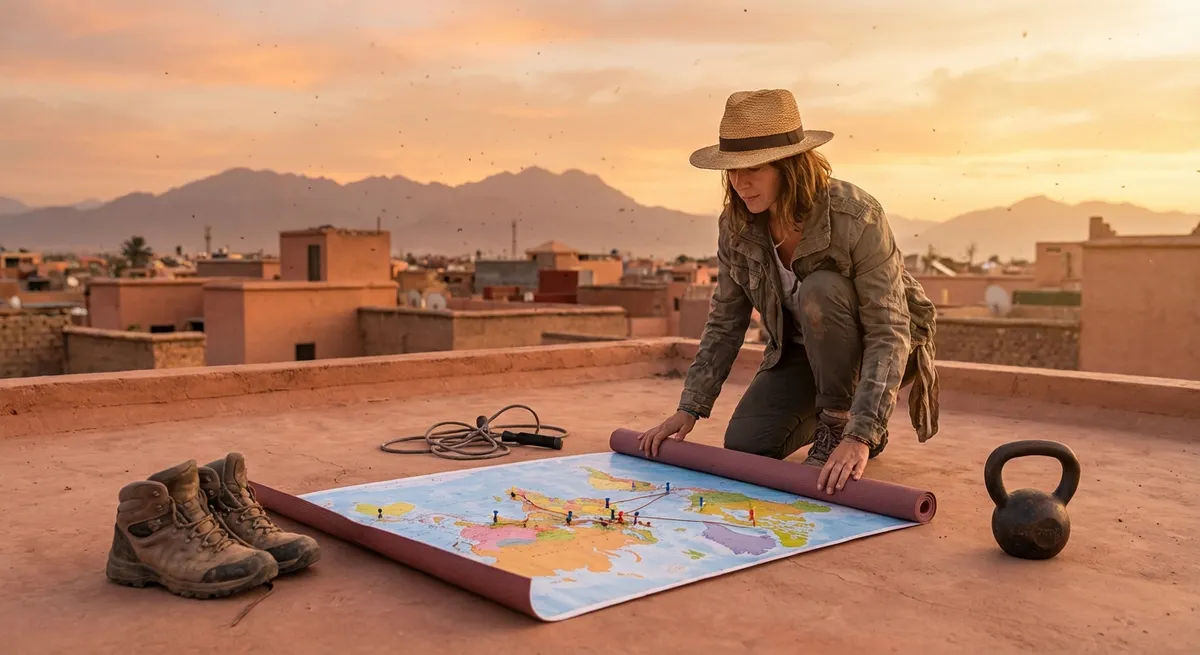
Welcome to training that doesn’t pause when you travel—it levels up.
Destinations That Turn Movement Into Adventure
Some places practically beg you to lace up and head out before breakfast. Think of cities and landscapes not as backdrops, but as living, breathing gyms.
In Cape Town, South Africa, Lion’s Head and Table Mountain turn “leg day” into a sunrise summit, where rocky switchbacks build power while the Atlantic glitters below. Barcelona’s waterfront promenade and hilltop Parc Güell make it effortless to alternate between flat tempo runs along the beach and quad-burning climbs through Gaudí’s surreal mosaics. Vancouver blends city and wilderness so tightly that you can jog the Seawall at dawn, then hit steep forest trails in Lynn Canyon for agility and stability work by lunch.
Island destinations also pack more fitness potential than most itineraries admit. In Hawaii, the volcanic slopes of Oʻahu’s Koko Crater reward every step of its infamous railway-style staircase with sweeping coastal views that turn fatigue into fuel. Meanwhile, the Greek islands offer cliffside runs, stone stair sprints, and open-water swims in coves where the water is so clear it feels like flying.
When you start choosing destinations by how they’ll move you—not just what you’ll see—your travels become a training program you’re genuinely excited to wake up for.
Five Power Moves for Active Travelers
These five tips will help you turn any trip into a moving, memorable training cycle—without sacrificing the joy of exploration.
1. Build Your Itinerary Around Natural “Training Zones”
Before you book, scan your destination for features that match your training style: stairs, hills, long waterfronts, urban parks, or accessible trails. Paris offers riverside paths and wide boulevards perfect for tempo runs or long walks. Medellín’s surrounding Andes foothills double as a hiker’s interval playground. Coastal cities like Sydney and Rio de Janeiro combine beaches for plyometric work, ocean swims, and boardwalk runs with big viewpoints just a hill climb away.
Add these “training zones” to your map like must-see attractions. Instead of planning a 45-minute hotel workout, plug in a loop that passes a local lookout, cuts through a park, and finishes at a café. Your workout becomes a mini-expedition, and your memories won’t smell like hotel carpet—they’ll smell like sea air and street food.
2. Use Local Terrain as Your Training Gear
The more you interact with the landscape, the less you need to haul around.
Stairs are built-in strength and cardio: Lisbon’s alleyway staircases, Hong Kong’s Mid-Levels escalator neighborhoods, or the hilly streets of San Francisco can all become your glute and calf studio. Beaches and dunes become resistance tools—soft sand in places like Bondi, Bali, or the Algarve turns every stride, lunge, and jump into a stability challenge. City parks with benches double as platforms for step-ups, incline push-ups, and dips; think London’s Hyde Park, New York’s Central Park, or Buenos Aires’ Bosques de Palermo.
When you treat curbs as jump boxes, railings as balance beams, and tree-lined paths as mobility corridors, you carry your “gym” in your mindset, not in your luggage.
3. Sync Your Training With the Local Climate and Culture
Your best training often happens when you move like the locals do. In hot, humid destinations like Singapore or Bangkok, early mornings or post-sunset sessions help you adapt safely to the heat, turning every run or ride into a lesson in pacing and hydration. In cooler climates—say Reykjavik in summer or Patagonia in shoulder season—long, layered hikes and trail runs become your durable, low-impact training foundation.
Look for movement woven into the culture. Join local running clubs that meet along Berlin’s canal paths or at Tokyo’s Imperial Palace loop. Try surf lessons in Portugal’s Ericeira, stand-up paddling in Croatia, or city bike tours in Amsterdam or Copenhagen that double as low-intensity cardio. The more you adopt the local rhythm, the more sustainable—and enriching—your training feels.
4. Turn “Rest Days” Into Light Exploration
Active recovery days on the road don’t have to mean sitting still. Let your body recover while your curiosity leads.
Slow bike rides through vineyards in Italy, gentle coastal walks in Ireland, or strolling food markets in Mexico City keep circulation flowing without taxing your system. Museum-hopping and old-town wandering can easily add 10,000+ steps without feeling like a workout. Gentle swims in calm bays, hotel pool float sessions with a few mobility drills, or yoga on a quiet rooftop help unwind the stiffness from flights and harder training days.
Think of these days as “explorer mode”: the GPS stays on, the pace stays easy, and every step is a selfie your nervous system takes to remember, “Here, we can relax.”
5. Protect Your Engine: Hydrate, Fuel, and Sleep With Intention
Adventure is only fun when your body can keep up. New foods, time zones, and late nights can quietly erode your training if you don’t steer on purpose.
Hydration is your first line of defense. Hot or high-altitude destinations—from Mexico City to Cusco—can increase fluid loss more than you expect. Carry a refillable bottle, seek out fountains where safe, and alternate alcohol with water during social nights. Aim to keep some structure around your meals: anchor breakfasts with protein and fiber (eggs, yogurt, oats, fruit) to keep energy steady for morning sessions, then let lunches and dinners become your window into local cuisine.
Sleep is your performance multiplier. Long-haul flights and jet lag will happen; counter them with simple routines—short walks after arrival, morning light exposure, and consistent wind-down rituals (stretching, breathwork, or reading) in any time zone. Your ability to climb that city’s hillside lookout or tackle that trail tomorrow starts with how seriously you treat recovery tonight.
Global Highlights for Your Adventure-Fitness Bucket List
If you’re ready to let geography design your next training block, these destinations offer a powerful mix of challenge and wonder:
- Queenstown, New Zealand – A natural playground for trail runs, ridgeline hikes, mountain biking, and cold-water dips in Lake Wakatipu. The varied terrain builds strength, balance, and resilience while the scenery keeps your motivation on a permanent high.
- Chamonix, France – Nestled under Mont Blanc, this alpine valley offers everything from gentle valley walks to steep vertical kilometers. It’s a masterclass in altitude training, leg strength, and mental grit, with cable cars that can adjust the challenge to your ability level.
- Cape Town, South Africa – Oceanfront promenades for flat runs, iconic peaks for stair-laden ascents, and nearby wine country roads for long, rolling bike rides. The contrast between sea-level sprints and summit scrambles makes every week feel like a training camp.
- Kyoto, Japan – Temple-lined hills, torii gate staircases at Fushimi Inari, bamboo forest paths, and riverside running routes form a calm yet challenging canvas for mindful movement. It’s ideal if you want your training to feel meditative instead of rushed.
- Vancouver, Canada – A four-season testing ground: rainy urban runs that build grit, forest trails for soft-surface mileage, and accessible mountains for hiking, snowshoeing, or skiing. It’s a blueprint for how cities can support adventurous, all-weather athletes.
You don’t need to be an elite athlete to claim these landscapes. You just need a pair of shoes, a curious mind, and a willingness to let the world coach you.
Conclusion
Every destination has a way it wants to be moved through: climbed, swum, sprinted, wandered. When you listen for that, your training plan stops feeling like a script and starts feeling like a story—written one hill, one wave, one sunrise at a time.
You’re not choosing between being a traveler and being an athlete. You’re becoming something better: a voyager whose fitness is carved by coastlines, city steps, and mountain air. Let your next trip be more than a break from routine—let it be the chapter where your passport and your potential finally move in the same direction.
Sources
- Centers for Disease Control and Prevention – Travel Health - Guidance on staying healthy while traveling, including hydration, illness prevention, and activity considerations
- Mayo Clinic – Exercise and the Heat - Explains how to safely train in hot climates and adapt intensity, hydration, and timing
- Harvard T.H. Chan School of Public Health – Healthy Travel - Covers nutrition, hydration, and routine maintenance on the road
- Sleep Foundation – Jet Lag and Sleep - Discusses strategies to manage jet lag and protect sleep while traveling
- U.S. National Park Service – Hiking Safety - Offers practical tips on safe hiking and outdoor activity, relevant to trail-based fitness adventures