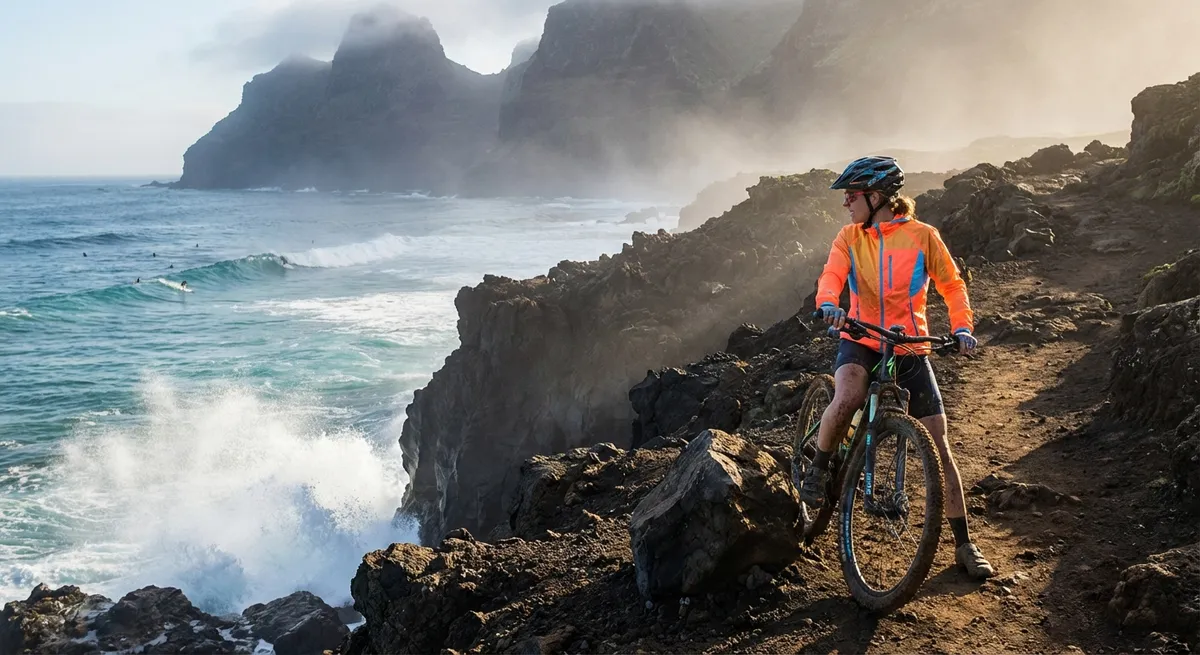
This isn’t about squeezing a quick hotel workout between meetings. It’s about choosing destinations that demand you move—places where the landscape, the streets, and even the culture pull you off the couch and straight into motion. Pack your curiosity and your grit; the world is waiting to be explored at an elevated heart rate.
Lisbon, Portugal – Hills, Ocean Air, And Endless Stair Climbs
Lisbon doesn’t ask if you want a workout—it hands you one with every steep, winding street. The city’s famous hills and staircases turn simple wanderings into mini leg-day sessions, especially in neighborhoods like Alfama and Bairro Alto where the paths zigzag up to panoramic viewpoints. Sunrise runs along the riverfront promenade in Belém offer softer terrain, cooled by Atlantic breezes and framed by historic towers and monuments. You can cap that off with a quad-burning climb up to São Jorge Castle, where your “rest” is soaking in a 360-degree view of terracotta rooftops and shimmering water.
For cross-training, rent an e-bike or traditional bike and follow the coastal route toward Cascais; gentle inclines and ocean vistas keep every pedal stroke motivating. On warmer days, stand-up paddleboarding or surfing at nearby Carcavelos beach delivers upper-body and core engagement in the rolling Atlantic swells. Lisbon’s outdoor plazas and viewpoints are perfect for bodyweight circuits—think push-ups, step-ups, and planks with world-class city views. Recovery is built into the culture, too: linger over grilled fish, fresh salads, and strong coffee, and you’ll quickly see why Lisbon is a dream for travelers who refuse to sit still.
Queenstown, New Zealand – Adrenaline Capital With A Heart Of Wild
Queenstown feels engineered for people whose comfort zone is somewhere between “slightly breathless” and “happily exhausted.” Cradled by The Remarkables mountain range and the deep blue of Lake Wakatipu, this New Zealand town is basically an open-air training ground. Start with hiking or trail running the Queenstown Hill Track or the Ben Lomond summit—both deliver powerful elevation gain, switchbacks, and sweeping vistas that reward every step. The thinner mountain air challenges your lungs, while rocky terrain hones balance and stability.
If you crave more adrenaline, throw in downhill mountain biking at the Queenstown Bike Park, where gondola-accessed trails let you focus energy on skill and speed. Kayaking or paddleboarding on Lake Wakatipu taps your core, shoulders, and back while you glide past dramatic peaks and forested slopes. For those wanting high-intensity bursts, bungee jumping and canyon swinging may be more mental than physical, but the rush of overcoming fear can fuel your next run or strength session. Queenstown’s mix of adventure activities, clean air, and rugged beauty makes it the kind of place where “rest day” still means a gentle hike or lake walk—because staying still feels like a missed opportunity.
Kyoto, Japan – Mindful Miles Through Temples And Forests
Kyoto is proof that fitness travel doesn’t have to be loud to be powerful. The city’s blend of temples, bamboo forests, and quiet neighborhoods invites an intentional, almost meditative style of movement. Jog or fast-walk the Philosopher’s Path at dawn, when the canals and cherry trees are washed in soft light and the streets are nearly empty. The stone paths and mild inclines create a steady cardiovascular session without jarring impact. For more intensity, tackle the long stairways leading up to Kiyomizu-dera or Fushimi Inari Taisha, where thousands of vermilion torii gates create a surreal, tunnel-like ascent.
Cycling through Kyoto’s side streets and along the Kamo River gives a full-body wake-up as you navigate bridges, gentle slopes, and scenic detours past shrines and local markets. You can build in intervals: easy pedaling through neighborhoods, then faster sprints along flat riverside stretches. Outside the city center, the Arashiyama area offers trail runs and hikes through bamboo groves and into low mountains, with natural staircases and tree roots providing agility training. Cap your day with a slow, stretching-focused session in a quiet park, letting the calm atmosphere sink in. In Kyoto, fitness and mindfulness collide, reminding you that strength isn’t only measured in speed or weight, but also in presence.
Patagonia, Chile & Argentina – Where Miles Become Meditation
In Patagonia, distances stretch, winds howl, and the landscape humbles you into becoming stronger. From Torres del Paine in Chile to Los Glaciares National Park in Argentina, the region delivers long, demanding trails that push endurance and mental resilience. Trekking routes like the W or O circuit in Torres del Paine challenge your legs with days of uneven terrain, river crossings, and constant weather shifts—sun, rain, and gusts so strong they turn every step into resistance training. Each climb offers a payoff: jagged granite towers, turquoise lakes, and glaciers glowing in the changing light.
Day hikes near El Chaltén, like the trails to Laguna de los Tres or Laguna Torre, test your stamina with steady elevation gain, rocky sections, and sometimes muddy paths. Trekking poles become an extension of your arms, engaging your upper body as you power uphill and stabilize on descents. Patagonia also rewards active explorers who mix in kayaking on glacial lakes or ice-hiking with crampons, working accessory muscles you rarely challenge at home. The sheer scale of this region shifts your perspective: you’re not just logging miles—you’re learning how it feels to carry your own strength through wild, unfiltered landscapes.
Cape Town, South Africa – Ocean, Cliffs, And City Energy
Cape Town might be one of the few cities where you can combine a steep summit sprint, a beach workout, and a vibrant urban walk all in one day. Table Mountain looms over the city as both a landmark and a challenge; routes like Platteklip Gorge demand powerful legs, strong lungs, and solid pacing. You’ll move through rocky steps and switchbacks, feeling the gradient in your calves and glutes, and then emerge onto a plateau with sweeping views of the city and Atlantic. For slightly less intensity but equal reward, the Lion’s Head trail gives a spiraling climb with scrambling sections and sunrise or sunset colors worth every heartbeat.
Down at sea level, running along the Sea Point Promenade offers flat, ocean-side terrain where you can slot in intervals or tempo runs, with outdoor gyms and benches making convenient stops for strength circuits. The nearby beaches—Camps Bay, Clifton, Muizenberg—are perfect sand training grounds, where every step demands more from your calves, core, and balance. If you’re craving dynamic cross-training, try surfing or kitesurfing: you’ll work your shoulders, back, and core while harnessing the power of wind and waves. Cape Town’s blend of hiking-ready mountains, swimmable coves, and energetic neighborhoods makes it a dream for travelers who want their itinerary to double as a training plan.
Active Travel Tip: Train For Terrain, Not Just Time
Instead of only tracking how long your workouts are before you travel, prepare your body for the terrain you’ll face. If you’re headed somewhere hilly, add stair climbs, uphill treadmill sessions, and walking lunges into your routine. For coastal and sand-heavy destinations, practice short runs or power walks on softer surfaces like grass or trails, and strengthen your ankles and calves with balance work and calf raises. This terrain-specific approach means your first day of adventure doesn’t double as your first day of shock to your muscles.
You’ll also reduce the risk of injury when you suddenly ask your body to handle steep descents, rocky paths, or unstable sand. Visualize your destination as you train—imagine the trail under your shoes or the stairs under your feet. That mental rehearsal builds anticipation and helps you show up feeling ready, not apprehensive. By the time you arrive, the landscape will feel like the next logical step in your training, not an ambush.
Active Travel Tip: Turn Transit Days Into Mobility Missions
Flights, long car rides, and layovers can stiffen your hips, tighten your hamstrings, and leave your back cranky—exactly what you don’t want before a hike or city exploration. Use transit time as your secret weapon: every few hours, stand up and work through simple mobility routines like hip circles, ankle rolls, and gentle forward folds. In airport terminals, walk the length of your gate area, add calf stretches against the wall, and do seated figure-four stretches to open up your hips.
Once you reach your accommodation, spend 10–15 minutes on a focused mobility session: dynamic leg swings, shoulder rolls, cat-cow movements, and gentle lunges with rotation. Think of it as “unpacking” your body from the trip. This keeps your joints happier and your muscles more responsive when it’s time to tackle stairs, trails, or long exploratory walks. Mobility may not feel as glamorous as sunrise runs, but it’s the invisible hero that lets you say “yes” to one more adventure without your body protesting.
Active Travel Tip: Build Micro-Workouts Into Your Exploration
Not every workout on the road has to be a full-blown session. Use micro-workouts—short bursts of effort built into your day—to stay active without sacrificing exploration time. Power-walk steep alleys, take the long way up using stairs instead of elevators, and add a 5-minute bodyweight circuit (squats, push-ups, planks) before showering or heading out to dinner. These tiny deposits of effort add up surprisingly fast across a day of travel.
When you reach viewpoints, plazas, or parks, consider dropping into a quick set of walking lunges, incline push-ups on benches, or side shuffles across open spaces. It’s a playful way to keep your muscles engaged and your energy levels high. Micro-workouts also make fitness feel like part of the journey rather than something separate you have to “fit in.” You’re not interrupting your trip—you’re intensifying it.
Active Travel Tip: Fuel Like An Explorer, Not A Tourist
Street food and local delicacies are part of the adventure, but your body still needs reliable fuel to power long days of movement. Aim to build each meal around a solid protein source, colorful vegetables or fruits, and complex carbohydrates like whole grains or starchy veggies. In markets and small shops, stock up on portable snacks such as nuts, yogurt, fresh fruit, jerky, or simple sandwiches to keep your energy steady between big activities.
Hydration is non-negotiable, especially in sunny or high-altitude destinations. Carry a refillable bottle and set mental cues to drink regularly—every viewpoint stop, every train ride, or every hour of walking. Rather than thinking of food as a reward after your workout, think of it as your fuel before and during; this shift helps you make choices that keep you energized instead of sluggish. When you do dive into richer local specialties, savor them without guilt—they’re part of the story you’re writing with your body and your taste buds.
Active Travel Tip: Let Your Itinerary Follow Your Energy
Instead of cramming your schedule with back-to-back intense days, plan your travels around natural waves of effort and recovery. Alternate harder days—like long hikes, climbing, or big cycling adventures—with lighter ones featuring leisurely walks, short jogs, or gentle swims. This rhythm keeps you from burning out by day three and lets your muscles adapt and rebuild while you’re still on the move.
Listen to your body each morning. If your legs feel heavy after that mountain summit, swap the planned trail run for a slower city stroll or a yoga session in a park. Active travel is a long game; the goal isn’t to crush every possible activity, but to stay engaged and energized across the whole trip. When you give yourself permission to adjust, you open space for spontaneous adventures—sunset paddles, unexpected festivals, or a local inviting you on a neighborhood walk—that might end up being the true highlight of your journey.
Conclusion
The world is full of places that challenge you to move differently, breathe deeper, and see what your body can do when the horizon keeps expanding. From Lisbon’s stair-laced streets to Patagonia’s windswept ridges, every destination carries its own rhythm—and your muscles, lungs, and curiosity are the instruments that bring it to life.
When you choose travel that asks something of you physically, you come home with more than photos. You return with stronger legs, a braver heart, and memories etched in sweat, sunrises, and the quiet satisfaction of having gone just a little farther than you thought you could. Pack your shoes, your sense of adventure, and those active travel tips—and let the world be the wildest gym you’ve ever stepped into.