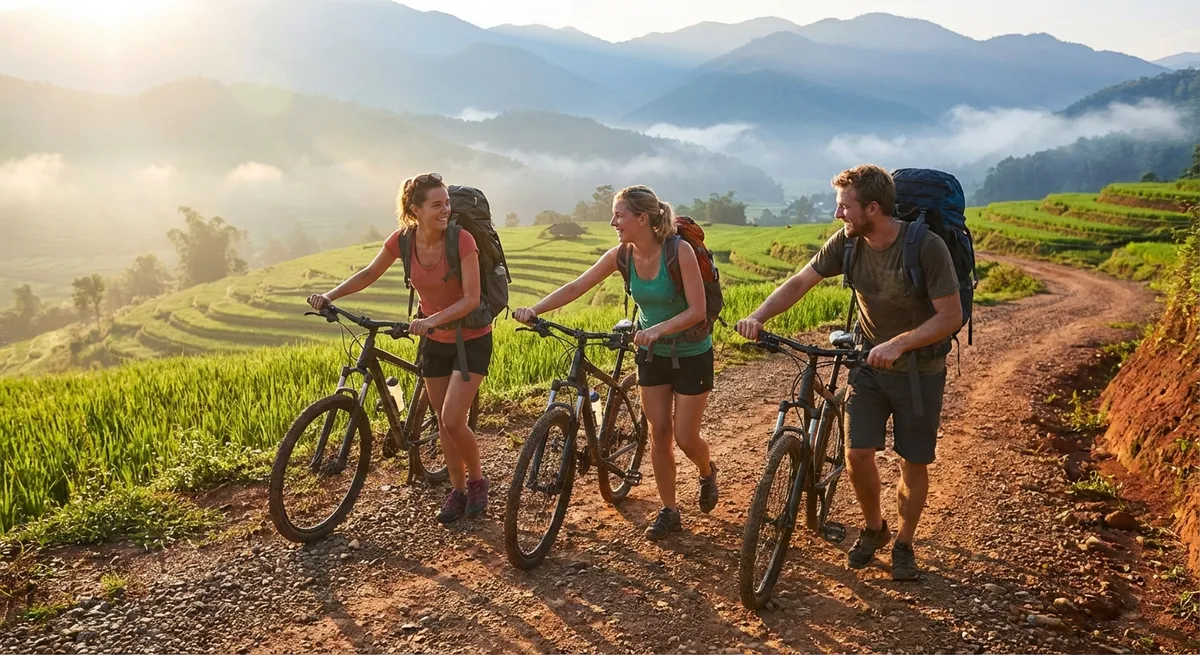
This isn’t about perfection. It’s about movement, curiosity, and choosing the route that makes you feel most alive—whether that’s a coastal trail in Portugal, a stair-filled Old Town in Colombia, or a ridgeway above Japan’s temples. Let’s build trips that leave you not just rested, but transformed.
Why Active Travel Is the New “All-Inclusive”
Active travel flips the script on traditional vacations. Instead of planning days around buffets and deck chairs, you plan them around movement, exploration, and challenge. Studies show that combining moderate-to-vigorous physical activity with time outdoors can improve mood, sleep, and long-term health markers—exactly what you want from time away, but with benefits that follow you home.
On an active trip, your body becomes your favorite piece of gear. You learn how far your legs can carry you through a city with no taxis, how strong your lungs feel on a ridge trail at sunrise, and how steady your mind can be when you’re balancing on a stand-up paddleboard in turquoise water. The memories feel sharper because you earned them with every step, pedal, and paddle stroke.
And the best part? You don’t have to be an elite athlete. Active travel scales with you. A beginner can rack up steps exploring Kyoto’s temple districts, while a seasoned trail runner might chase alpine singletrack in Chamonix. Your fitness level is your starting line—not your limit.
Destination Highlights for the Movement-Obsessed Traveler
If you love the idea of building trips around motion, some destinations are a playground waiting for you:
- Madeira, Portugal – A volcanic island crisscrossed with levada (irrigation) trails, vert-filled coastal hikes, and switchback roads perfect for hill sprints. Start the day with a ridge hike above the clouds, end it with a chilly ocean plunge.
- Queenstown, New Zealand – Self-proclaimed “adventure capital of the world.” Think trail runs along Lake Wakatipu, lung-busting hikes like Ben Lomond, mountain biking, canyon swings, and cold river dips to reset your muscles.
- Banff & Lake Louise, Canada – Turquoise lakes, glacial cirques, and trails that climb fast. You can hike to alpine teahouses, rent a canoe for upper-body work, then add a light strength session using park benches and picnic tables.
- Chiang Mai, Thailand – A city ringed by jungle and hills. Mornings can mean cycling out to the countryside, hiking to mountaintop temples, or dropping into local Muay Thai gyms that double as cultural immersion and cardio.
- Azores, Portugal – Island hopping meets endurance training. Trail runs through hydrangea-lined paths, volcano crater hikes, hot springs for recovery, and ocean activities like kayaking and open-water swimming.
These are just starting points. Any place with walkable streets, access to nature, or a culture that celebrates outdoor life can become your next training ground.
5 Active Travel Tips for Fitness-Fueled Adventurers
1. Build Your Itinerary Around Movement, Not Just Landmarks
Instead of plotting pins on a map and figuring out transportation later, start with this question: “How can I move through this place?”
- Choose one or two “anchor” activities per destination—like a longer hike, a scenic bike route, or a full-day paddle.
- Cluster attractions so you can walk or cycle between them. “Walkable radius” might mean 20–40 minutes on foot or a short bike ride.
- Use stairs, hills, and waterfronts intentionally—turn that steep alley in Lisbon or those temple stairs in Seoul into your glute workout for the day.
By designing routes instead of just checklists, you turn ordinary sightseeing into a steady stream of low- to moderate-intensity cardio, which can be easier to maintain over a multi-week trip than a few brutal gym sessions.
2. Pack a “Micro-Gym” and Train Anywhere
You don’t need a full weight room to stay strong on the road. Pack light, multi-use gear that disappears into your bag but unlocks dozens of training options.
Consider bringing:
- A mini resistance band for glute work, warm-ups, and joint-friendly strength sessions.
- A light suspension trainer or long resistance band you can anchor to a door, tree, or railing.
- A jump rope for quick, high-intensity cardio when running isn’t practical.
- A travel yoga mat or foldable mat (or just a towel) for mobility sessions in hotel rooms or on balcony floors.
Then build a simple “anywhere” routine: squats, lunges, push-ups, rows (using bands or suspension), planks, and hip hinges. These movements keep your major muscle groups firing so you can handle long hikes, spontaneous runs, and full days on your feet without fading.
3. Periodize Your Trip Like a Training Block
Think of your journey as a short training cycle: you’ll have heavier movement days and lighter recovery days.
- High-impact days: Long hikes, summit pushes, trail runs, full-day ski tours, or multi-hour bike rides. Combine 1–2 of these per week with lots of food, hydration, and sleep.
- Moderate days: City exploration on foot, coastal walks, casual kayaking, or easy bike paths—active but not draining.
- Recovery days: Short mobility sessions, gentle swims, slow walks through markets or parks, and maybe a local spa or hot spring if the destination has one.
This approach helps prevent overuse injuries and burnout. You’ll arrive home energized instead of feeling like you need a “vacation from your vacation.”
4. Eat and Hydrate Like You’re Fueling an Expedition
Active travel can dramatically increase your daily energy expenditure, especially if you’re logging more steps, hills, or altitude than at home.
To keep your engine running:
- Aim for regular meals with complex carbs, lean protein, and healthy fats—think rice bowls with fish in Japan, lentil stews in the Balkans, or veggie tagines in Morocco.
- Carry portable snacks like nuts, fruit, trail mix, or local energy bars, especially on long hikes or rural routes where food options are limited.
- Start the day hydrated and bring a reusable water bottle. In hot or high-altitude locations, sip consistently rather than chugging sporadically.
- Don’t shy away from local food; just think like an athlete. Balance rich, celebratory meals with lighter, nutrient-dense options that help your muscles recover.
You’re not “cheating” on your diet while you travel—you’re fueling adventure.
5. Let Local Culture Shape How You Move
One of the most powerful parts of active travel is adopting how locals move through their world.
- In Amsterdam or Copenhagen, join the flow of cyclists and rent a bike instead of calling cabs.
- In Tokyo, embrace long walks through neighborhoods and train stations—many locals rack up thousands of steps daily just living their lives.
- In Patagonia or the Dolomites, follow the hut-to-hut hiking culture, breaking longer routes into stages and refueling in mountain refuges.
- In coastal towns from Croatia to Costa Rica, tap into sea culture with stand-up paddleboarding, surfing, or ocean swims.
Ask guides, café owners, or your hosts: “How do people here stay active?” You might discover dawn tai chi in a park, a weekly night ride, or a sunrise hiking ritual locals swear by. These are the moments that anchor your memories and expand your fitness beyond your usual routine.
Conclusion
Active travel is more than a vacation style—it’s a mindset. It says: I will explore this place with my whole body, not just my camera lens. It asks your legs to climb toward viewpoints that no tour bus can reach and your lungs to match the rhythm of a city’s streets or a mountain’s wind.
You don’t have to turn every trip into an expedition. You simply choose movement, again and again: the trail over the tram, the pedals over the backseat, the stairs over the elevator. In doing so, you stitch your strength into the fabric of each destination.
Let your next journey be the one where you come home not just with photos, but with a deeper trust in your body and a new definition of what “vacation” can feel like—powerful, present, and undeniably alive.
Sources
- World Health Organization – Physical Activity – Global recommendations on health benefits of regular physical activity
- Harvard T.H. Chan School of Public Health – Benefits of Physical Activity – Overview of how movement supports long-term health and well-being
- National Park Service – Benefits of Outdoor Recreation – Details on physical and mental benefits of outdoor, nature-based activity
- Centers for Disease Control and Prevention – Healthy Travel – Guidance on staying healthy and active while traveling
- Mayo Clinic – Exercise and Stress Relief – Explains how exercise and movement can enhance mood and reduce stress