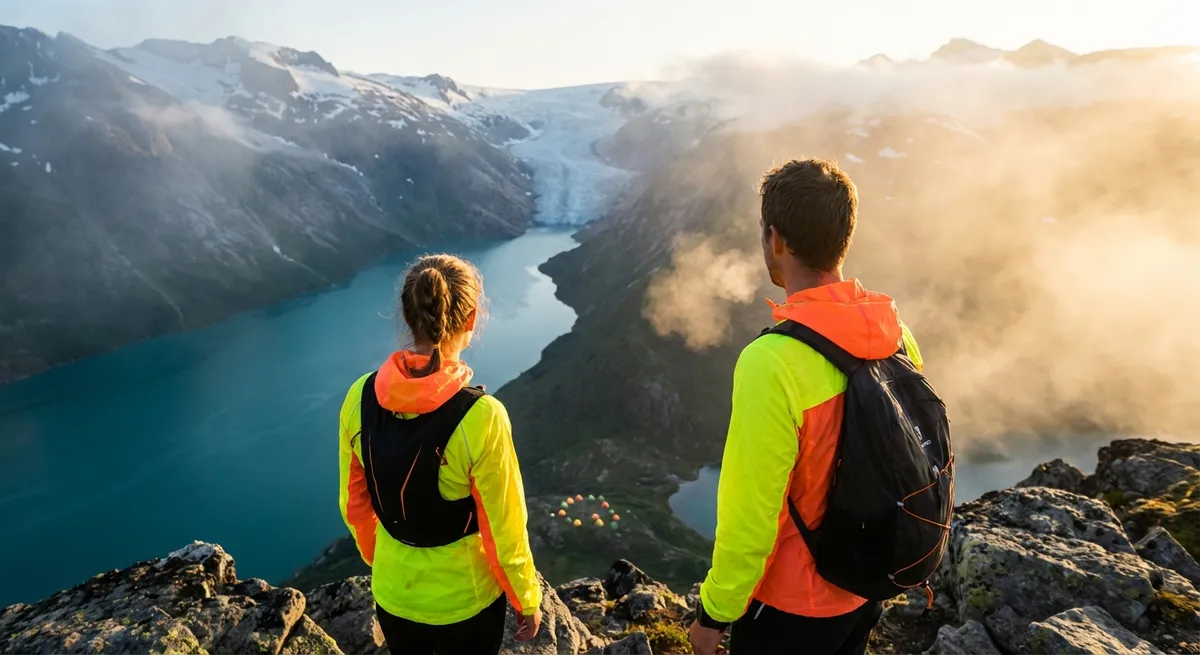
Why Train Where the World Comes Alive
Your body responds differently when the landscape refuses to stay in the background. Elevation, terrain, climate, and culture all shape how you move—and how far you can go.
In mountainous regions, thinner air forces your cardiovascular system to adapt, boosting red blood cell production and endurance even after you return to sea level. Coastal destinations invite long, sustainable efforts—sunrise runs on firm sand, open-water swims along buoy lines, or long bike rides tracing the shoreline. Cities challenge agility and creativity: park benches become plyo boxes, stairs become interval hills, bridges become mental checkpoints.
Training in new environments also rewires your mindset. You’re not just doing squats—you’re preparing for that steep stone staircase to a temple lookout. You’re not just stretching—you’re opening your hips so you can hike longer, sit deeper on a surfboard, or hop onto that overnight train without feeling wrecked. The journey stops being a break from your fitness and becomes the reason your fitness matters in the first place.
Destination Highlights: Where the Map Meets Your Muscles
Some places feel like they were carved specifically for people who can’t sit still. While the world is full of active playgrounds, a few stand out as pure rocket fuel for the adventure-driven body.
In the Swiss Alps, cardio collides with scenery in the best way possible. Summer trails weave through wildflower meadows and glacier views, perfect for trail running, mountain biking, or vertical hiking that turns your quads into steel. If you visit in winter, cross-country skiing and ski touring add low-impact, full-body work in crisp mountain air.
Costa Rica is a natural obstacle course of rainforests, volcanoes, and surfable coastlines. One moment you’re hiking near Arenal Volcano, drenched in sweat and birdsong; the next, you’re paddling out in Tamarindo or Santa Teresa, your shoulders and core pushed to their limit by the Pacific. Zipline parks, waterfall rappelling, and canyoning give you a blend of adrenaline and functional strength training.
In Japan, cities like Tokyo and Kyoto are surprisingly friendly for movement-rich days: walkable neighborhoods, public parks for bodyweight circuits, and stair-heavy temples that turn sightseeing into a leg workout. Add in onsen (hot springs) culture for post-training recovery, plus nutrient-rich cuisine with plenty of lean protein, vegetables, and rice to refuel.
Then there’s New Zealand, basically an outdoor gym disguised as a country. Glacier-fed lakes for kayaking and wild swims, ridgelines for multi-day treks, and coastal tracks like the Abel Tasman that let you log serious miles with ocean views as your reward. Your “rest day” might still involve stand-up paddleboarding or an easy bike ride—but in a place like this, it barely feels like training.
5 Active Travel Tips for the Adventure-Obsessed
These five tips are built for travelers who treat every new destination as a fresh chance to level up—without turning their trip into a rigid boot camp.
1. Train for the Terrain Before You Fly
Look up the landscape and likely activities, then let your pre-trip workouts mirror what’s coming.
If you’re heading to a hill-dense city or alpine village, load your weeks with step-ups, hill sprints, and weighted stair climbs. For surf or paddle destinations, prioritize shoulder stability, core rotation (Russian twists, woodchoppers), and hip mobility. If you’re targeting a trek or long-distance hike, practice back-to-back long walks with a loaded pack to mimic multiple days on trail.
You’re not just “getting in shape”—you’re rehearsing for the adventure so your body is ready to enjoy it, not endure it.
2. Anchor Your Days With a Micro-Ritual
Instead of planning full-length gym sessions, create one simple non-negotiable ritual that travels well.
Maybe it’s:
- 10–15 minutes of mobility each morning on the hotel floor
- A sunrise walk or easy jog before breakfast
- A 5-move bodyweight circuit (e.g., squats, pushups, lunges, planks, glute bridges) you can do in any room or park
This ritual grounds you when flights are delayed, trains are missed, or itineraries shift. It’s small enough to be realistic but powerful enough to keep you connected to your body, no matter the time zone.
3. Let Movement Replace Transit When You Can
Think like an explorer, not a commuter. Anytime you’re about to tap a rideshare app, ask: “Can my legs get me there instead?”
- Walk between neighborhoods instead of taking short cabs or metro hops.
- Rent a bike in bike-friendly cities to turn your transfers into low-intensity cardio.
- Use stairs instead of escalators and elevators—for real, not just as a fitness cliché.
These choices stack up. Over a week, you might quietly log a marathon’s worth of walking just by choosing the long way with intention. Not only does that build your aerobic base, it lets you stumble into side streets, local cafes, and viewpoints that never show up on a map.
4. Pack the Minimalist Athlete’s Toolkit
You don’t need a suitcase full of gear—just a few high-impact, low-space items that turn almost anywhere into a training zone.
Smart options include:
- A lightweight resistance band for rows, pull-aparts, and hip work
- A mini loop band for glute activation before hikes or runs
- A compact jump rope for quick cardio when you’re short on time and space
Combine these with park benches, playgrounds, hotel stairs, and railings, and suddenly every destination becomes a functional gym. The less you depend on formal facilities, the more flexible—and adventurous—your training becomes.
5. Plan Recovery Like It’s Part of the Adventure (Because It Is)
Active travel is deceptive: you might feel like you’re “not really training,” but long days on your feet, unstructured hikes, and new sports stress your body in unfamiliar ways.
Build recovery into your itinerary:
- Seek out local hot springs, saunas, or ocean swims as part of your cultural experience, not just a cooldown.
- Hydrate aggressively, especially at altitude or in humid climates. Carry an electrolyte packet or two for heavy-sweat days.
- Give yourself at least one lighter day to stroll, stretch, or float in a pool between big exertions like summit days or long bike rides.
Your goal isn’t to survive the trip; it’s to finish it feeling like your body rose to the challenge. Recovery isn’t the break from the adventure—it’s what lets the adventure stay fun.
Turning Memories Into Metrics (Without Killing the Magic)
You don’t have to log every step or obsess over calories burned—but a tiny bit of tracking can make your journey more satisfying.
Use a wearable or smartphone app to keep rough tabs on your daily movement and elevation gain. Later, those numbers become souvenirs: “That temple day was 18,000 steps and 120 floors climbed” tells a richer story than “We walked a lot.” For runners or cyclists, mapping your route lets you revisit that sunrise river run or coastal ride on a map long after you’re home.
At the same time, leave room for unstructured effort. Say yes to the last-minute kayak rental, the spontaneous beach soccer game, the extra viewpoint detour on a hike. Those unscripted moments often deliver the deepest training—and the strongest memories.
Conclusion
The world doesn’t just want you to see it; it wants you to move through it. Every coastline is a potential running route, every mountain a chance to test your lungs, every city stairwell an excuse to feel your quads burn and your heart pound.
When you travel like an athlete and train like an explorer, fitness stops being something you “maintain” and becomes a passport to experiences most people will never touch. Your next destination isn’t just a pin on a map—it’s the next chapter in what your body can do.
Pack your curiosity. Pack your grit. The planet is waiting to see how far you’re willing to go.
Sources
- Centers for Disease Control and Prevention – Physical Activity and Health – Overview of the health benefits of regular physical activity
- American College of Sports Medicine – Altitude Training and Athletic Performance – Explains how training at altitude affects endurance and performance
- Harvard T.H. Chan School of Public Health – Benefits of Walking – Details how routine walking supports cardiovascular health and fitness
- Mayo Clinic – Overtraining: How to Recognize and Prevent It – Discusses the importance of recovery and how to avoid overtraining
- World Health Organization – Physical Activity Fact Sheet – Global guidelines and recommendations for physical activity levels