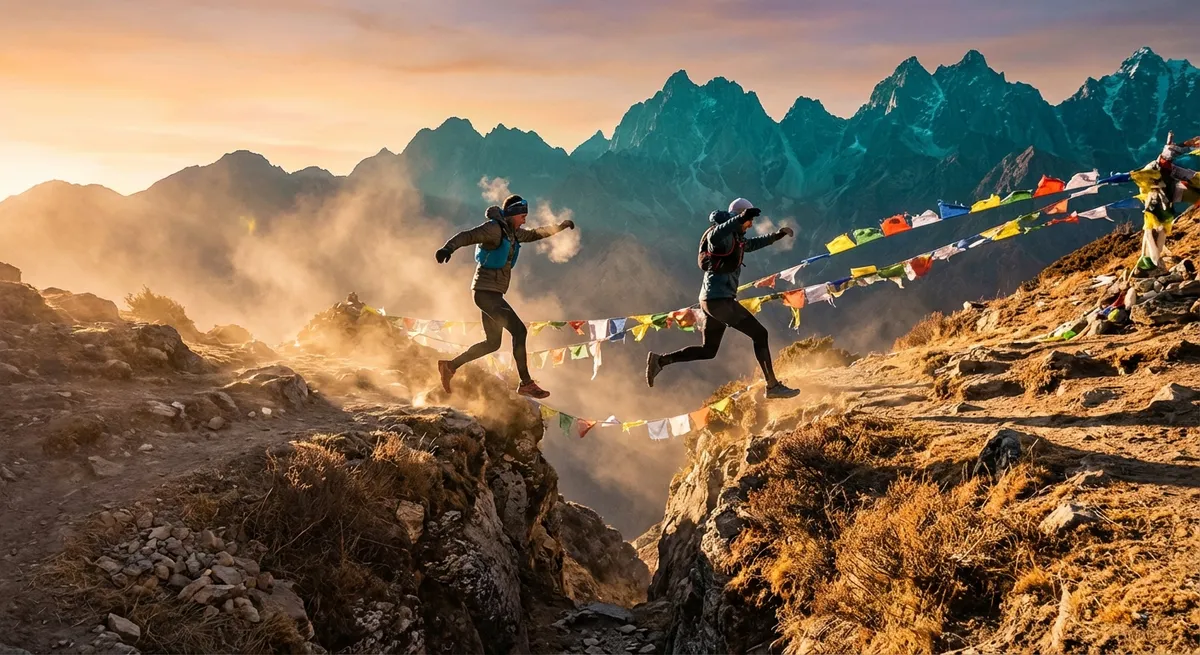
Redefining “Vacation Shape”: Why Adventure and Fitness Belong Together
Most trips are designed to escape routine; adventure fitness trips are built to evolve it. When you land somewhere new, your senses wake up—your brain is cataloging smells, sights, and sounds, and your body is primed to move. That heightened awareness is a secret training weapon.
Instead of thinking, “How do I maintain my workouts while traveling?” flip the script: “How can this landscape challenge me in ways my hometown can’t?” Steep stone stairways in Lisbon, sunrise ridgelines in Peru, and oceanfront promenades in Cape Town become training partners, not scenery.
Physically, mixing hiking, cycling, swimming, and bodyweight work on the road increases overall conditioning and builds usable strength—strong legs from hill climbs, stable joints from uneven trails, and a more resilient heart and lungs from varied intensities. Mentally, navigating foreign signs, unexpected weather, and changing terrain builds confidence and adaptability. When you train in unfamiliar environments, you’re not just getting fitter; you’re hardwiring yourself to handle the unknown.
Your goal on an adventure fitness trip isn’t perfection. Some days you’ll power up volcanoes; other days you’ll walk, stretch, and just soak in the view. The victory is in choosing movement as your default mode of exploration.
Tip 1: Design Your Route Around Natural “Training Zones”
Choose destinations where the environment naturally pushes your limits. Mountains, coasts, high-altitude towns, and cities with serious stair culture make it easy to stay active without ever setting foot in a gym.
- Mountain Basecamps (Chamonix, Queenstown, Banff)
These hubs give you options: technical hikes, trail runs, climbing, and mountain biking—often within the same valley. In Chamonix, for example, you can hike up to Plan de l’Aiguille for 1,000+ meters of elevation gain, then spend the next day recovering with gentle walks along the Arve River.
- Coastal Powerhouses (Madeira, Cape Town, Oahu)
Coastal destinations offer a perfect triad: hills, water, and wind. In Cape Town, you might tackle Lion’s Head before sunrise, surf at Muizenberg in the afternoon, then end with a sunset run along Sea Point Promenade. Every element—sand, waves, slopes—forces your body to stabilize, adapt, and grow stronger.
- High-Altitude Towns (Cusco, La Paz, Innsbruck)
Training at altitude challenges your cardiovascular system. Start slow: light walks on day one, then progress to more strenuous hikes as your body adjusts. Even climbing local stairs and gentle hills will have your heart working harder than usual.
Build your trip around these “training zones.” Mark them on a map, and plan your days so every excursion doubles as an adventure workout—without feeling like one.
Tip 2: Make Movement Your Default Transportation
Instead of viewing runs, rides, or long walks as “workouts,” bake them into how you get from place to place. When you move with purpose—heading to a viewpoint, a café, or a hidden beach—your training feels like exploration, not obligation.
- Walk First, Transit Second
In cities like Tokyo, Barcelona, or Mexico City, pick a neighborhood 30–60 minutes away on foot for breakfast or sunset views. Use offline maps, choose a scenic route, and let your steps become your warmup for the day. The distance adds up: three intentional walks can easily turn into 15,000+ steps.
- Run the Story of the City
Early mornings are the sweet spot. In Rome, trace a loop that hits the Colosseum, Trevi Fountain, and Spanish Steps before tourists arrive. In Vancouver, run the seawall of Stanley Park while the city wakes up. You’re not “just running”; you’re sprinting through history, skyline, and shoreline.
- Bike as Your Adventure Engine
Many cities and regions are cycling-friendly: Amsterdam canals, Copenhagen lanes, or Croatia’s coastal roads. Rent a bike for the day and turn travel between villages and viewpoints into steady-state cardio. On islands like Mallorca or Tenerife, a day’s ride can be your most intensive workout and your most memorable experience.
When movement is your transport, your training volume skyrockets without “extra” workout time. You’re not fitting fitness into your trip; your trip is built from fitness.
Tip 3: Pack a Lightweight “Anywhere Gym” (And Know How to Use It)
You don’t need a trunk full of equipment to train hard on the road. A small, intentional kit can turn a rooftop, park, or hostel courtyard into a training ground in minutes.
Key items to consider:
- Resistance Bands for pulling movements (rows, pull-aparts, banded squats)
- Mini-Loop Bands for glute activation and hip work
- Jump Rope for fast cardio bursts and warmups
- Packable Suspension Trainer (optional, but powerful if you love bodyweight strength)
Next, memorize 3–4 simple “anywhere sessions” you can deploy in 20–30 minutes:
- Stair Sessions
Perfect for Lisbon, Hong Kong, or Santorini. Combine stair sprints or fast climbs with bodyweight exercises: push-ups at the top, squats on landings, planks at the base. Repeat for 20–25 minutes.
- Beach or Park Strength Circuit
Alternate lower body, upper body, and core: jump squats, band rows, push-ups, lunges, and side planks. Use a tree or bench for incline or decline variations.
- Rooftop or Balcony Flow
On long transit days, focus on mobility: hip circles, world’s greatest stretch, gentle yoga flow, and a few minutes of breathwork. It’s recovery, but it’s also an investment in your next big push.
This “anywhere gym” keeps your training sharp when weather, schedules, or safety limit where you can roam—but it still supports your adventurous, movement-first approach.
Tip 4: Chase Elemental Challenges—Water, Rock, Wind, and Height
Adventure fitness thrives when you interact with the raw elements of a place. Instead of just looking at mountains, oceans, and cliffs, you partner with them.
- Water – Lakes, oceans, rivers
In the Azores, you can start your day with an open-water swim in volcanic lakes. In Oahu or Bali, surfing doubles as upper-body endurance, core training, and balance work. Kayaking in Norway’s fjords brings shoulder strength and mental calm in equal measure. Always check local conditions, currents, and safety guidelines before diving in.
- Rock and Ridge – Climbing and scrambling
Areas like Kalymnos (Greece), Railay (Thailand), or the Dolomites (Italy) are legendary for climbing and via ferrata routes. Guided climbs or beginner-friendly routes teach you how to move vertically, building pulling strength, grip endurance, and full-body tension you rarely get from machines.
- Wind and Speed – Cycling and trail running
Patagonian gusts or the open roads of New Zealand’s South Island can turn a ride or run into a battle with the elements. You learn pacing, mental resilience, and how to find joy in the grind.
- Height and Exposure – High trails and peaks
Sunrise summits above the clouds—like Mount Batur in Bali or Lion’s Head in Cape Town—build leg strength and lung capacity while giving you a front-row seat to some of the best skies on earth. The exposure sharpens your focus: every step becomes intentional.
Seek out local guides and operators who prioritize safety and sustainability. The more you respect the environment, the more it will challenge and reward you.
Tip 5: Train Like a Local, Recover Like an Explorer
Active travel isn’t about going hard every single day until you’re wrecked. It’s about cycling intensity and letting the culture and landscape help you recover.
- Follow the Local Rhythm
In Spain, you might time long walks or runs for cooler mornings and evenings, with a restorative midday pause. In hot climates, schedule intense work before sunrise and use pool or ocean time for low-impact mobility.
- Eat for Adventure
Use local cuisine to fuel and recover. In Japan, lean fish, rice, and miso soup are excellent post-run meals. In the Mediterranean, olive oil, vegetables, legumes, and grilled fish support long days on your feet. Think “performance plate”: a combo of carbs, protein, and healthy fats rather than heavy, sleepy meals before big efforts.
- Layer in Micro-Recovery Moments
Between big undertakings—like a multi-hour hike or ride—use short recovery rituals: 10 minutes of stretching on a balcony, legs-up-the-wall after long flights, or a slow stroll at sunset to keep blood flowing. In destinations like Iceland or Budapest, thermal baths become both cultural experience and active recovery.
- Leave Space for Spontaneity
Some of your best “workouts” will come from unplanned chances: a local inviting you on a short hike, a beach soccer game at dusk, or a group from your hostel heading to waterfall pools. Don’t schedule yourself so tightly that you can’t say yes.
Your body adapts most when stress and recovery are balanced. Let the destination handle the “magic” part—the views, the food, the culture—while you steer the effort and rest with intention.
Destination Sparks: Where Adventure Fitness Comes Alive
If you’re ready to build a trip around movement, these regions offer an authentic mix of challenge, culture, and wild beauty:
- Peru’s Sacred Valley – Trek to high-altitude villages, climb Inca stairs, and explore Cusco’s cobbled streets between hikes. Train your lungs by day, refuel with quinoa, potatoes, and local specialties by night.
- New Zealand’s South Island – String together day-hikes, trail runs, and bike routes between Queenstown, Wanaka, and Aoraki/Mount Cook. Glaciers, lakes, and ridgelines form a natural obstacle course.
- Madeira, Portugal – Follow levada paths along cliffs, conquer steep coastal climbs, and finish days with ocean swims and fresh seafood. Elevation is guaranteed; boredom is not.
- British Columbia, Canada – From Vancouver’s seawall and North Shore trails to Squamish’s climbing routes and Whistler’s alpine terrain, you can hike, ride, paddle, and climb within a single extended weekend.
Wherever you go, let your itinerary be guided by three questions: Where can I move? What can I learn here? How can this place change me?
Conclusion
Adventure fitness is about rewriting what “travel” means. It’s stepping off the plane with intention: to explore, to test your limits, and to come home a little braver, stronger, and more alive. With the right mindset and a handful of strategic habits—moving as transport, training with the elements, packing an “anywhere gym,” and recovering through culture—you turn every journey into a training arc and every landscape into a chapter in your personal legend.
You don’t need permission, a perfect plan, or elite-level fitness to start. You need curiosity, a willingness to sweat for your views, and the courage to let unfamiliar places sculpt you. The world is waiting—and it’s one massive, untamed training ground. Roam strong.
Sources
- U.S. National Park Service – Health Benefits of Hiking - Overview of physical and mental benefits of hiking and time in nature
- Harvard T.H. Chan School of Public Health – Physical Activity and Health - Evidence-based insights into how varied movement improves overall health
- Centers for Disease Control and Prevention – Physical Activity Basics - Guidelines on intensity, duration, and types of activity for adults
- American College of Sports Medicine – High Altitude Training - Discussion of how altitude impacts training and performance
- International Mountain Explorers Connection – Responsible Trekking Practices - Guidance on safe, sustainable adventure travel in mountainous regions