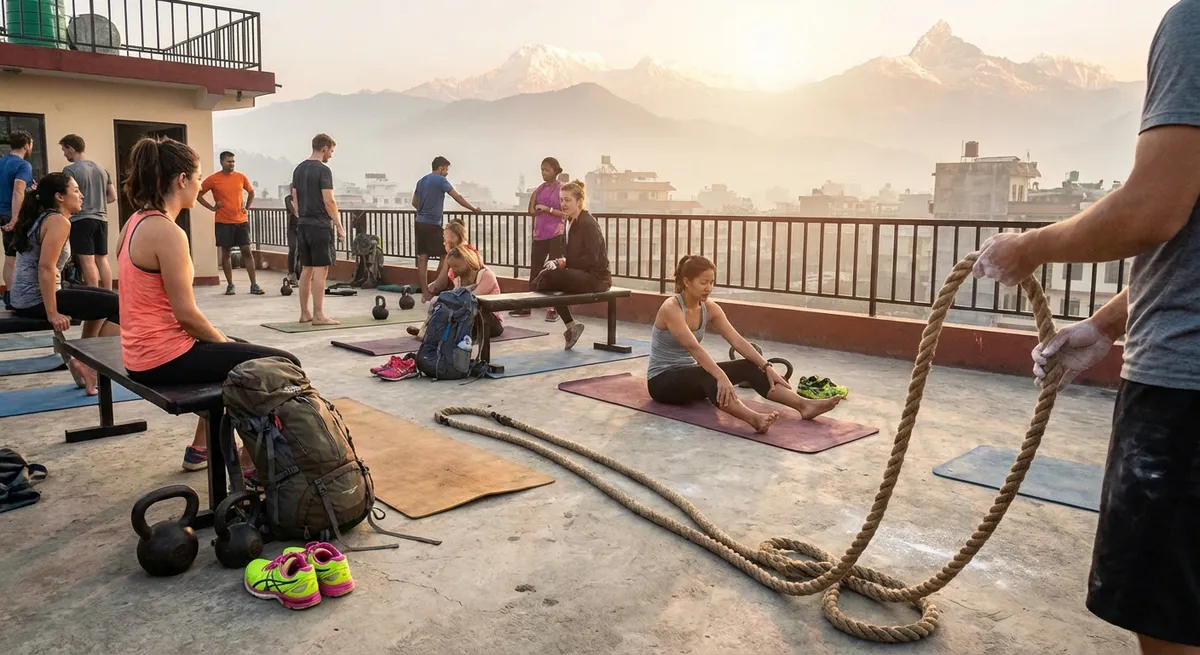
This guide dives into bold fitness destinations across the globe, plus five powerful active-travel tips to help you roam stronger, recover smarter, and squeeze every last drop of adventure from your trip.
Where Mountains Become Your Training Partner: High-Altitude Havens
High-altitude destinations don’t just serve up cinematic landscapes—they can also upgrade your endurance. Places like Chamonix in France, Colorado’s Rocky Mountains, and Peru’s Sacred Valley give you natural stair climbers in the form of switchback trails, glacier-fed rivers for cold plunges, and endless ridgelines to chase.
Training at elevation exposes your body to thinner air, encouraging physiological adaptations that can boost cardiovascular performance when you return to sea level. In Chamonix, trail networks spider out from town in all directions, from mellow balcony paths with views of Mont Blanc to quad-burning climbs that feel like a vertical gym session. In Colorado’s Summit County, bike paths link mountain towns, letting you spin from Breckenridge to Frisco with peaks towering above you as your motivation.
The key is respecting the altitude: arrive a day or two early, dial down the intensity at first, and hydrate like it’s your sport. Hike instead of sprint; swap ego for curiosity. As you climb higher, you’ll discover not just stronger lungs and legs, but a deeper sense of mental grit—one that doesn’t leave when your plane touches down.
Coastal Playgrounds: Where Every Horizon Line Calls You Forward
Oceans are natural reset buttons—and coastal destinations are perfect for travelers who crave movement with a side of salt spray. Think Bondi to Coogee in Sydney, Cape Town’s Sea Point Promenade, California’s Santa Monica and Venice beach paths, or Lisbon’s Atlantic-facing cliffs in Cascais.
These waterfront corridors offer soft-sand sprint lanes, stair runs on sea-view bluffs, sunrise yoga on the shoreline, and long, meditative runs with waves as your metronome. The changing terrain—boardwalk, sand, packed dirt—keeps your body guessing and strengthens stabilizer muscles that indoor workouts often neglect.
In Cape Town, you can power-hike Lion’s Head at dawn, surf in Muizenberg at midday, and wind down with a run along the promenade at golden hour, all in one epic, active day. In Sydney, the coastal trail links coves, swimming pools carved into rock, and cliffside viewpoints where you can slip in mini bodyweight circuits between photo stops.
Coastal destinations remind you that movement doesn’t have to be complicated to feel magical: bare feet, a rising tide, and a horizon that seems to say, “Keep going.”
Urban Frontiers: Turning Global Cities into High-Energy Gyms
Skylines can be just as inspiring as summits. Some cities are engineered for active souls, with bike lanes, pocket parks, stair-filled viewpoints, and waterfront paths that make it impossible to sit still. Think Copenhagen’s bike-first culture, Vancouver’s Stanley Park loop, Tokyo’s Imperial Palace running circuit, or Barcelona’s beach-to-hill variety.
In Copenhagen, cycling is a way of life, and you can log serious leg work simply by commuting between cafés, museums, and waterfront hangouts. Vancouver’s Seawall delivers miles of traffic-free running and cycling around forest-lined bays and mountain-framed inlets. Tokyo’s loop around the Imperial Palace is lit, secure, and full of local runners pacing laps at almost every hour.
The beauty of urban fitness destinations lies in accessibility—no car, no problem. Lace up, grab a city map or navigation app, and build your own “sight-running” route: sprint intervals between landmarks, stair climbs up metro exits, and park circuits with quick strength blocks. Each traffic light becomes a mini rest interval; each new neighborhood, a reason to keep your pace alive.
Wild Trails, Ancient Paths: Hiking Destinations with a Soul
Some paths are more than routes—they’re stories etched into the earth. Classic trekking regions like Patagonia, New Zealand’s South Island, and the Dolomites in Italy blend high-output hiking with raw, cinematic beauty that makes every step feel meaningful.
In Patagonia’s Torres del Paine, wind-sculpted valleys, azure lakes, and granite spires transform your hike into a full-body experience; you’re not just climbing, you’re bracing, balancing, and adapting. New Zealand’s Great Walks—like the Routeburn or Tongariro Alpine Crossing—offer well-marked trails that let you focus on rhythm and breath while moving through mossy forests, volcanic landscapes, and glacier-carved valleys.
The Dolomites create a playground of Via Ferrata routes, ladders, and ledges that blend mountaineering and fitness with a raw jolt of adrenaline. Your quads and calves will burn, but every overlook reminds you that effort is the price of perspective.
These destinations are where you learn that the most satisfying “finish lines” aren’t inflatable arches—they’re quiet passes, sun-washed ridges, or the simple act of arriving at a mountain hut, lungs humming and heart wide open.
Jungle Heat and Island Grit: Tropical Training Escapes
If your soul lights up near palm trees and warm seas, tropical destinations can turn every day into a self-powered adventure. Think Costa Rica’s Pacific coast, Hawaii’s island trails, Thailand’s islands, or Bali’s rice-terrace ridges.
Costa Rica’s mantra—“pura vida”—shows up in its movement culture: surfing dawn patrols, waterfall hikes, jungle zipline approaches that have you scrambling and climbing before the adrenaline rush even begins. On Oahu, you can hike steep ridges in the morning, practice ocean swimming at Waikiki or Ala Moana, and finish with a sunset paddle.
In Thailand, longtail boat rides to hidden bays can double as swim workouts, while steep temple stairways offer unexpectedly brutal cardio. Bali’s Campuhan Ridge Walk or Mount Batur sunrise hike combine flowy movement with panoramas that feel almost unreal.
Tropical climates ask more from you: extra hydration, careful planning around peak heat, and an elevated focus on recovery. But they give back in abundance—fresh local fruits, ocean-soaked muscles, and a kind of relaxed intensity that reminds you training can feel like vacation, not punishment.
Five Active Travel Tips to Elevate Every Fitness Adventure
These five strategies help you arrive ready, stay strong, and return home feeling upgraded—not wrecked.
1. Design Your Trip Around Movement “Anchors,” Not Just Attractions
Instead of building your itinerary solely around tourist sites, choose one to two movement “anchors” for each destination: a sunrise trail, a specific bike route, a city park loop, a climb, or a local class. In Switzerland, that might be a lakeside run in Lucerne; in Lisbon, hill repeats up to a miradouro (viewpoint); in Rio, a morning run along Copacabana before the crowds.
These anchors give each day a fitness-focused spine and ensure that movement becomes a non-negotiable part of your experience, not an afterthought squeezed in between tours.
2. Travel Light but “Train Ready”
You don’t need a suitcase full of gear to stay active, but a minimalist kit goes a long way. Prioritize:
- One pair of versatile training shoes suitable for running, hiking light trails, and city walks
- Quick-dry apparel that works for both workouts and casual wear
- A compact resistance band or mini loop for strength sessions in small spaces
- A collapsible water bottle and electrolyte packets for long, hot days
This setup ensures you’re always ready to say “yes” when a spontaneous hike, stair climb, or bike ride appears on your path.
3. Sync with the Local Rhythm Instead of Fighting Jet Lag
Use movement to adjust to new time zones instead of forcing your usual training plan. When you land:
- Grab sunlight with a gentle walk or easy jog to reset your circadian rhythm
- Do a short mobility or bodyweight session to wake up stiff travel muscles
- Keep your first high-intensity session until after a full night’s sleep
Your body adapts faster when you combine natural light, moderate exercise, and consistent meal times. You’ll recover better, enjoy more of the destination, and reduce your risk of injury from “jet-lagged hero workouts.”
4. Let Local Terrain Shape Your Training
Rather than trying to copy your at-home routine, allow each place to rewrite your workout playbook. In a hilly town, focus on hill sprints and stair climbs. Near water, build in swims, paddles, or shoreline runs. In a bike-centric city, use cycling as your core cardio.
This approach not only respects the environment—you’re using what’s naturally available—but also makes your training more memorable. Your “leg day” becomes that steep lane in Lisbon; your “tempo run” becomes a lap around Stanley Park with the city skyline watching.
5. Recover Like It’s Part of the Adventure
When you’re burning energy exploring, recovery becomes your secret performance weapon. Treat it like a non-negotiable ritual:
- Hydrate consistently, especially at altitude or in heat
- Seek out stretching opportunities: beach yoga, hotel-room mobility, park benches as stretch stations
- Embrace local recovery traditions—onsen in Japan, thermal baths in Budapest, hammams in Morocco, saunas in Nordic countries
By baking recovery into your travel narrative, you avoid burnout and give your body space to absorb the benefits of your adventure-driven training.
Conclusion
Fitness destinations aren’t just pins on a map; they’re invitations. To feel the wind in your lungs at 3,000 meters. To chase the tide line until the sun dissolves behind the horizon. To turn foreign streets into personal milestones and new languages into the soundtrack of your sweat.
When you travel with movement at the core, every border crossed becomes a new level unlocked. You collect not just photos, but personal bests in courage, resilience, and joy.
Pack your curiosity. Pack your grit. The world is waiting—and it’s ready to train with you.
Sources
- Centers for Disease Control and Prevention – Travel Health: Stay Healthy While You Travel - Guidance on hydration, illness prevention, and safe activity while traveling
- American Council on Exercise – Benefits and Risks of High-Altitude Training - Explains how altitude affects performance and adaptation
- Harvard T.H. Chan School of Public Health – Physical Activity Guidelines - Evidence-based recommendations for exercise volume and intensity
- World Health Organization – Global Action Plan on Physical Activity - Overview of physical activity benefits and global movement trends
- Tourism Vancouver – Stanley Park Seawall - Example of an urban fitness-friendly destination and its active features