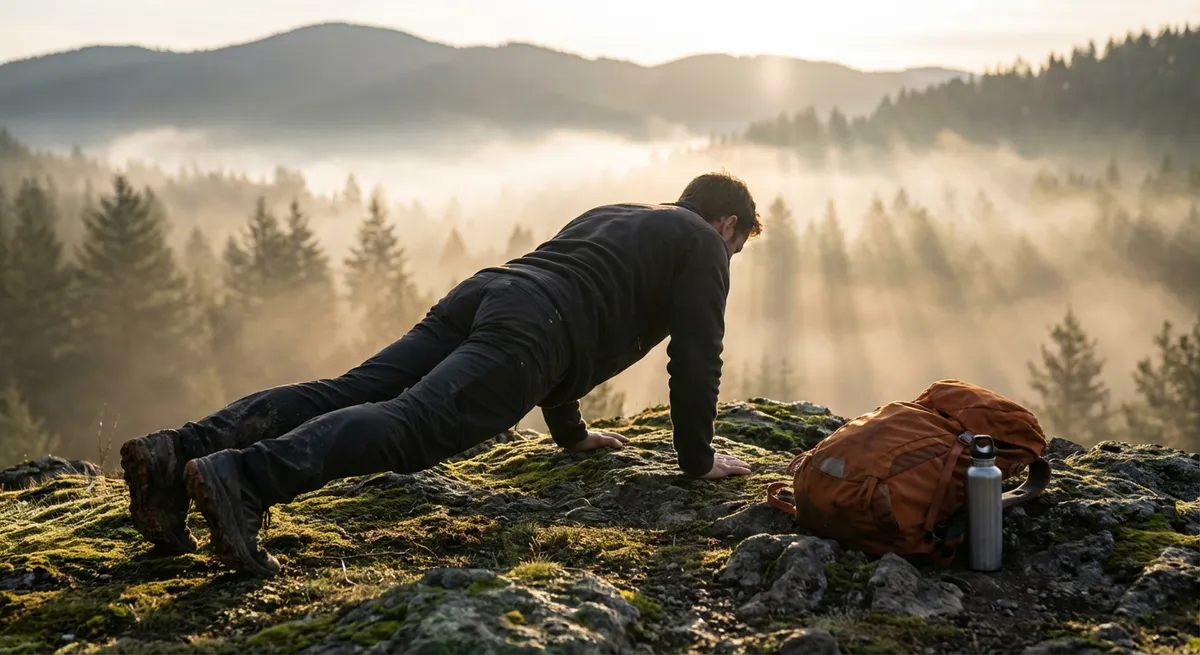
Why the World Is the Ultimate Training Partner
The moment you step outside, your body gets cues that a treadmill can’t mimic. Uneven trails ignite stabilizing muscles, ocean breezes challenge your breathing patterns, and altitude tweaks your endurance in ways no air-conditioned weight room can match. Outdoor training also taps into something primal—moving through real landscapes, not just virtual courses.
Research shows that exercising in nature can reduce stress, sharpen focus, and boost mood more than indoor workouts alone. Natural light helps regulate your sleep-wake cycle, which is critical when you’re hopping time zones and trying to stay on top of your training. For travelers who crave both performance and wonder, the outdoors isn’t a compromise; it’s an upgrade.
When you see a hill, you don’t just see an obstacle—you see a chance to build power. When you spot a set of stairs, you see a makeshift plyometric station. The world stops being scenery and starts being equipment. That mindset is the Fit Voyaga way: not just visiting a destination, but training through it.
Destination Highlights: Where Scenery Meets Sweat
Some places don’t just host your workout—they transform it. If you’re chasing adventure and athletic growth, aim for destinations that challenge both your legs and your comfort zone.
Along the rugged coasts of Portugal’s Algarve, clifftop paths become natural interval tracks. Run the flat stretches for speed, then attack the ascents with hill sprints. Finish with bodyweight circuits on the beach—push-ups, walking lunges, and planks as the tide rolls in. The shifting sand forces your stabilizers to fire, turning a simple lunge into a full-body demand.
In Colorado’s high-altitude towns like Boulder, every breath becomes training. The thinner air pushes your cardiovascular system into overdrive. Long hikes on mountain trails double as endurance sessions, and even easy jogs feel like threshold runs. Return to sea level, and you’ll feel the benefits in your pacing and recovery.
Urban explorers can turn cities into obstacle courses. In Tokyo, early-morning runs around the Imperial Palace loop give you steady terrain with cultural snapshots around every bend. In Barcelona, the long promenade of Barceloneta Beach is perfect for sunrise tempo runs, followed by strength work using benches, railings, and park spaces.
Wherever you land, ask: How can this landscape shape my workout? Coastal cliffs demand climbs, deserts reward early-morning endurance, and dense cities invite creative circuit training between landmarks.
Outdoor Training Framework: Build a Travel-Proof Routine
A powerful travel workout doesn’t need a predictable schedule—it needs a reliable framework. Instead of clinging to a rigid gym plan, build a flexible outdoor routine that survives delayed flights, shifting weather, and surprise adventures.
Design your week around training “themes” rather than specific equipment: strength, speed, endurance, mobility, and adventure. For example:
- Strength Day: Bodyweight or resistance band circuits (push-ups, Bulgarian split squats on a bench, band rows anchored to a pole or tree, single-leg Romanian deadlifts)
- Speed Day: Hill sprints, stair repeats, or short intervals on a flat promenade or park loop
- Endurance Day: Long coastal run, mountain hike, or extended bike ride
- Mobility Day: Sunrise flow session in a park or on the beach—hips, hamstrings, T-spine, shoulders
- Adventure Day: Surf lesson, guided trail run, kayak outing, or climbing session
Aim for 30–60 minutes per session, adjusting intensity based on your travel fatigue and sleep. Don’t underestimate walking: high-step-count sightseeing days still tax your legs, so scale your runs or strength work accordingly. Your goal on the road isn’t perfection—it’s momentum.
5 Active Travel Tips for Fitness Adventurers
These five strategies keep your workouts sharp while your itinerary stays wild.
1. Scout Your “Training Map” Before You Land
Before you touch down, study your destination like an athlete, not just a tourist. Use map and satellite views to spot:
- Parks, riverfronts, and coastal paths for runs and circuits
- Stair-heavy areas, hill streets, or viewpoints for strength and conditioning
- Public sports facilities—outdoor gyms, running tracks, basketball courts
Check local sunrise and sunset times to plan safe training windows. Bookmark two or three backup spots in case one is crowded, closed, or under construction. When you arrive, your plan is already waiting.
2. Pack a Micro Gym That Fits in Your Daypack
Your gear should weigh less than your curiosity. Prioritize:
- Light resistance band with handles or a loop band
- Jump rope for quick cardio hits in small spaces
- Compact suspension trainer or a long strap you can anchor to a tree or playground structure
- Foldable travel mat or a large towel for beach and park sessions
This small setup turns any patch of ground—airport green space, hostel terrace, lakeside pier—into a legitimate training zone.
3. Use Local Terrain as Performance Fuel, Not Just Backdrop
Let the destination dictate your workout style to gain unique adaptations:
- Hillside towns (Lisbon, San Francisco): power and glute training via hill walks, loaded carries, and sprints
- Coastal spots (Cape Town, Gold Coast): sand sprints, surf sessions, paddle boarding for core and balance
- Mountain hubs (Chamonix, Queenstown): elevation hikes, trail runs, stair climbs to overlooks
Treat each setting as a “block” in your long-term training—mountains for endurance, coasts for agility and balance, cities for speed and strength.
4. Anchor Your Day With One Non-Negotiable Movement Ritual
Travel is unpredictable, but one daily ritual keeps you grounded. Choose a 10–15 minute “always” session:
- A sunrise mobility flow by a window or balcony
- A daily 1-mile jog or brisk walk loop from your stay
- A set of 3 bodyweight circuits (e.g., squats, push-ups, planks, lunges) between shower and breakfast
This ritual doesn’t replace your longer sessions; it stabilizes your momentum. Even on travel days, you honor that promise to yourself—and that consistency is where real progress is built.
5. Train With Locals When You Can
Every destination has its own movement culture. Plug into it:
- Join a local run club or park bootcamp
- Take a sunrise yoga class on a rooftop or by the sea
- Try a destination-specific sport: surfing in Bali, bouldering in Fontainebleau, cycling in Girona
Not only does this expand your training vocabulary, it connects you to people who live and breathe the terrain daily. They know the safest trails, the hidden staircases, the best sunrise spots—and they’ll push your pace in ways solo training rarely does.
Safety, Recovery, and Respect in Wild Spaces
Epic workouts mean nothing if they derail your health or disrespect the places you explore. Outdoor training demands awareness as much as ambition.
Hydration is non-negotiable—especially at altitude, in humidity, or under intense sun. Carry water and electrolytes on longer sessions, and avoid starting hard workouts dehydrated from flights or nightlife. Respect local climate risks: heat index, air quality alerts, and ocean conditions can all shift quickly.
Recovery matters more when travel stress stacks on top of training load. Prioritize sleep, even if it means one less late-night outing. Build micro-recovery into your days: gentle stretching after walks, easy swims after tough runs, and short naps if you’ve crossed time zones.
Finally, leave every place better than you found it. Stay on marked trails where requested, pack out your trash, and avoid crowding sensitive natural areas just to “get the shot.” Strong travelers understand that protective choices are just another expression of power.
Conclusion
Every journey you take can sharpen you: stronger lungs on the ridgeline, steadier legs on the city stairs, calmer mind under an open sky. Outdoor workouts aren’t just a way to “stay in shape” while you roam—they’re how you forge a body and mindset capable of chasing bigger horizons.
Let your training shoes be as essential as your passport. Let your next destination be more than a backdrop—it’s your next challenge. Step outside, feel the terrain underfoot, and claim your miles. The world is wide, and you’re built to move through it.
Sources
- Centers for Disease Control and Prevention – Benefits of Physical Activity - Overview of health benefits from regular physical activity, including cardiovascular and mental health effects
- Harvard Health Publishing – Exercising Outdoors Has More Mental Health Benefits Than Indoors - Discusses mood and cognitive benefits linked to time in nature and outdoor movement
- European Environment Agency – Green Spaces and Health - Explores how access to green and blue spaces supports physical and mental well-being
- American College of Sports Medicine – Exercise at Altitude - Explains how high-altitude environments affect training and performance
- National Park Service – Hike Smart - Practical guidance on outdoor safety, hydration, and planning for nature-based activities