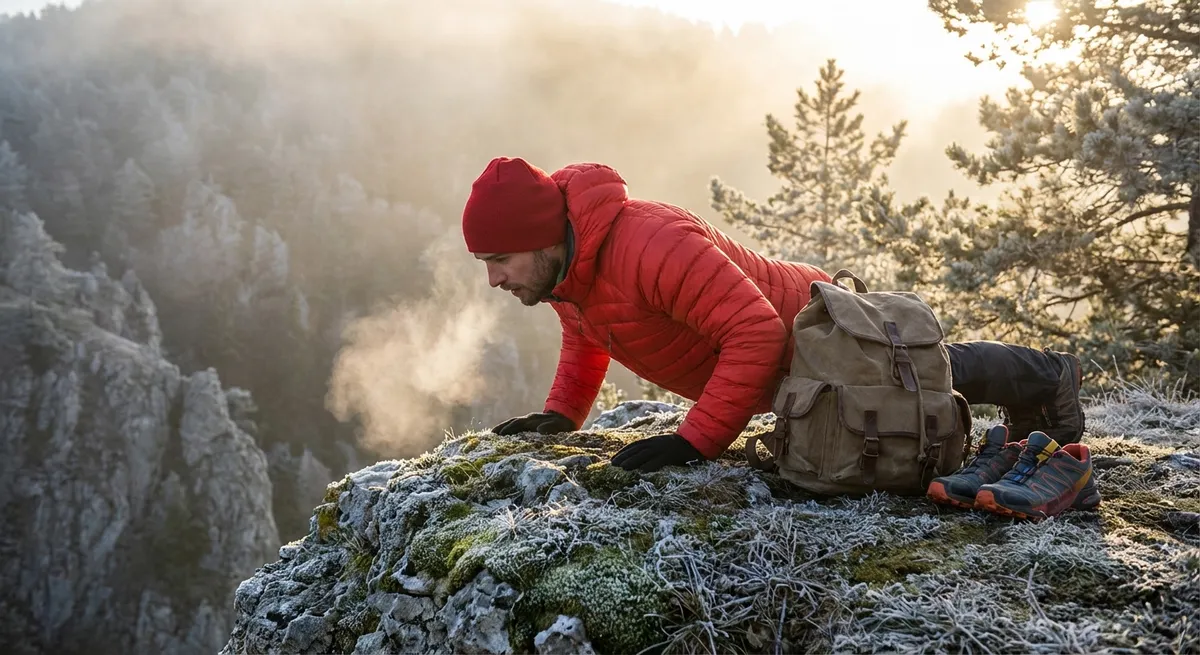
Why the World Is the Best Training Partner You’ll Ever Have
Your body was built for varied terrain, changing weather, and unpredictable movement—not just the predictable layout of a gym floor. Outdoor workouts tap into that original design. Uneven ground trains your stabilizer muscles, changing temperatures challenge your circulation and endurance, and shifting scenery keeps your brain engaged instead of counting down minutes on a treadmill. Travel magnifies all of this, offering new surfaces, altitudes, and micro-adventures that your usual routine can’t replicate.
There’s also a powerful mental edge to training outdoors when you’re away from home. Research consistently links green and blue spaces—think forests, parks, coastlines—with reduced stress, improved mood, and better focus. When you sprint along a beach in Portugal, climb stairs beside a temple in Kyoto, or flow through mobility drills in a Chilean plaza, you’re not just working your muscles; you’re hardwiring memories of strength into specific places. Your passport stamps become a record of physical milestones as much as travel stories.
Outdoor training while traveling also develops a trait every adventurer needs: adaptability. Maybe the hotel gym is closed, the local studio is full, or you’re on a remote island with nothing but sand and sea. Learning to build a session from a bench, a hill, a stairway, or a patch of grass makes you resilient and resourceful. Over time, your training doesn’t just survive your travels—it’s strengthened by them.
Crafting Your Destination-Driven Training Ritual
Instead of treating your workouts as something you “fit in,” reframe them as a daily travel ritual—your anchor in unfamiliar places. Start by scouting your surroundings the way a climber studies a route. Open a map app and switch to satellite view: look for parks, riverside paths, waterfront promenades, hills, and public staircases. Check sunrise and sunset times and decide whether you’re a dawn explorer or a twilight mover in this particular place.
Build a simple structure that travels well: a short warm-up, 20–30 minutes of focused effort, and a cool-down that doubles as sightseeing. For instance, you might warm up in your accommodation with mobility work, then jog to a local viewpoint, where you perform your main bodyweight circuit, and end by walking back through a new neighborhood. The workout becomes a narrative, not just a task.
Let the destination dictate the flavor of your session. Coastal town? Think sand sprints, deep walking lunges by the waterline, and push-ups with your hands on driftwood or rocks. Mountain village? Slow hill climbs, downhill control drills, and breathing exercises in cooler air. Historic city? Use plazas for dynamic stretching, benches for dips and step-ups, and staircases near monuments for leg-burner intervals. Tie one element of your workout to a place you want to remember; every time you train there, you deepen your connection to it.
Finally, set an intention each day that goes beyond calories or reps. Maybe today is about exploring a new route, practicing patience at higher altitude, or feeling gratitude for the mobility that lets you roam. That intention turns your outdoor workout into a mindful travel ritual—one that leaves you more present, not more depleted.
Five Active Travel Tips for Relentless Fitness Adventurers
1. Design a “One-Pack” Travel Training Kit
You don’t need a trunk of gear to stay in peak form on the road. Build a compact kit that lives in your backpack so you’re always ready to turn any space into a training zone. One or two light resistance bands, a jump rope, and maybe a compact suspension trainer can unlock dozens of movements without tipping your luggage over the weight limit. Add a collapsible water bottle and a small microfiber towel, and you’re fully outfitted.
The real magic of a small kit is psychological: it’s a visual reminder that fitness is part of your travel identity, not an afterthought. When you arrive in a new city, unpack it immediately. Lay the jump rope by the door and loop the band over a chair; this tiny ritual tells your brain, “We train here.” Suddenly, a rooftop terrace in Athens or a courtyard in Marrakech isn’t just photogenic—it’s your temporary outdoor studio.
2. Let Terrain Be Your Coach, Not Your Excuse
Every environment offers something: sand for resistance, hills for strength, stairs for power, flat paths for tempo work. Instead of lamenting what a place doesn’t have—no gym, no track, no perfect running trail—ask, “What is this terrain trying to teach me?” Soft sand builds stabilizers and ankle strength; cobblestone streets challenge your balance; long boardwalks invite steady, meditative runs.
Next time you land somewhere new, pick one natural or urban feature and build an entire session around it. In a city with a long riverside walkway, you might alternate fast and easy intervals between bridges. In a hill town, walk or run every steep street you can find, then use the top of each hill for a short strength set: squats, push-ups, and core holds. By the time you leave, that once-intimidating terrain will feel like an ally you’ve learned to read.
3. Turn Sightseeing Into Structured Movement Quests
Instead of checking off attractions from the seat of a tour bus, design “movement quests” that blend exploration with training. Start by choosing three or four landmarks you want to see—viewpoints, markets, parks, street art clusters—and connect them via a running route, a power walk, or a combination of jogging and bodyweight stops.
At each spot, assign a mini-challenge that fits the space: stair repeats at a cathedral, balance work on a quiet stone ledge, or a short mobility flow on a shaded patch of grass. Take a quick photo after you finish each challenge, not just of the scenery but of you in the aftermath—sweaty, smiling, fully present. By the end of the day, you’ll have strung together a memory-rich workout route that feels more like an adventure than a routine.
4. Respect Climate and Time Zones Like a Pro Athlete
Chasing sunrise runs in Bali or sunset circuits in Iceland is romantic—but your body still has to navigate jet lag, heat, humidity, cold, and altitude shifts. Treat these factors the way an elite athlete treats competition conditions: plan for them rather than pretending they don’t exist. In hot, humid destinations, schedule your hardest work early in the morning or near dusk, carry water or know where you can refill, and ease into intensity over the first couple of days.
Crossing multiple time zones? Start with shorter, low-intensity outdoor sessions that prioritize circulation and daylight exposure: easy walks, relaxed bike rides, or light jogs in local parks. Natural light will help anchor your circadian rhythm, and gentle movement will flush stiffness from flights or long drives. As your sleep normalizes, ramp up intensity. You’ll adapt faster, and your outdoor sessions will feel like energizing resets instead of exhausting slogs.
5. Build Local Micro-Connections Through Movement
One of the hidden powers of outdoor training on the road is how quickly it plugs you into the local rhythm. Early-morning park regulars, waterfront joggers, and stair-running diehards form an unofficial global tribe. A simple nod, a shared pace, or asking for a route recommendation can open doors to local insights you’d never find in guidebooks.
Consider joining a free community run, an outdoor yoga session, or a beach bootcamp if you stumble across one. If there’s a language barrier, let movement do the talking: follow along, mirror the instructor, and smile. You’ll leave not just with a good sweat but with a feeling of belonging in a place that was unfamiliar just hours earlier. Those micro-connections can transform a destination from “some city I visited” into “the city where I crushed hill intervals with locals at dawn.”
Destination Highlights to Fuel Your Outdoor Training Imagination
Certain destinations practically beg you to take your training outside. Coastal routes like the seaside paths in Sydney, Barcelona’s beachfront promenades, or Cape Town’s Sea Point Promenade offer flat, scenic stretches ideal for tempo runs, speed play, or sunrise mobility flows. Combine a morning session with a plunge in the ocean to cool down, and you’ve created a ritual you’ll crave long after you’re home.
Mountain hubs—think Chamonix in France, Queenstown in New Zealand, or Colorado’s Front Range—are natural playgrounds for hikers, trail runners, and cyclists. Use gentler trails on arrival days for acclimatization, then build to longer treks or steeper ascents as your legs and lungs adapt. Treat each summit or viewpoint as a “checkpoint workout”: a few rounds of bodyweight strength work before you head back down, reinforcing the idea that reaching views is something you earn with effort.
Urban explorers aren’t left out. Cities like Vancouver, Copenhagen, and Tokyo are laced with parks, water edges, and pedestrian-friendly zones that make outdoor sessions easy and safe. In dense historic centers—from Lisbon to Istanbul—stairs become your best training tool, while riverbank paths offer continuity away from traffic. The key is to land with curiosity instead of a rigid plan: notice how locals move through their city, then weave your own training into that flow.
Conclusion
You don’t have to choose between being the traveler who chases horizons and the athlete who chases progress. You can be both—the person who finishes a sunrise hill session before the city fully wakes, who turns a random park into a personal training ground, who leaves each destination stronger in body and richer in story. With a simple kit, a flexible mindset, and a willingness to let terrain and culture shape your movement, the world becomes an ever-changing arena for your evolution.
Next time you zip up your bag, pack more than clothes and a passport. Pack the intention to roam strong—to let every coastline, alleyway, hill, and plaza remind you what your body can do when adventure and training move in the same direction.
Sources
- American Council on Exercise (ACE): The Benefits of Outdoor Exercise - Overview of physical and psychological benefits of training outside
- Harvard Health Publishing: Spending Time in Nature Linked to Health Benefits - Explains how green spaces reduce stress and improve well-being
- Centers for Disease Control and Prevention (CDC): Travel Health and Hydration Guidance - Practical advice on staying hydrated and safe while traveling
- World Health Organization (WHO): Physical Activity Fact Sheet - Global recommendations and benefits of regular physical activity
- University of Exeter: Research on Nature, Health, and Wellbeing - Summarizes research linking outdoor environments with improved health outcomes