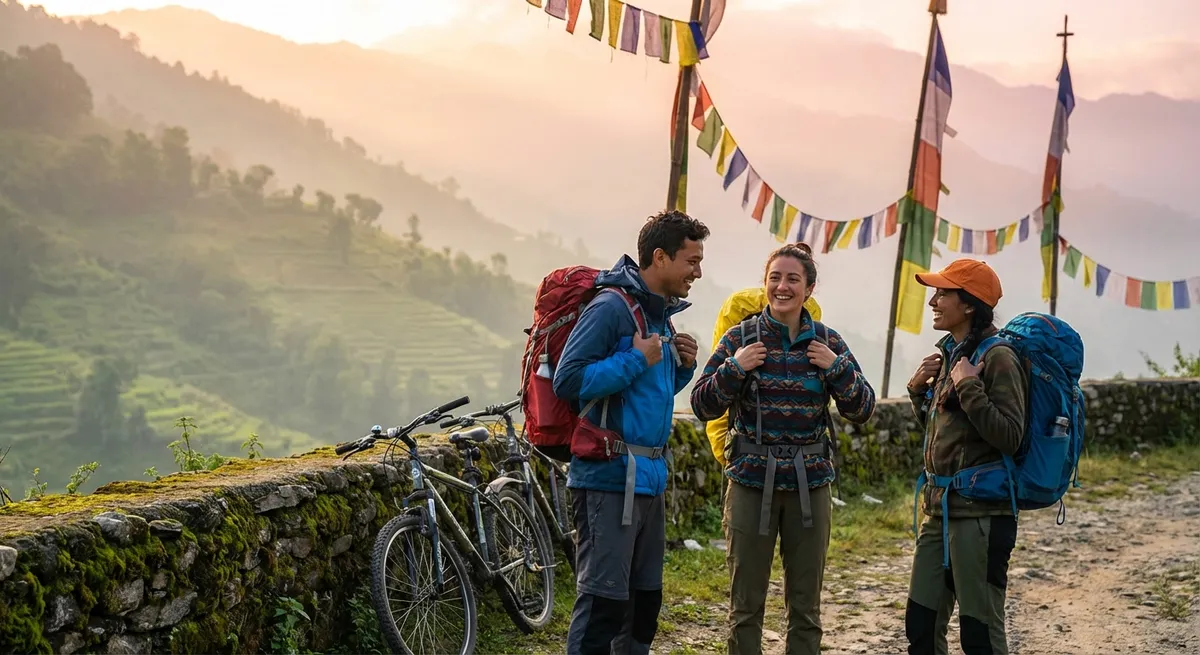
This guide is your launchpad into active travel: five adventure‑ready tips, destination ideas, and mindset shifts to help you turn your next getaway into a powerful reset for both body and soul.
Tip 1: Build Your Trip Around a Daily Movement Ritual
Instead of asking, “Where should I go?”, start with, “How do I want to move every day?” Then let that answer shape your destination.
If you crave long, steady efforts—think coastal runs in Lisbon at sunrise or cycling through rice paddies in Ubud, Bali. Prefer power and short bursts? Consider city stair sprints in Athens, rock scrambling in Joshua Tree, or hill repeats in the alleyways of Valparaíso, Chile. Love low‑impact endurance? Lake swims in Switzerland, paddleboarding in Croatia, or week‑long hiking routes in New Zealand’s South Island will light you up.
Anchor your trip around one consistent ritual: a 30–60 minute “movement window” every morning before sightseeing. This could be a beach run along Bondi in Sydney, a yoga flow on a rooftop in Mexico City, or a brisk walk up to a local viewpoint in Cape Town. When movement becomes non‑negotiable, the rest of your trip rearranges itself around feeling energized instead of drained.
Tip 2: Let the Landscape Design Your Workout
The planet is already programmed with one of the most dynamic “gyms” you’ll ever step into. Your job is to read it.
Mountain towns like Chamonix (France) or Banff (Canada) practically beg for hiking, trail running, and via ferrata routes. Island destinations such as Madeira, the Azores, or Hawaii offer volcanic ridge walks, cliffside hikes, and surfing that turns the ocean into resistance training. River cities like Budapest or Seoul deliver long, flat paths for cycling and interval runs along the water.
Use the environment to vary your training:
- Hills and stairs for strength and power
- Beaches and sand dunes for lower‑impact but high‑effort cardio
- City parks for bodyweight circuits and sprints
- Lakes and calm bays for open‑water swimming or kayaking
Let Tokyo’s side streets challenge your navigation and pacing, Patagonia’s winds test your grit, and Scotland’s highlands work your legs in ways a treadmill never could. When you allow the terrain to dictate the session, every workout becomes an exploration.
Tip 3: Travel Light, Train Smart: Minimal Gear, Maximum Adventure
Active travel isn’t about lugging a mini gym through the airport. It’s about choosing a few smart items that multiply your options without weighing you down.
Pack essentials that unlock movement anywhere:
- Lightweight resistance band: for strength sessions in hotel rooms, airport lounges, or on balconies with a view.
- Compact jump rope: ideal for quick, high‑intensity bursts in courtyards, parking lots, or quiet plazas.
- Trail‑ready shoes: a single pair that can handle cobblestones, light trails, and urban runs.
- Swim goggles and a compact swimsuit: instant access to pool lanes, lakes, and ocean coves.
With just these tools, you can turn a hostel courtyard in Cusco into a conditioning circuit, a ferry deck in the Greek Islands into your cardio zone, or a quiet square in Seville into your personal mobility studio.
Train smart by adapting your sessions to your travel days: keep it shorter and lighter on long transit days, then lean into longer hikes or rides when you’re settled. Think of your gear as an invitation, not a burden—small signals that remind you movement is always within reach.
Tip 4: Chase Experiences, Not Just Landmarks
Active travel flips the question from “What should I see?” to “What should I experience in my body?”
Instead of only ticking off photo spots, look for movement‑rich moments that connect you to the soul of a place:
- In Kyoto, explore temple districts on foot at dawn, climbing stone steps and weaving through quiet alleys before the crowds awake.
- In Reykjavik, book a guided glacier hike or ice‑climbing experience and feel your legs burn as you cross blue ice and black volcanic sand.
- In Queenstown, New Zealand, trade a passive bus tour for mountain biking, canyoning, or bungee jumping that pulses adrenaline through every vein.
- In Lanzarote or Tenerife (Canary Islands), follow volcanic trails that blend surreal lunar landscapes with Atlantic views.
Every country has its own “movement language”—surf breaks in Portugal, high‑altitude treks in Peru, cycling culture in the Netherlands. Seek out the activities that locals love instead of ones designed only for tourists. You’ll collect skills and sensations, not just selfies.
Tip 5: Recover Like an Athlete, Explore Like an Adventurer
Active travel isn’t about grinding your body into the ground; it’s about leaving stronger, not shattered. To sustain adventure across days and time zones, recovery is your secret weapon.
Use your destination as recovery fuel:
- Soak in thermal baths in Budapest, Iceland, or Japan’s onsen towns to soothe muscles and reset your nervous system.
- Walk, don’t ride, whenever possible—post‑workout strolls through neighborhoods in Prague or Montreal double as active recovery and cultural immersion.
- Prioritize local, nutrient‑dense foods: Mediterranean fare in Greece or Italy, poke bowls in Hawaii, fresh produce markets in Colombia or Vietnam.
- Guard your sleep: earplugs, an eye mask, and a flexible schedule so your body can adapt to new time zones.
Program lighter days into your itinerary: maybe a gentle city bike ride in Copenhagen between two big hiking days, or an ocean swim and mobility session between long travel legs. When you treat yourself like an athlete on an expedition rather than a tourist on overdrive, your energy lasts longer—and so does your sense of wonder.
Conclusion
Active travel is more than “staying fit on vacation.” It’s a decision to let movement guide the way you meet the world. When you build each journey around a daily ritual, let landscapes shape your training, pack intentionally, pursue experiences over landmarks, and recover with purpose, every trip becomes a training camp for your boldest self.
Your next adventure doesn’t have to wait for the perfect time, budget, or fitness level. Start where you are, pick a place that stirs your curiosity, and promise yourself this: you won’t just pass through—you’ll move through, climb through, and swim through until your passport and your pulse tell the same story.
Sources
- CDC – Physical Activity Basics - Overview of recommended activity levels and health benefits of regular movement
- Harvard T.H. Chan School of Public Health – Physical Activity and Health - Evidence-based insights on how different types of activity support long-term health
- National Park Service – Plan Your Visit - Guidance on safely planning active experiences in U.S. parks and natural spaces
- Adventure Travel Trade Association – Industry Snapshot - Data and trends on adventure and active travel worldwide
- World Health Organization – Physical Activity Factsheet - Global recommendations and research on physical activity and its impact on health