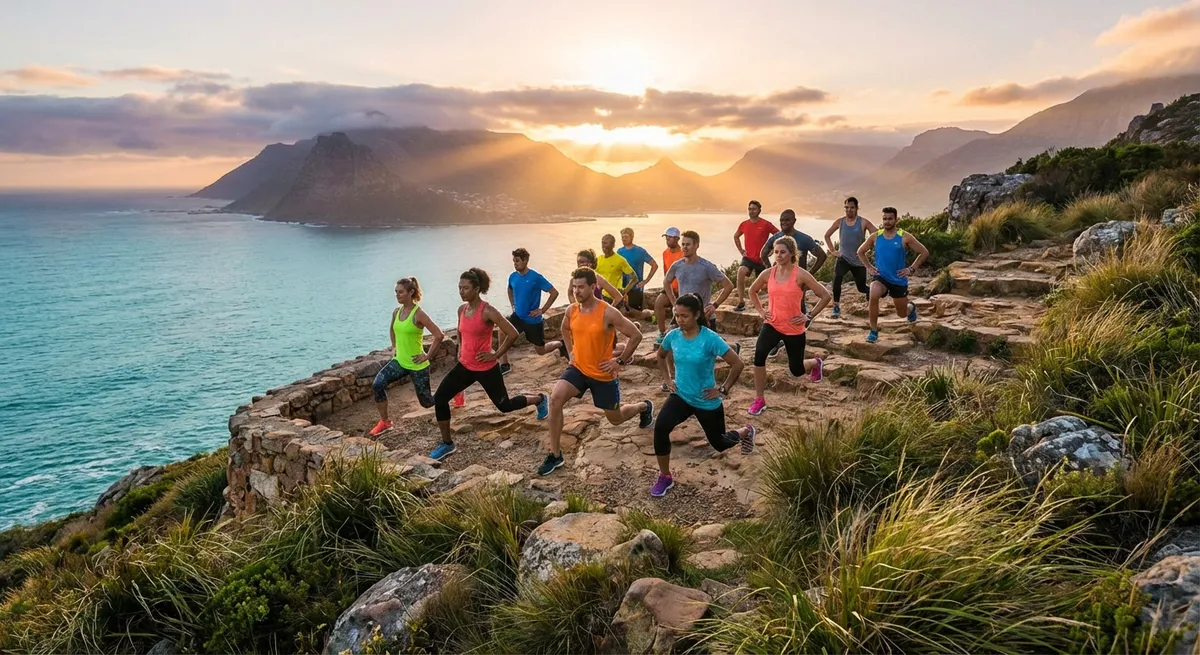
This is your invitation to roam stronger: to pick destinations that challenge your body, expand your comfort zone, and leave you returning home fitter than when you left.
Where Sweat Meets Skyline: Urban Destinations That Move You
Some cities are built for speed, not just selfies. They’re wired with running paths, public parks, bike lanes, and waterfront boardwalks that turn your daily workout into a moving postcard.
In Copenhagen, you can blend fitness with freedom by hopping on a bicycle like a local. Over half the city’s residents commute by bike, and the flat terrain plus endless bike lanes make it a dream for cyclists who want both sweat and sightseeing. Sunrise rides past Nyhavn and lakeside paths give you a gentle burn and a fresh perspective on the city.
Head to Vancouver, and the city itself becomes your multi-sport playground. Run or cycle around the seawall in Stanley Park, do hill sprints up to Queen Elizabeth Park for panoramic views, or paddleboard off Kitsilano Beach. Here, it’s easy to move from trail to ocean to city streets in a single day and feel your body adapt to every surface.
Then there’s Barcelona, where early-morning runs from the Gothic Quarter down to Barceloneta Beach deliver a rare combo: ancient stone alleys, Mediterranean sunrise, and a sandy finishing stretch where you can cool off in the sea. Urban fitness destinations aren’t just about gyms—they’re about using the city’s bones as your equipment.
Wild Spaces, Wilder Workouts: Nature-Driven Fitness Destinations
If your soul wakes up at the sound of crashing waves or wind in the pines, let wild spaces be your training partners. Nature has a way of exposing weaknesses and building grit in a way no sleek gym can.
In New Zealand’s South Island, you can hike steep switchbacks in Fiordland National Park one day and kayak across glacial lakes the next. The constantly changing terrain—rocky climbs, root-tangled forest paths, and rolling hills—forces your muscles and lungs to adapt, turning every outing into functional, full-body training.
On the other side of the world, Costa Rica mixes tropical heat with adventure. Zipline through the canopy, then tackle a waterfall hike where each wet step doubles as balance training. Morning surf sessions in Tamarindo or Santa Teresa will torch your core and upper body while teaching patience and focus as you read each wave.
High-altitude seekers can chase thinner air in places like Chamonix in the French Alps. Even slow-paced hikes here feel like full-intensity workouts thanks to elevation. Your heart learns to work harder, your legs discover new endurance, and your mind meets a deeper version of “I can do hard things” each time you push above the tree line.
Training With a Passport: Five Active Travel Tips Adventurers Swear By
Turning a trip into a training ground isn’t about rigid routines—it’s about smart, flexible habits. These five tips help you stay adventurous and athletic, no matter where your boarding pass takes you.
1. Let the Terrain Design Your Workout
Instead of forcing your usual gym session into a new environment, ask: What is this place built for?
Cliff-lined coasts are perfect for stair sprints, hill repeats, and beach runs that challenge stability. Mountain towns lend themselves to hiking, trail running, or mountain biking. Flat, compact cities encourage daily step-count domination and long exploratory runs. Let the landscape dictate your movement style, and you’ll get a workout that feels organic and unforgettable.
2. Pack a “Micro Gym” in Your Carry-On
You don’t need a trunk full of gear to stay strong on the road. Lightweight essentials—like a resistance band, a mini loop band, and a jump rope—can transform any small hotel room or rooftop terrace into a training zone. Use resistance bands for strength circuits after a long travel day, or set a 10–15 minute jump-rope session before breakfast to spike your heart rate and reset jet-lagged energy. Compact tools keep your baseline fitness sharp so you can fully enjoy the “big” activities: long hikes, surf lessons, or citywide bike tours.
3. Train Smart for the Climate and Altitude
Your body needs time to adjust to heat, humidity, cold, or high elevation. If you’re heading to hot, humid destinations, plan early-morning or sunset workouts and hydrate more than you think you need. For mountain or high-altitude cities, dial back intensity on your first few days—shorter hikes, slower runs, or gentle walks—so your heart and lungs can adapt. Respecting the environment you’re entering isn’t just smart; it ensures you can go harder later in the trip without burning out.
4. Build Movement Into Your Itinerary, Not Around It
Make your daily “must-move” moment part of the adventure. Choose walking tours over bus tours, book kayaking instead of a standard harbor cruise, or sign up for a local running group’s weekly run to combine community with cardio. Use simple rules: walk any distance under 2 km, take stairs whenever possible, and aim for one intentional training session (20–40 minutes) three to four days a week. You’ll maintain or even grow your fitness without feeling like you’re sacrificing exploration.
5. Recover Like an Athlete, Not a Tourist
The more actively you travel, the more deliberate your recovery needs to be. Long flights, unfamiliar beds, and extra mileage can leave even seasoned adventurers stiff and drained. Prioritize sleep by respecting local time zones as quickly as you can, stretch or do light yoga after intense activity days, and stay on top of hydration—especially in hot or high-altitude locations. When available, use cold-water dips (ocean, river, or even a cold hotel pool) and short sauna sessions to soothe sore muscles. Strong travel isn’t just about how hard you push; it’s about how well you bounce back.
Destination Highlights: Places That Redefine “Vacation Shape”
Some places don’t just host your workouts—they transform how you think about your body and your limits. These destinations blend culture, scenery, and physical challenge into one powerful experience.
Kyoto, Japan invites you to treat every temple and shrine as a checkpoint in a moving meditation. Run or power-walk up the Philosopher’s Path at dawn, then tackle the staircase gauntlet of Fushimi Inari Taisha. The quiet streets in the early morning give you space to breathe deeply, move deliberately, and feel how endurance and mindfulness can coexist.
In Cape Town, South Africa, you can pivot from ocean to mountaintop in a single morning. Hike or run up Lion’s Head for sunrise, scramble rocky trails that demand balance and leg strength, then cool off with a sea swim or surf session at Muizenberg Beach. Each day can be a mini-triathlon of hiking, swimming, and exploring—your muscles will be as lit as the sunsets.
Reykjavik, Iceland offers a raw, elemental kind of fitness. Imagine trail runs along windswept coasts, hikes to geothermal hot springs where recovery literally bubbles out of the earth, and glacier walks that have you digging in with every step. The stark scenery pairs perfectly with powerful movement, reminding you that you’re small in the best possible way—yet stronger than you realized.
Conclusion
The world is not just a backdrop for photos; it’s a living, breathing training ground asking you to rise to meet it. When you choose destinations that challenge you physically and mentally, you don’t just collect stamps in your passport—you collect new personal records, new strengths, and new stories about the moments you almost quit but didn’t.
Roam to run. Wander to climb. Travel to test your limits. Let every border you cross be an invitation to become a tougher, braver, more alive version of yourself.
Your next trip isn’t a break from your fitness journey. It’s the next level of it.
Sources
- U.S. Centers for Disease Control and Prevention – Travel Health: Staying Healthy on the Road - Guidance on hydration, climate adaptation, and staying healthy while traveling
- World Health Organization – Physical Activity Fact Sheet - Global recommendations and benefits of regular movement that support active travel habits
- Visit Copenhagen – Cycling in Copenhagen - Details on bike infrastructure and why Copenhagen is ideal for active travelers
- Tourism Vancouver – Outdoor Activities - Overview of fitness-friendly experiences like running, hiking, and water sports in Vancouver
- New Zealand Department of Conservation – Walking and Hiking - Information about trail options and safety in New Zealand’s national parks