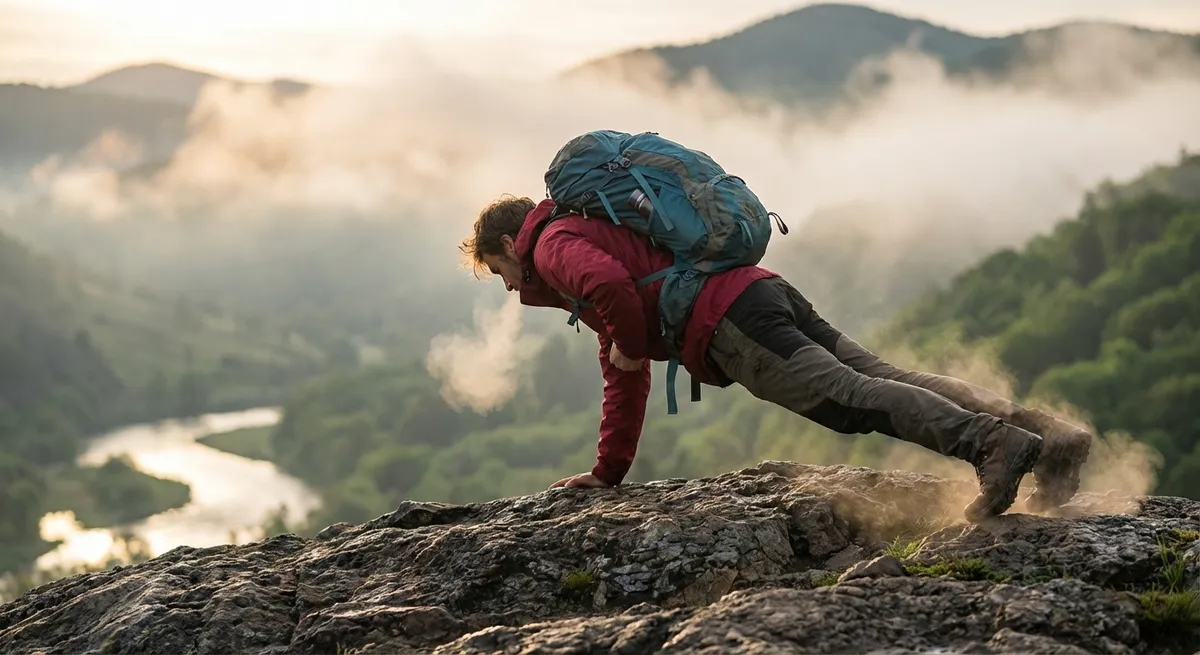
This guide is your passport to turning any journey into a living, breathing workout—without sacrificing the magic of exploration. Pack your curiosity, lace up your shoes, and get ready to train in the language of mountains, markets, and winding alleys.
What Adventure Fitness Really Means
Adventure fitness is the crossroads where physical training meets real-world exploration. It’s not a rigid routine you drag from city to city. It’s a flexible, movement-forward mindset that lets your surroundings dictate how you challenge your body.
In a seaside village, that might be interval sprints along the tide line between fishing boats. In a dense city, it might be stair repeats up a hilltop viewpoint before sunrise. On a mountain trail, it’s strength, stability, and endurance rolled into a single, breathtaking climb.
This approach goes beyond counting reps. You’re training your balance on uneven paths, your lungs in unfamiliar climates, and your mental resilience in entirely new contexts. The reward is a kind of fitness you can’t download from an app: adaptable, resilient, and deeply connected to the places you move through.
Destination Highlights: Where the World Becomes Your Training Ground
Every destination has a “training personality.” Once you start looking at landscapes and cityscapes with a fitness lens, entire worlds of possibility open up.
Picture this:
- Lisbon, Portugal: A vertical playground of cobbled streets and steep staircases. Hike up to Miradouro da Senhora do Monte at sunrise, using every hill as an incline workout and every overlook as your rest stop with a view over terracotta rooftops and the Tagus River.
- Queenstown, New Zealand: A hub of adrenaline and endurance. Start your day with a lakeside run around Lake Wakatipu, then hike Ben Lomond for a full-body test of strength and stamina, finishing with panoramic alpine views that make every burning step worth it.
- Kyoto, Japan: A living blend of serenity and challenge. Jog along the Kamogawa River in the morning, using the riverbanks for bodyweight circuits, then hike the Fushimi Inari trail, treating the endless torii-lined steps as a meditative endurance climb.
- Vancouver, Canada: Ocean, forest, and mountain within easy reach. Cycle the Seawall in Stanley Park, then tackle the Grouse Grind—essentially a natural stairmaster built into a mountainside—with the city shimmering below.
- Costa Rica’s Pacific Coast: Tropical heat, rugged trails, and ocean power. Start with yoga on the beach at sunrise, then head into the jungle for trail runs beneath howler monkeys and technicolor birds, finishing with ocean-based conditioning through surfing or open-water swims.
Each of these places offers something different: elevation, terrain, climate, or culture. The trick is matching your training to what the location naturally offers, rather than fighting it or defaulting to the nearest treadmill.
5 Active Travel Tips for the Fitness-Obsessed Adventurer
These five tips will help you stay strong, safe, and fully present while turning your trip into a moving adventure.
1. Build Your Itinerary Around “Anchor Moves”
Instead of planning random workouts, choose one anchor movement for each day that syncs with your destination:
- Coastal town? Make sand sprints or hill repeats your anchor.
- Mountain region? Use a summit hike or ridge walk as the day’s main training.
- Historic city? Plan a long city trek—10–15 km on foot through neighborhoods, parks, and viewpoints.
Design the rest of the day around exploration and recovery: wandering side streets, stretching in parks, or enjoying a slow walk back at dusk. This structure lets you stay consistent without over-programming your trip.
Pro tip: Mark anchor moves on your map ahead of time—favorite viewpoints, long staircases, river paths, or beaches—and let them guide your daily flow.
2. Pack a “Micro Gym” That Fits in Your Daypack
You don’t need heavy equipment to stay strong on the road. Pack a lightweight micro gym that works across any terrain:
- Mini resistance band for glute and shoulder activation before hikes or runs
- Long loop band for rows, presses, and assisted mobility
- Light jump rope for quick, high-intensity cardio sessions in small spaces
- Collapsible water bottle that can double as a light weight when filled
- Door anchor strap (or use sturdy railings) for improvised pulling exercises
With these tools, you can turn a balcony, beach, or quiet park corner into a functional training space in minutes. Keep your “micro gym” accessible in your daypack so you’re always one decision away from a short, powerful session between adventures.
3. Treat Movement as Your Primary Mode of Transport
Where possible, let your body replace taxis and transit. Walking, hiking, and cycling are not just greener options—they’re your built-in cross-training.
- Swap a 10-minute taxi ride for a 25-minute city power walk with a loaded daypack.
- Rent a bike to string together distant must-see locations, turning your sightseeing into low-impact endurance training.
- Take the long way: stairs instead of elevators, alleys instead of main roads, waterfront paths instead of traffic-heavy streets.
Aim to hit a step or distance “floor” on travel days—even 6,000–8,000 steps during flights or transfers helps your body adapt better and recover faster. Think of it as honoring your nervous system as much as your muscles.
4. Adapt Your Training to Climate and Altitude
New environments demand new strategies. Respect local conditions, and your performance will climb instead of crash.
- Heat & humidity (e.g., tropics, summer cities): Train early or near sunset, prioritize shade, shorten high-intensity efforts, and hydrate with electrolytes. Let your body acclimate over several days before pushing hard.
- Altitude (e.g., mountain towns, high plateaus): Start with slower paces and shorter durations. Use conversational effort as your guide: if you can’t speak in short sentences, back off. Sleep, hydration, and gentle movement are as important as your workouts.
- Cold climates (e.g., alpine or winter travel): Focus on layering, protecting extremities, and longer warm-ups. Use dynamic movements—leg swings, arm circles, walking lunges—to wake up joints before going hard.
By tuning into local weather, terrain, and elevation, you turn your destination from a barrier into a co-coach guiding your progression.
5. Fuse Culture and Conditioning
The most unforgettable adventure workouts are the ones that weave directly into the spirit of the place.
Try these culture-infused fitness ideas:
- Join a local running club or community ride—you’ll meet people, discover routes you’d never find alone, and see the city through local eyes.
- Take movement-based classes rooted in place: capoeira in Brazil, surf lessons in Portugal, traditional dance in West Africa, yoga in India, or tai chi in a Chinese park.
- Turn markets and old towns into urban agility sessions: walk the perimeter, weave through alleys, use plazas for short circuits of push-ups, air squats, and planks between people-watching breaks.
- On islands or lakes, try paddleboarding or kayaking—core, shoulders, and balance all fired up against the backdrop of mountains, cliffs, or jungle.
By linking your sweat to local traditions and landscapes, your travel memories become deeply physical—not just photos, but sensations your body will remember long after you’ve flown home.
How to Stay Strong Between Borders
Adventure fitness is a long game. Your body carries every border crossed, every trail climbed, every city traversed. To keep that body ready for anything, build in simple rituals:
- Post-flight reboot: 5–10 minutes of mobility—hip circles, thoracic rotations, calf and hamstring stretches—to reset after long travel days.
- Sleep as training: Aim for consistent sleep windows, even across time zones. Recovery is what turns new stressors (terrain, climate, intensity) into lasting adaptations.
- Eat for exploration: Embrace local food while anchoring each day with at least one protein-rich meal, plenty of fruits/vegetables, and stable hydration. Think of regional cuisine as fuel, not a detour.
Over time, this rhythm—move, explore, recover, repeat—turns you into the kind of traveler who doesn’t just visit places, but interacts with them through every step, stretch, and heartbeat.
Conclusion
Adventure fitness is not a niche; it’s a way of moving through life. When you step off the plane with intention, you’re not just collecting stamps in a passport—you’re gathering new gears for your body and mind.
The hills of Lisbon, the ridges of Queenstown, the shrines of Kyoto, the forests of Vancouver, the waves of Costa Rica: each destination becomes a chapter in your evolving story of strength. You don’t leave the gym behind when you travel. You expand it—across oceans, cultures, and horizons.
Your next trip isn’t just a getaway. It’s the next evolution of what your body can do.
Pack your curiosity. Pack your micro gym. Then let the world do the rest.
Sources
- CDC – Physical Activity Guidelines for Adults - Evidence-based recommendations on weekly activity levels and intensity
- American College of Sports Medicine – Recommendations for Exercise in Hot and Cold Environments - Guidance on safely adapting workouts to extreme climates (search “exercise in the heat” / “cold”)
- Altitude.org – Training and Exercise at Altitude - Overview of how altitude affects performance and strategies for acclimatization
- New Zealand Department of Conservation – Ben Lomond Track - Example of a popular mountain trail with elevation, difficulty, and safety information
- Government of Canada – Staying Active While Travelling - Practical tips for building physical activity into travel days and vacations