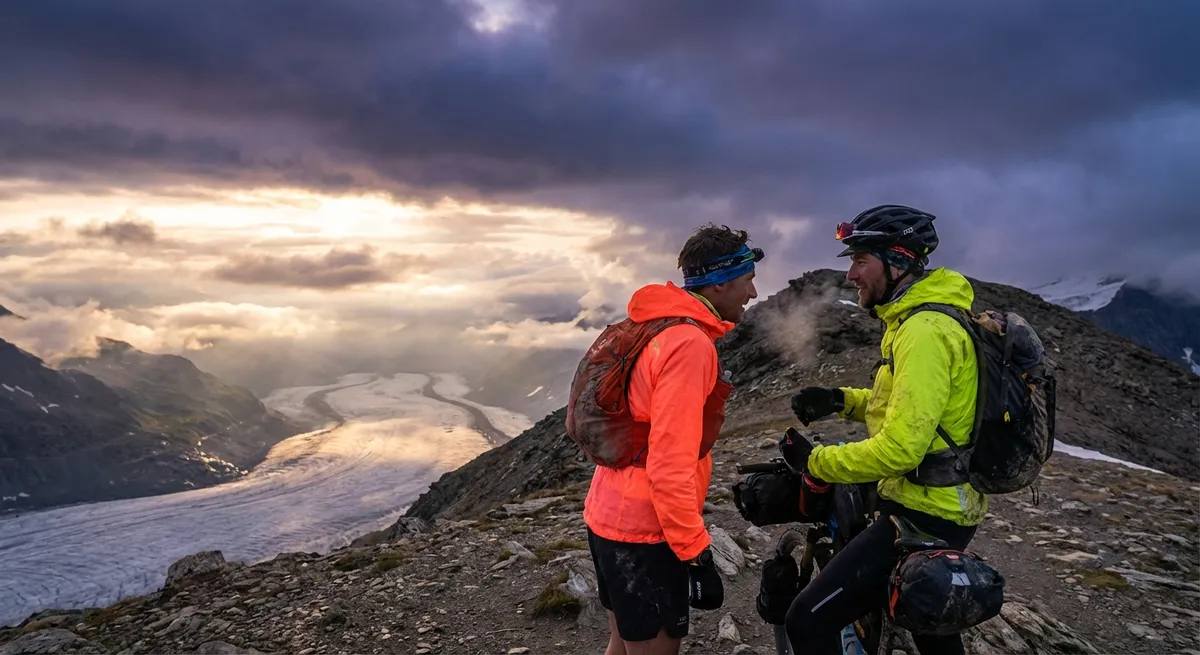
If your ideal souvenir is sore legs and a fire in your chest, you’re in the right place.
Why Active Travel Feels Like Freedom
Active travel flips the script on “vacation.” Instead of returning home feeling sluggish and overfed, you come back stronger, clearer, and more alive. You’re not just observing a place—you’re moving through it, feeling its weather on your skin and its terrain under your feet.
Think sunrise runs along Lisbon’s waterfront instead of hotel treadmills. Imagine sea kayaking in Norway’s fjords, your arms burning as glaciers loom in the distance. Picture cycling the back roads of Vietnam, weaving between rice paddies and village markets, your heart rate spiking with every hidden hill.
In each of these moments, your body becomes the vehicle for discovery. The view at the summit means more because you earned it. The ocean feels wilder because you fought the current with your own power. That fusion of effort and experience is what makes active travel addictive: it’s not just where you go, but who you become getting there.
Tip 1: Choose Destinations That Match Your Grind
The best active trips start with a destination that fits your preferred way to sweat—then pushes it just a bit further.
Love hiking? Swap casual day trails for multi-day treks like the Laugavegur Trail in Iceland, where you’ll cross steaming geothermal valleys, snow patches, and neon-green moss fields. The weather shifts fast, and so will your respect for your own resilience.
More of a water warrior? Consider Stand-Up Paddleboarding (SUP) in Croatia’s Dalmatian Coast, navigating limestone coves by day and stretching on your board at sunset. Calm bays will sharpen your core strength; afternoon winds will test your balance.
Prefer your heart rate spike on two wheels? Base yourself in Girona, Spain, a training hub for pro cyclists. From there, climb into the Pyrenees, spinning past medieval villages and hilltop churches. Every switchback is a tiny victory; every descent, a reward.
The key: match your core passion—hiking, biking, paddling, climbing—to a landscape that amplifies it, then add just enough difficulty to scare you a little. That’s where growth lives.
Tip 2: Train Like You’re Packing For The Terrain
Your body is your most important gear, and you’re going to “check it in” every day of your trip. Prep it like you would any elite tool.
If your destination is mountainous—think Patagonia’s Torres del Paine or the Dolomites in Italy—build a base of:
- Leg strength: squats, lunges, step-ups with weight
- Endurance: longer hikes or runs with hills
- Loaded movement: practice walking with a pack similar to what you’ll carry
Headed for coastal or island adventures in places like Hawaii, Madeira, or New Zealand’s Abel Tasman Coast Track? Focus on:
- Cardio with bursts: intervals that mimic surf sessions, coastal runs, or stair climbs
- Core strength: planks, rotational exercises for SUP or kayaking
- Shoulder and back work: rows, band pull-aparts for paddling power
Urban active escapes—such as Tokyo, Copenhagen, or Mexico City—need:
- All-day stamina: long walking days beforehand to simulate exploration
- Stair intervals: to mirror metro exits, viewpoints, and rooftop bars
- Mobility drills: so you can bounce between bikes, walks, runs, and public transit without stiffening up
Train for how you’ll move, not just how you want to look. When you arrive, your confidence will feel like an extra piece of gear you’re grateful you packed.
Tip 3: Turn Every Neighborhood Into A Moving Playground
Active travel doesn’t mean every day must be a hardcore expedition. Some of the most powerful fitness moments happen in the spaces between your “big” adventures.
Morning in Cape Town? Jog from the V&A Waterfront to Sea Point Promenade, stopping for push-ups on benches and dynamic stretches where the Atlantic crashes against the sea wall.
Midday in Kyoto? Walk instead of taking the bus between temples, adding in slow, controlled stair climbs at shrines like Fushimi Inari. Treat every step as a mini lunge. Your quads will remember it the next day.
Evening in Buenos Aires? Join a local tango class and let your muscles adapt to a new language of movement. Dancing is cardio, footwork, balance training—and connection to place.
Look for:
- Stairs instead of elevators
- Boardwalks and river paths instead of taxis
- Public parks for bodyweight circuits
- Waterfronts for runs, rides, or barefoot walks
When you start to see cities as obstacle courses and coastal paths as open-air gyms, the world becomes an endless training ground—without ever stepping into a traditional gym.
Tip 4: Eat & Recover Like An Athlete On Expedition
When every day is an adventure, your fueling strategy matters as much as your route. Your goal isn’t perfection; it’s performance and pleasure in balance.
Anchoring habits:
- Hydrate hard: long flights, new climates, and extra movement will dehydrate you fast. Keep a reusable bottle, and refill every chance you get.
- Front-load protein: use breakfast to get a solid portion—eggs, yogurt, beans, tofu—so your muscles have building blocks for long days.
- Pack adventure snacks: nuts, dried fruit, jerky, or local equivalents keep you from bonking halfway up a trail or mid-ride.
Destination-inspired power moves:
- In Greece, refuel with grilled fish, lentils, fresh salads, and olive oil after coastal hikes.
- In Japan, lean on rice bowls, miso, tofu, and grilled fish to power long walking days.
- In Peru, quinoa, potatoes, and local produce like lucuma and corn make powerful fuel, especially at altitude in Cusco or the Sacred Valley.
Recovery isn’t optional when you’re stacking big days:
- Prioritize stretching or mobility at night—hip openers, calf stretches, and back mobility will keep you exploring instead of sidelined.
- Aim for consistent sleep, even if you’re changing time zones. Earplugs, eye masks, and a simple pre-bed wind-down ritual can save your energy.
- Layer in light recovery days: a gentle coastal walk, a casual city bike ride, or a mellow swim can flush your legs without draining your tank.
Fuel like a traveler, recover like an athlete, and you’ll be able to say yes to that unexpected sunrise hike or last-minute night ride without hesitation.
Tip 5: Build A Story, Not Just A Schedule
The most unforgettable active trips aren’t defined by perfect logistics; they’re built from raw, imperfect, intensely alive moments.
Let your planning set the stage, but let the journey write the script:
- Book a base in a place that begs you to move—like Queenstown in New Zealand, Chamonix in France, or Whistler in Canada—then decide each day whether you’re hiking, biking, trail running, climbing, or paddling.
- Leave strategic gaps in your itinerary for local discoveries: a trail a barista recommends, a sunrise summit a hostel mate swears by, or a night run with a local running club.
- Capture not just photos, but metrics: the elevation gain on that brutal switchback hike, the distance of your coastline ride, the number of steps you racked up exploring old towns. These numbers become part of your story.
Most importantly, let challenge be the point. There will be rain storms, wrong turns, language mix-ups, and days your legs argue with your heart. Those are the scenes that turn into the stories you’ll tell for years.
Active travel isn’t about escaping your life. It’s about stepping into a version of you that is stronger, braver, and more present than the one who boarded the plane.
Conclusion
Active travel is for the ones who don’t want to choose between seeing the world and becoming their strongest self. It’s for the traveler who wants lungs burning on alpine climbs, salt in their hair after ocean crossings, and the deep, satisfying fatigue that hits when you’ve used every muscle in a day well lived.
Pick the terrain that calls you. Train for it like it matters. Move through cities and coastlines like they’re your personal playgrounds. Fuel your body like a companion you respect. Then let the trip shape you in ways that no gym session ever could.
Your next destination is out there, waiting—not just to be seen, but to be felt in every step, every pedal stroke, every paddle, every heartbeat.
Sources
- Centers for Disease Control and Prevention – Physical Activity Guidelines – Overview of recommended activity levels and health benefits, useful for planning training before active trips
- Harvard T.H. Chan School of Public Health – Healthy Travel Tips – Evidence-based guidance on staying healthy, hydrated, and well-fueled while traveling
- American Council on Exercise – Training for Hiking and Backpacking – Practical advice on preparing your body for trekking and elevation
- New Zealand Department of Conservation – Great Walks – Official information on iconic multi-day hikes and active experiences in New Zealand
- National Park Service (USA) – Plan Like a Park Ranger – Guidance on planning safe, active adventures in national parks, including preparation and safety tips