Why the World Makes a Better Gym
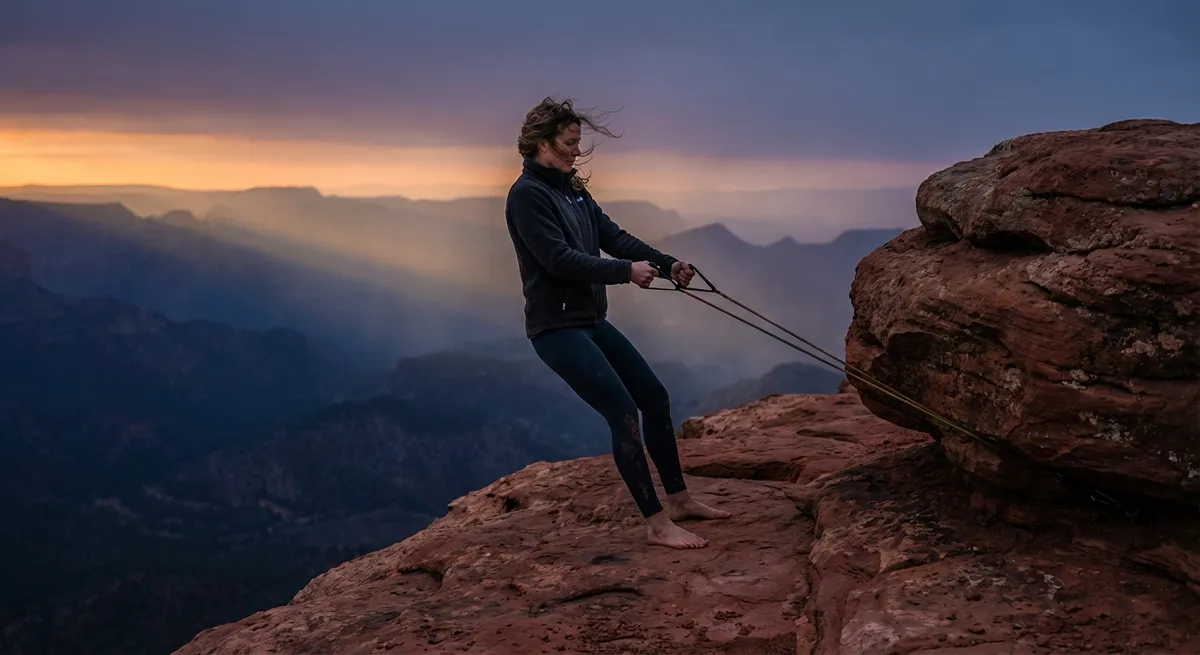
Step outside and your training instantly changes. Hills become your treadmill incline, park benches are your weight rack, and ocean resistance is your rowing machine. Outdoor movement taps into muscles and reflexes that indoor routines often ignore—balance on uneven ground, power on steep climbs, and coordination as you navigate real terrain.
Science backs up what every trail runner and beach sprinter already knows: training in nature can boost mood, reduce stress, and increase your sense of vitality compared with indoor exercise. Fresh air can help you feel less fatigued, and natural light helps your circadian rhythm recalibrate when you cross time zones. When your “gym” is a mountain pass or a seaside promenade, the reward for pushing through that last interval isn’t a mirror selfie—it’s a view you’ll remember long after your muscles stop aching.
Building Your Move-Anywhere Adventure Routine
Before you throw yourself into a cliffside HIIT session or a desert trail run, build a flexible framework you can adapt to any destination. Think in terms of three pillars: strength, stamina, and mobility.
Strength comes from simple, travel-proof exercises: push-ups on hostel rooftop terraces, air squats by the campground, lunges along a lighthouse path, dips on a park bench. Stamina lives in your runs, hikes, long walks, swims, and cycling tours. Mobility is the glue—dynamic warm-ups before you move and deep stretches at sunset overlooking whatever horizon you’ve chased that day.
Design a “base template” you can plug into any location:
- Warm-up (5–10 minutes): brisk walk or light jog, arm circles, leg swings, hip circles
- Strength set (15–20 minutes): 3–4 bodyweight moves, 10–15 reps each, repeated 3 times
- Cardio push (15–25 minutes): run, hike, stairs, swim, or cycle—steady or intervals
- Cooldown & mobility (5–10 minutes): slow walk, then stretching focused on hips, hamstrings, chest, and shoulders
Once this skeleton is in place, the landscape becomes your personal trainer.
Destination Highlights: Turn Landscapes Into Training Grounds
Every destination you roam has its own “training personality.” When you look at a place through the lens of movement, you start to see workouts everywhere.
Coastal Cities & Island Escapes
Seafront promenades are natural running tracks, often flat, scenic, and safe at dawn. Use piers or boardwalk rails for incline push-ups and rows. Beaches offer resistance like no treadmill can—soft sand turns simple sprints, lunges, and burpees into full lower-body assaults. If local conditions and lifeguard guidance allow, add open-water swims or paddleboarding to challenge your core and stabilizers.
Mountain Towns & Highland Retreats
In mountain hubs—from the Alps to the Rockies to the Andes—hiking trails double as endurance labs and leg-strength arenas. Long ascents test your lungs while descents condition your quads and ankles. Incorporate hill repeats on safe, steady sections: power hike or run uphill, walk back down, repeat. At higher altitudes, shorter sessions at gentler intensities can still give your cardiovascular system a serious upgrade.
Urban Jungles & Skyline Circuits
Cities shine when you treat them as obstacle courses. Sunrise stair runs on public steps, circuit sessions in green spaces, and long exploratory walks between landmarks can rack up serious mileage. Many capitals feature outdoor fitness parks with pull-up bars, parallel bars, and balance beams—perfect for a minimalist strength session between museums and markets. If you’re crossing multiple neighborhoods, wear a running vest or light backpack and turn your commute into a point-to-point run.
Lakes, Rivers & Waterfront Trails
Where there’s water, there’s usually a path. Riverfront cycling routes, lake loops, and canal towpaths create flat, forgiving terrain for runs, interval sessions, and long walks. Many waterfronts rent kayaks, canoes, or stand-up paddleboards—ideal cross-training that challenges your core, shoulders, and balance while giving you a completely different vantage point on the city or countryside.
Five Active Travel Tips for Fitness Adventurers
Here are five field-tested strategies for weaving outdoor workouts into any journey without sacrificing spontaneity or fun.
1. Make Your First Hour in a New Place a “Shakeout Explore”
When you arrive—before you flop onto the bed—spend 30–45 minutes moving lightly through your surroundings. Walk, jog, or slow cycle around your accommodation, down main streets, and through the nearest park or waterfront.
This “shakeout explore” does three things at once: it gets blood flowing after long transit, helps you acclimate to the climate (heat, humidity, altitude), and gives you a mental map of safe early-morning or evening workout zones. Bring only what you can carry in a running belt or small pack, pause to note stairs, benches, wide sidewalks, or tranquil side streets you can return to for a more structured session later.
2. Design a Signature 20-Minute “No-Excuses” Outdoor Circuit
Build one simple, repeatable circuit that fits in a hotel courtyard, campground, or postage-stamp park. When schedules, weather, or jet lag rebel, this is your fallback. For example:
- 1 minute: jogging or fast walking loop
- 10 push-ups (hands on a bench if needed)
- 15 squats
- 10–12 lunges each leg (walking if space allows)
- 20–30 seconds plank or side planks
- Repeat for 20 minutes total
If you’re near stairs, swap one round of squats and lunges for 2–3 minutes of stair climbs. If there’s a beach, plug in sand sprints or shuffles. This circuit anchors your routine so you never feel “off the rails,” no matter how unpredictable your itinerary becomes.
3. Choose One “Anchor Adventure” Per Destination
Instead of squeezing random workouts around sightseeing, choose one major physical challenge per stop on your route and build your days around it. That might be:
- A summit hike to a local peak
- A sunrise run along a famous coastal route
- A guided kayak or SUP exploration of cliffs and coves
- A long cycling loop through wine country or mountain passes
- A day of surf lessons on a legendary break
Treat that anchor adventure as both your key workout and your core memory for that place. On surrounding days, keep sessions shorter and more restorative—mobility work in a plaza, easy riverfront jogs, or casual swims. Let each destination leave a different imprint on your conditioning.
4. Pack Lightweight Gear That Expands Your Options
A minimalist kit turns any patch of sky into a well-equipped training zone without weighing down your backpack. Consider:
- Resistance band or mini-loop band: for rows, band walks, and hip activation pre-hike
- Jump rope: compact cardio if running routes feel unsafe or crowded
- Collapsible water bottle: for hydration on longer urban or trail sessions
- Lightweight running vest or belt: to carry essentials during exploratory runs
- Travel-friendly trail shoes: with enough grip for dirt paths but comfortable on streets
These tools add variety, allow for quick strength bursts in transit (think band rows in a park during a bus layover), and help stay consistent even when you’re far from any formal facility.
5. Sync Your Training With the Rhythm of the Place
Each destination runs on its own clock—climate, culture, and crowds all shape your best training windows. Learn and lean into that rhythm rather than fighting it.
In hot, humid zones, plan sunrise sessions before the heat spikes, then enjoy slower, shaded walks or water-based activities in the afternoon. In late-night cities, early mornings may gift you nearly empty streets and plazas. In high-altitude or extremely hilly regions, alternate hard days with gentler walking tours to allow your body to adapt. Ask locals where they run or train; they’ll often steer you toward safe, scenic routes you’d never find on a tourist map.
When you move in harmony with a place—running when the city stretches awake, climbing when the fog lifts, swimming as the tide rolls in—your workouts feel less like interruptions and more like pure immersion.
Conclusion
Outdoor workouts on the road are more than a strategy to “stay on track.” They’re how you claim your travels with your whole body—how you earn that view from the ridge, feel the gradient of a city under your feet, and let your lungs learn the language of every new climate. With a simple, flexible routine and a willingness to let landscapes lead your training, the world stops being a backdrop and becomes your training partner.
Pack your curiosity, your willingness to sweat, and a small kit of essentials. Then step outside. There’s a coastline to sprint, a staircase to conquer, a ridge line to hike—and a stronger, more adventurous version of you waiting just beyond the door.
Sources
- Harvard Health Publishing – Exercising Outdoors Has More Mental Health Benefits Than Indoors - Overview of research on mood, stress, and well-being improvements from outdoor exercise
- American Council on Exercise – Health Benefits of Outdoor Exercise - Explains physiological and psychological effects of outdoor workouts
- Centers for Disease Control and Prevention – Physical Activity Guidelines - Evidence-based recommendations for exercise duration and intensity
- American College of Sports Medicine – Staying Active While Traveling - Practical tips to maintain fitness routines on the road
- National Park Service – Hiking Safety - Guidance on safe hiking practices relevant to outdoor adventure workouts