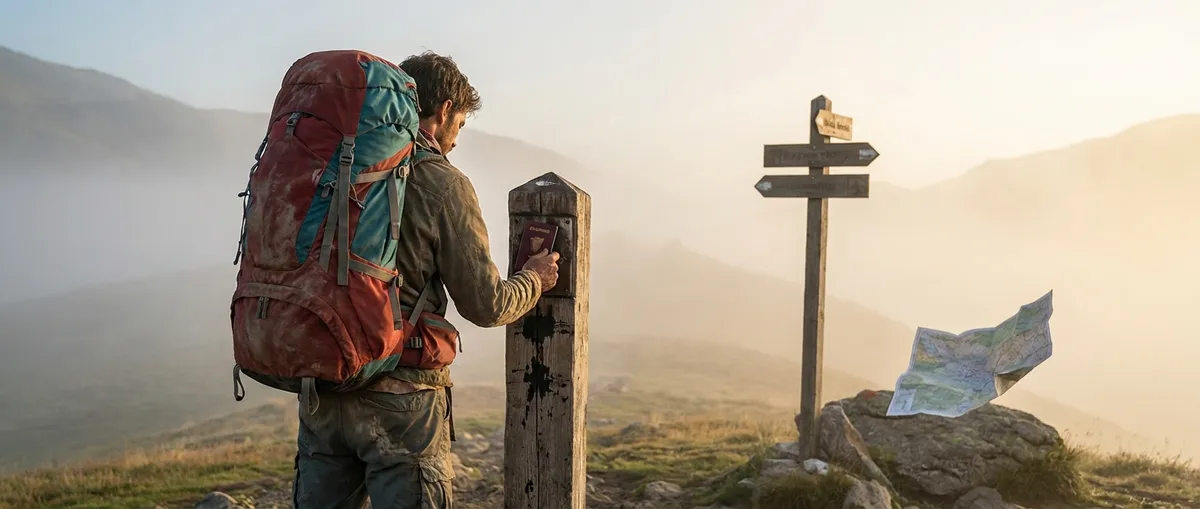
This is your call to move with intention, explore with curiosity, and let every journey leave you fitter than when you left home.
Why Adventure Fitness Belongs in Your Passport Plans
Adventure fitness lives where movement and exploration collide. It’s not a rigid training plan—it’s a mindset that asks, “How can I experience this place with my whole body, not just my camera?”
Instead of structuring trips around rest and indulgence alone, you weave in challenges that match the landscape: mountain switchbacks in the Dolomites, coastal paths in California, stair climbs in Lisbon, sunrise runs along Tokyo Bay, or paddle sessions in Croatia’s hidden coves. The reward isn’t only views; it’s the quiet knowledge that you climbed, pushed, and earned them.
Blending fitness with travel keeps your energy high, fights off sluggishness from long flights, and helps your body adapt faster across time zones. Adventure-driven movement also connects you to a place differently: your lungs feel the altitude, your calves learn the cobblestones, your core stabilizes on rocky paths and wobbly boats. You’re not just passing through—you’re physically writing your story into the landscape.
Tip 1: Let the Terrain Design Your Workout
Forget cookie-cutter routines. When you travel, the land itself is your best trainer.
In the Swiss Alps or the Rockies, think elevation: hiking, fastpacking, and light trail runs build leg strength and lung power. In coastal escapes like Portugal’s Algarve or Australia’s Great Ocean Road, beach runs, cliff-top walks, and ocean swims turn scenic routes into full-body conditioning. Urban jungles like Hong Kong, San Francisco, or Valparaíso offer brutal stair climbs and hill sprints built right into the city grid.
Use the destination’s natural strengths:
- Mountains: uphill hikes, downhill control work, loaded pack walks
- Beaches: barefoot sand sprints, walking lunges at low tide, ocean dips for recovery
- Cities: stair intervals, long exploratory walks, sunrise runs along waterfronts or old town walls
- Forests and national parks: trail runs, rucksack hikes, mobility flows among trees
By letting terrain dictate your session, you stay present, beat boredom, and leave with memories of “that brutal hill” instead of “treadmill workout #27.”
Tip 2: Turn Your Itinerary Into an Active Route
Your itinerary can be more than checklists and museum hours—it can be a carefully woven route of movement.
Instead of hopping into taxis or rideshares for every short distance, choose one day per trip as your “active transit” day. In cities like Copenhagen, Amsterdam, or Kyoto, rent a bike and stitch together your must-see spots in a rolling, all-day ride. In compact old towns like Dubrovnik, Florence, or Cartagena, walk between sites and add short stair bursts on fortress steps or city walls.
Plan your days like progressive circuits:
- Morning: fasted walk or easy jog to a viewpoint or market
- Midday: walking transfers between major sights, backpack acting as light resistance
- Afternoon: optional add-ons like kayaking, SUP, or a guided hike
- Evening: relaxed stroll through a new neighborhood to unwind your legs
Every kilometer replaced by your own muscle power becomes both cardio and memory—“We biked across the city to that hidden café” beats “We sat in traffic” every time.
Tip 3: Make One Big Physical Challenge the Heart of Each Trip
Choose a single, signature challenge per journey—a lighthouse climb, a summit push, a long-distance cycle, or a point-to-point coastal trek—and build your anticipation and training around it.
In Peru, it might be hiking to a high-altitude ruin instead of taking the bus. In Norway, a half-day climb to a fjord overlook. In New Zealand, a hut-to-hut trail in a national park. On a tropical island, a full-day paddle to nearby islets with swim breaks and snorkel stops.
This “anchor challenge” does three powerful things:
- Gives your pre-trip training purpose—you’re not just “getting in shape,” you’re preparing to conquer that ridge, that canyon, that crossing.
- Focuses your trip—it becomes the story you shape other activities around.
- Leaves a clear before-and-after—who you were at the trailhead versus who you are at the summit.
Pick something that stretches your limits but doesn’t shatter them. You want soaring confidence at the finish line, not injury or burnout halfway up.
Tip 4: Pack Light, Train Smart: Portable Gear for the Bold Traveler
You don’t need a mobile gym to stay adventure-ready—just a few strategic tools and a willingness to improvise.
Consider adding to your carry-on:
- A light resistance band or mini-band: for warm-ups, glute activation before hikes, or quick hotel circuits.
- A jump rope: perfect for courtyard, rooftop, or beach conditioning.
- A compact suspension trainer: if you know you’ll have sturdy beams, bars, or trees.
- A collapsible water bottle: doubles as hydration and a light weight for shoulder and arm work.
- Use park benches for step-ups, elevated push-ups, and dips.
- Turn a quiet pier into your training zone for balance work and core flows.
- Use a local running track or promenade for speed intervals.
Then, blend gear with surroundings:
The goal isn’t to recreate your home gym—it’s to stay mobile, strong, and confident enough to say “yes” when someone invites you on a surprise sunrise hike or last-minute kayak run.
Tip 5: Recover Like an Explorer, Not a Zombie
Adventure fitness doesn’t mean grinding back-to-back brutal days until your body rebels. Recovery is what turns effort into progress—and keeps your trip from dissolving into aches and exhaustion.
Build micro-recovery into your travels:
- Walk and stretch after long flights instead of collapsing in bed immediately.
- Use hotel towels or bands for short mobility sessions focusing on hips, calves, and back—high-mileage zones for travelers.
- Take gentle swims in lakes or the ocean when available; cold water can refresh sore legs and boost circulation.
- Eat like you’re fueling the next adventure, not just the nearest craving: prioritize protein, colorful vegetables, and steady hydration.
Seek out local recovery rituals when you can—onsen in Japan, hammams in places like Istanbul or Marrakech, thermal baths in Budapest or Iceland. These aren’t just luxuries; they’re cultural experiences that double as profound rest for your adventure-hungry body.
Destination Highlights to Ignite Your Training Wanderlust
If your training had a dream vision board, it might look like this:
- Interlaken, Switzerland – Trail runs between lakes, hikes with glacier views, paragliding off alpine cliffs, and paddleboarding on turquoise water. Your cardio sessions come with postcard-level backdrops.
- Madeira, Portugal – Steep levada walks, dramatic coastal cliffs, volcanic peaks, and lush forests that test your legs and reward your eyes every few steps.
- Banff & Jasper, Canada – Glacier-fed lakes for cold-water dips, punchy elevation hikes, long valley rides, and wildlife-filled trails that make every mile feel majestic.
- Queenstown, New Zealand – A playground for the bold: alpine hikes, mountain biking, bungee, trail runs, and lakefront routes that make “leg day” feel like a movie scene.
- Cape Town, South Africa – Hike or run up Lion’s Head or Table Mountain, surf the Atlantic swells, and finish your days with coastal road runs under a burning sunset.
You don’t have to visit all of them. Let one destination light a spark under your training, even if your first “adventure fitness trip” is a weekend in a nearby national park or a new coastal town a few hours from home.
Conclusion
Adventure fitness is not about perfection, six-pack photos, or rigid routines—it’s about choosing the kind of strength that helps you say yes more often: yes to the longer trail, yes to the early-morning hike, yes to the hill that looks intimidating from the valley floor.
With every flight, train, and winding road, you’re gathering stories—but you also have the chance to gather power: in your lungs, in your legs, in your ability to move through this world with curiosity and courage.
Let your next journey be more than a getaway. Let it be proof that you can become stronger with every stamp, every summit, and every sunrise you decide to chase on your own two feet.
Sources
- Centers for Disease Control and Prevention – Physical Activity and Health – Overview of the health benefits of regular physical activity, including for travelers
- American College of Sports Medicine – ACSM’s Guidelines for Exercise Testing and Prescription – Evidence-based principles for safe, effective exercise you can adapt to active travel
- Harvard Health Publishing – The Importance of Stretching – Guidance on flexibility and mobility work useful for recovery on the road
- National Park Service – Hiking Safety Tips – Official recommendations for safe hiking in parks and wilderness destinations
- World Health Organization – Physical Activity – Global guidelines and benefits of staying active across different ages and lifestyles