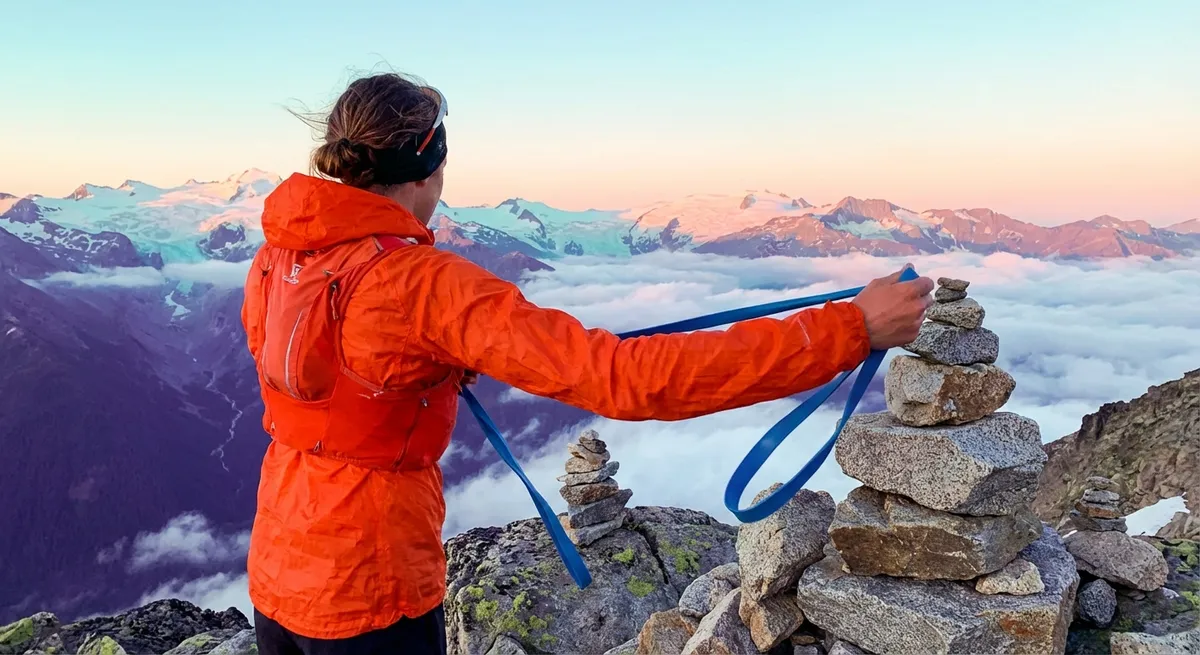
This guide is your invitation to turn any destination into an unforgettable open‑air training arena, with five travel‑ready tips to keep you strong, curious, and always ready for the next horizon.
Rewild Your Routine: Training With Terrain, Not Machines
Outdoors, the landscape becomes your equipment, and the rules change in your favor.
Uneven trails fire up stabilizer muscles your treadmill never meets. Sand pulls power from your legs and teaches efficiency with every step. Elevation shifts challenge your cardio and sharpen your mental grit. Instead of isolating one muscle group at a time, you move like your body was built to move—multi‑directional, responsive, and fully switched on.
Start by scouting your surroundings like a coach with a compass: staircases for hill sprints, park benches for step‑ups and dips, playgrounds for pull‑ups and hangs, rocks or driftwood for carries and deadlifts. Even a city’s old town becomes a workout zone—think Lisbon’s alley stairwells, Edinburgh’s closes, or Istanbul’s hilly streets.
When you train with the environment instead of against it, your workout stops feeling like a chore and starts feeling like an expedition.
Destination Highlights: Iconic Spots to Sweat and Explore
Some places simply beg you to push your limits. Add these to your active-travel radar:
- Cape Town, South Africa – Table Mountain & Lion’s Head
Tackle sunrise hikes with steep switchbacks and scramble sections that double as full‑body strength work. Cap it off with yoga at the summit led by your own routine.
- Interlaken, Switzerland – Lakes, Peaks, and Paragliders
Alternate trail runs along Lake Brienz with stair-sprint sessions in the nearby hills, then reward your lungs and legs with glacial vistas and cool‑down swims.
- Oahu, Hawaii – Craters, Ridges, and Ocean Power
Hit volcanic crater trails in the morning, bodyweight circuits on the beach at midday, and ocean swims or paddle workouts as the sun drops behind the horizon.
- Patagonia, Chile & Argentina – Long-Distance Grit
Multi‑day treks around Torres del Paine or Fitz Roy become endurance training on another level—pack carries, varied terrain, and weather that keeps you sharp.
- Kyoto, Japan – Temple Steps & Bamboo Forests
String together shrine staircases for a leg‑focused circuit and cool down weaving through bamboo trails where every breath feels meditative.
Each of these destinations offers more than scenery—they’re natural training labs where strength, stamina, and awe collide.
Five Active Travel Tips for the Fitness‑Hungry Explorer
1. Pack a “Micro Gym” You Can Carry Anywhere
Your suitcase is prime real estate; fill it with tools that multiply your options without weighing you down.
Slip into your bag:
- A light resistance band for rows, pulls, and glute activations in small hotel rooms
- A mini loop band for warm‑ups and lower‑body work before long hikes or runs
- A jump rope for high‑intensity cardio sessions in courtyards, rooftops, or parking lots
- A collapsible water bottle that can double as a lightweight “kettlebell” for basic movements when filled
This micro gym lets you create structure even when weather, time zones, or transit days try to derail your movement.
2. Turn Transit Days Into Movement Quests
Long travel days can steal your momentum—unless you flip the script.
- At airports, walk the length of your terminal instead of sitting at the gate; add walking lunges, calf raises on curbs, and wall push‑ups during quiet moments.
- On train platforms or bus stops, do gentle mobility flows: hip circles, ankle rolls, spinal twists, arm sweeps.
- Use layovers to hunt for staircases and climb them—forward, side‑steps, and double steps as your intensity allows.
By the time you arrive, your body feels primed instead of stiff, and your first adventure doesn’t start with an ache in your lower back.
3. Let Sunrise and Sunset Anchor Your Daily Workout
Jet lag and unfamiliar schedules can sabotage the best training plan. Sunrise and sunset are your built‑in anchors.
- Sunrise sessions: Short runs along waterfronts, dynamic stretches on hostel rooftops, or quiet strength circuits in courtyards before the streets wake up.
- Sunset sessions: Ocean dips, beach sprints, slow flow yoga in parks, or light hikes to overlooks with sweeping views.
Locking movement to these golden hours keeps you consistent, gives every day a defined arc of effort and reward, and hands you the most stunning lighting for the photos and videos you’ll share later.
4. Use Local Adventures as Your “Workout of the Day”
Think of every destination as a menu of workouts disguised as experiences.
Instead of asking, “Where can I find a gym?” ask:
- What hike here will test my lungs and legs?
- Is there a local bike or e‑bike route that will light up my quads and show me more of the city?
- Are there surf lessons, SUP rentals, kayaking options, or climbing crags nearby?
- Can I join a community run, open‑water swim, or outdoor fitness class?
Book one movement‑based experience every few days: a canyoning excursion in Slovenia, a coastal bike ride in Portugal, a jungle trek in Costa Rica, or a glacier walk in Iceland. Your “workout log” becomes a highlight reel.
5. Train Smart: Altitude, Heat, and Recovery in the Wild
Adventure fitness isn’t just about pushing—it’s about staying sharp enough to keep going.
- Altitude: In places like the Andes or the Alps, ease into effort for the first couple of days. Keep your intensity lower than usual, hydrate aggressively, and respect signs of altitude sickness.
- Heat and humidity: In tropical destinations, shift intense sessions to early mornings or post‑sunset, wear light, breathable layers, and replace electrolytes when you sweat heavily.
- Recovery: Treat recovery as part of the journey—think cold river dips after long hikes, slow strolls through markets as active recovery, and stretching sessions on balconies or hostel rooftops.
You’re not only chasing epic views; you’re building a body that can chase them again tomorrow, and the next day, and the next country.
Trail-Tested Outdoor Workout Ideas for Any Destination
Wherever you land, you can plug in these minimalist, travel‑proof sessions.
Hill or Stair Power Session (20–30 minutes)
- Warm up with 5–10 minutes of easy walking or jogging
- Find a hill or staircase: sprint or power hike up for 20–40 seconds
- Walk back down as recovery
- Repeat 8–12 times
- Cool down with slow walking and calf/quad stretches
- Step‑ups (right + left) – 12 total
- Incline push‑ups on the bench – 10–15 reps
- Bulgarian split squats – 8–10 per leg
- Triceps dips – 10–12 reps
- Plank with shoulder taps – 20 taps total
Park Bench Strength Circuit (3–4 rounds)
Rest 60–90 seconds between rounds. Add a backpack for extra load if you want more challenge.
Beach or Soft Terrain Burner (Intervals)
- 30 seconds: fast run on sand or grass
- 30 seconds: walking or slow jog
- 30 seconds: bodyweight squats or walking lunges
- 30 seconds: rest
Repeat 8–12 times, depending on fitness level. The unstable surface fires up your stabilizers and adds intensity without needing high speed.
Conclusion
Every journey can be a training arc, every landscape a new chapter in how you move, breathe, and test yourself. When you treat the world as your open‑air studio, workouts stop being something you “fit in” and start becoming the reason you carve a new path through mountains, shorelines, and ancient streets.
Pack your curiosity. Pack your micro gym. Land in a new place and ask: How can I move here today that I’ve never moved before?
That’s where adventure fitness truly begins.
Sources
- American Council on Exercise (ACE): Benefits of Outdoor Exercise – Overview of physical and mental benefits of training outside
- Harvard Health Publishing: The Health Benefits of Hiking – Explains how hiking improves cardiovascular fitness, strength, and mood
- Centers for Disease Control and Prevention (CDC): Healthy Travel – Evidence-based tips on staying healthy and safe while traveling
- Mayo Clinic: Altitude Sickness – Guidance on symptoms, risks, and prevention of altitude-related illness
- National Park Service: Hiking Safety – Practical safety and preparation advice for outdoor hiking and active adventures