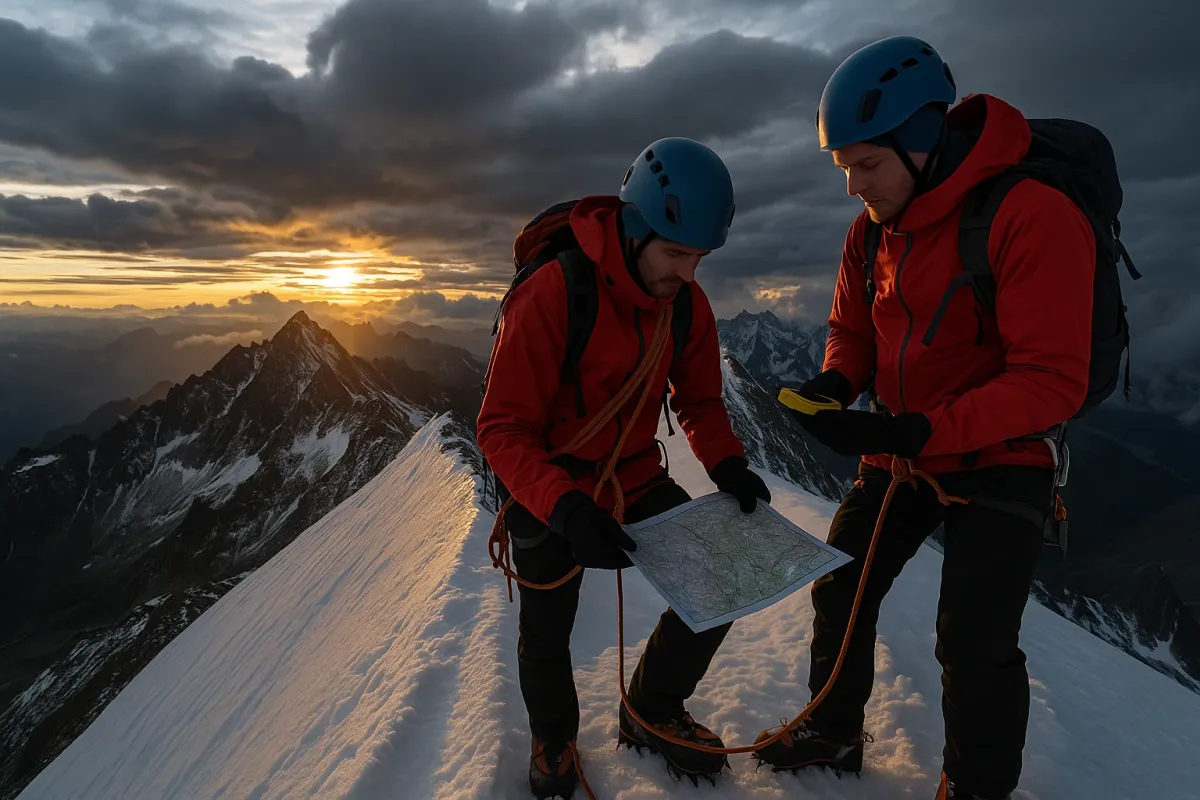
For the Fit Voyaga community, this isn’t a cue to dial down your dreams. It’s a wake‑up call to level up your preparation. Grandeur peaks, glacier crossings, and exposed ridgelines can absolutely be part of an epic fitness journey—if you treat them with the respect and planning they demand. Today, we’re turning this real, heartbreaking news into a practical field guide for adventurers who want to come home stronger, not just with a better story.
Below, you’ll find destination inspo from Austria’s high Alps and other mountain playgrounds—plus five hard-won active travel tips to help you push your limits without crossing the line into recklessness.
Großglockner: When Europe’s “Accessible” Giant Turns Lethal
At 3,798 meters (12,461 ft), Großglockner is Austria’s highest peak and a magnet for ambitious hikers, ski tourers, and mountaineers. On bluebird days, you’ll see ropes of climbers snaking up its icy flanks, guided groups edging along narrow ridges, and fit weekend warriors chasing summit selfies above the clouds. The nearby Grossglockner High Alpine Road—one of Europe’s most scenic drives—lures thousands who want a taste of altitude without stepping too far from the car.
But the recent death of Kerstin Gurtner on this mountain strips away the romantic filter. Reports describe brutal conditions and a partner who left her behind rather than ensuring they descended safely together. Hypothermia doesn’t care how experienced you are. A whiteout doesn’t care about your relationship drama. High peaks demand decision-making under stress, and one selfish or panicked choice can be the difference between a triumphant descent and a body recovery.
If Austria is on your radar as a fitness destination, don’t cross Großglockner off your list—just upgrade how you approach it. Base in towns like Kals am Großglockner or Heiligenblut, train on lower trails first, and if you’re serious about going for the summit, hire a certified UIAGM/IFMGA mountain guide. The mountain will still ask a lot from you—but you’ll be far better equipped to answer.
Chasing Elevation: Other High-Adventure Destinations to Test Your Grit
The lesson of Großglockner echoes across mountain ranges worldwide. From the Rockies to the Himalayas, the line between “epic” and “emergency” is razor-thin. If you’re building your travel calendar around maximum sweat and scenery, consider:
- Zermatt, Switzerland – Run glacier-view trails beneath the Matterhorn, try via ferrata routes, or book an alpine skills course before stepping toward mixed snow-and-rock terrain.
- Chamonix, France – The global capital of mountain endurance: sky-running, technical hiking, mountaineering, and big vertical days with cable cars that launch you straight into thin air.
- Colorado’s Fourteeners, USA – Peaks over 14,000 ft accessible from trailheads, often without technical climbing—but still notorious for afternoon storms, exposure, and altitude issues.
- Dolomites, Italy – Jaw-dropping limestone towers, equipped via ferrata climbs, and ridge hikes that blend fitness with just the right dose of fear and awe.
- Nepal’s Trekking Valleys – Not just for Everest hopefuls; multi-day treks like Annapurna Circuit and Langtang offer sustained high-altitude training and hardcore endurance days.
Wherever you go, remember: the “difficulty level” on a tourism website or booking page doesn’t know your fitness, your gear, or your decision-making under pressure. That’s on you.
Tip 1: Train Like You’re Going Higher Than Planned
Anyone can hike a tourist path in perfect weather. But altitude, cold, and long exposure turn a casual day out into a physiological stress test. The tragedy on Großglockner underscores how quickly you can slide from “chilly and tired” into life-threatening conditions.
How to prepare like a serious altitude athlete:
- Build vertical, not just distance. Train with hill repeats, stair climbs, and weighted hikes. Emphasize slow, sustained climbs that mimic the grinding effort of ascent.
- Layer in strength. Strong legs, hips, and core mean better balance, more stable footwork on snow and rock, and less fatigue-driven error. Focus on squats, lunges, step-ups, single-leg deadlifts, and loaded carries.
- Simulate fatigue. Do some sessions where you hike/run after a tough workout or long day, so your brain learns to make good decisions when tired.
- Test your gear under stress. Do a cold, windy training hike with your full kit. Learn how your body feels and moves in layers, gloves, and boots before you’re on a committing ridge.
The goal isn’t to make the mountain easy. It’s to make hard conditions survivable.
Tip 2: Pick Partners Like Your Life Depends On It (Because It Might)
Kerstin’s story hit a global nerve not just because of the conditions, but because her partner allegedly left her behind on Austria’s highest peak. For adventure athletes, that’s more than morally wrong—it’s a fundamental violation of mountain ethics.
When choosing adventure partners, look for:
- Shared risk tolerance. If you’re conservative and your partner is a “let’s just send it” type, that mismatch can be dangerous in stormy, cold, or technical environments.
- History under stress. Have you seen this person tired, cold, or scared? Do they stay calm, communicate clearly, and take responsibility?
- Mutual commitment. The baseline agreement should be: We start together, we make decisions together, we come down together.
- Respect for guide input. On big routes (like Großglockner, Mont Blanc, or technical Dolomite via ferratas), a certified guide isn’t just a leader—they’re your life insurance. Partners who argue with or ignore guides are red flags.
- Emotional maturity. Breakups, ego, or simmering resentment have no place on a ridge above a glacier. If the relationship is unstable, don’t tie into the same rope.
A reliable partner is as essential as crampons or a helmet. Your summit photo means nothing if your safety pact falls apart when conditions turn.
Tip 3: Layer Like a Mountaineer, Not a Tourist
Reports from the Austrian tragedy highlight brutal cold and hypothermic conditions—yet many people still head into high mountains dressed for a fall stroll. Fitness can keep you warm while you’re moving; it won’t save you when you have to stop, wait, navigate in a whiteout, or descend slowly with a partner.
For any high-altitude or alpine-style destination, make this your baseline kit:
- Moisture-wicking base layer. Forget cotton. Use merino or synthetic to pull sweat off your skin.
- Insulating mid-layers. Fleece or lightweight down/synthetic pieces you can stack as temps drop.
- Windproof, waterproof shell. Breathable, hooded, and tough enough for rock, ice, and pack straps.
- Serious gloves and hat. Bring two glove systems (thin liner + insulated pair) and a warm beanie or balaclava.
- Emergency insulation. A compact down or synthetic puffy and a lightweight emergency bivvy or foil blanket. These weigh little but buy you precious time if something goes wrong.
- Eye and skin protection. High UV, snow glare, and wind can blind or burn you fast. Sunglasses or glacier glasses plus high-SPF sunscreen are essential.
Think of your clothing as your mobile life-support system. You’re building a microclimate you can survive in if the mountain decides you’re staying longer than planned.
Tip 4: Turn “Check the Weather” Into a Pre-Climb Ritual
The difference between a life-changing summit and a life-threatening epic is often a forecast you didn’t bother to read twice. On peaks like Großglockner, storms, high winds, and rapid temperature drops are normal—especially in shoulder seasons.
Upgrade your weather game like this:
- Use serious sources. For the Alps, check services like Bergfex, MeteoBlue, or local avalanche centers—not just the generic weather app on your phone.
- Check multiple times. Once when planning, again the day before, and once more the morning of your climb or hike.
- Know the danger signs. Rapidly dropping temps, rising wind speeds, thunderstorms, and heavy precipitation all radically change the risk calculus—even on “non-technical” routes.
- Have a hard turn-around time. Decide in advance: If we’re not at Point X by Y o’clock, we turn back, regardless of how we feel.
- Respect the mountain, not your ego. You don’t argue with the weather. You adapt to it—or you go enjoy a training session in the valley gym and live to climb another day.
Walking away from a bad forecast is not weakness; it’s elite-level judgment.
Tip 5: Build a “Return Stronger” Mindset, Not a “Summit or Bust” Obsession
Every year, mountains from Austria to the Andes claim the lives of people who were strong, ambitious, and deeply motivated—but locked into a summit-or-die mentality. When your self-worth is tied to whether you reach the top, you’re far more likely to push past red flags.
Flip the script: your real fitness achievement is coming back with capacity to grow, not a single peak bagged.
Here’s how to protect that mindset:
- Redefine success. Success is nailing your pace, managing your energy, staying warm and fueled, making good calls with your team, and returning safely—even if you turned back 200 meters from the top.
- Debrief every mission. After a climb or demanding hike, ask: What did I do well? What scared me? What do I want to be better at before I try something bigger?
- Train for resilience, not heroics. Build sleep, recovery, and long-term strength into your travel itinerary. Swap an “off day” in the mountains for a valley run, yoga session, or mobility work.
- Stay humble with altitude. Even if you’re a beast at sea level, altitude can humble ultrarunners and CrossFitters alike. Listen to your body: headaches, nausea, dizziness, or unusual fatigue are cues to slow down or descend.
- Let stories inspire, not pressure you. Social media is full of summit shots and GoPro hero edits. What you don’t see are the wise turn-backs, the shorter training hikes, and the quiet days spent waiting out storms. Build your own timeline.
The bravest adventurers aren’t the ones who never retreat. They’re the ones who know when to pivot—so they can chase the next horizon.
Conclusion
The identification of Kerstin Gurtner on Austria’s Großglockner is a gut punch to anyone who loves the mountains. It’s also a stark reminder that our quest for peak experiences comes with real, non-negotiable stakes. Fitness, courage, and wanderlust are powerful—when paired with preparation, judgment, and unwavering loyalty to the people you travel with.
As you plan your next high-altitude escape—whether that’s Austria’s alpine giants, Colorado’s fourteeners, or the sharp spires of the Dolomites—treat every summit as a privilege, not a right. Train harder than the route demands. Choose partners you’d trust in a whiteout. Pack like you might have to spend an unplanned night out. And above all, build a mindset that values returning stronger over just standing higher.
The mountains will still be there tomorrow. Make sure you are too.