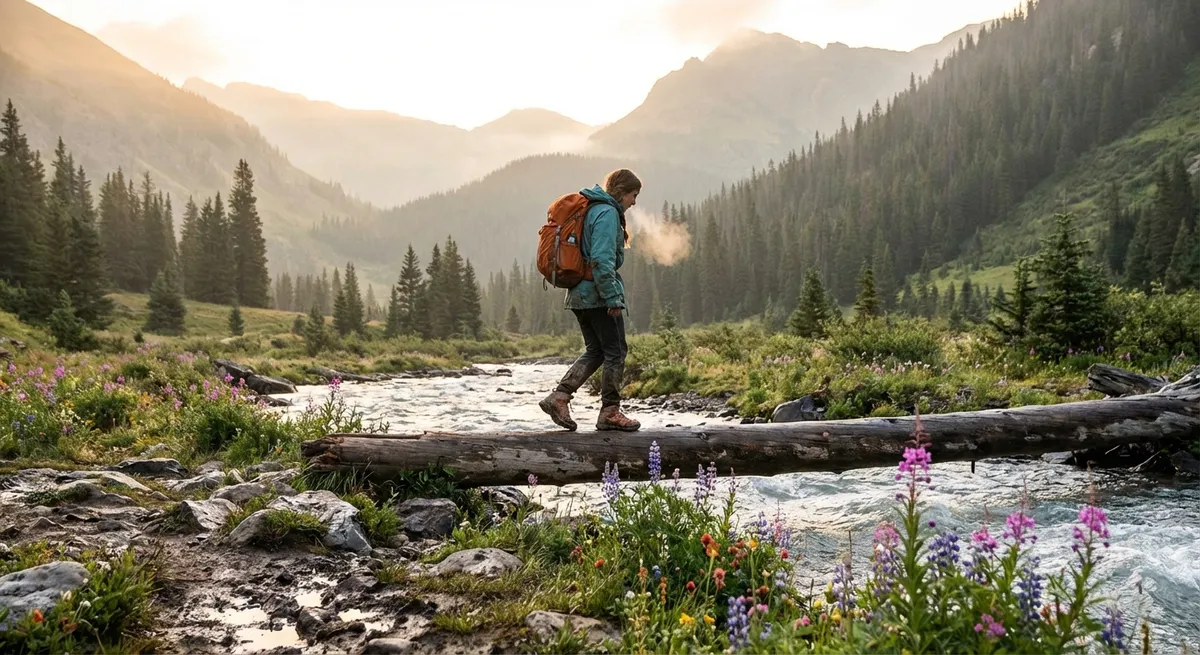
In this guide, we’ll explore how to fuse travel and training into one unstoppable force—plus 5 powerful active travel tips that keep your body lit up and your wanderlust roaring.
What Adventure Fitness Really Means
Adventure fitness isn’t a bootcamp on the beach or a token hotel-gym session; it’s a mindset that treats every destination as a catalyst for movement.
It’s choosing the steep, winding alleyway over the easy taxi ride, the paddleboard over the sun lounger, the mountain pass over the scenic overlook. It’s using your body not just to see the world, but to interact with it—heart pounding, lungs burning, mind wide open.
Adventure fitness blends endurance, strength, mobility, and resilience. One week you may be trekking Peru’s Sacred Valley, testing your stamina at altitude; the next, you’re threading through Tokyo at dawn on a tempo run, learning how your body responds to jet lag and humidity. Over time, this style of travel builds:
- Functional strength from varied terrain and natural obstacles
- Cardiovascular power from long, exploratory days
- Balance and agility from unfamiliar surfaces, stairs, and slopes
- Mental grit from pushing through discomfort in unknown environments
You’re not training for one fixed event—you’re training for a life that refuses to shrink to the size of a single routine.
Destinations That Invite You to Move
Some places practically dare you to stay still. These destinations are more than postcard pretty; they are built for bodies in motion.
Picture this:
- Queenstown, New Zealand – A high-adrenaline capital where your “leg day” is a ridge hike above Lake Wakatipu, your “cardio” is a mountain-bike descent, and your “cooldown” is a jog along the lakefront as the Remarkables glow at sunset.
- Interlaken, Switzerland – Wedged between lakes and ringed by snowy peaks, you can string together trail runs, via ferrata climbs, and paragliding sessions, all with trains and cable cars whisking you from one adventure to the next.
- Madeira, Portugal – An Atlantic island of knife-edge ridges, lush levadas (irrigation channels turned trails), and cloud forests. Steps, switchbacks, and volcanic cliffs turn each hike into a full-body challenge.
- Patagonia (Chile & Argentina) – Endless wind-swept valleys and jagged spires like Torres del Paine and Fitz Roy. Here, days are measured in kilometers trekked and vertical meters climbed, not emails cleared.
Of course, you don’t need iconic backdrops to move like an adventurer. Even in dense cities—Mexico City, Berlin, Singapore—you can chase your fitness through stair-filled neighborhoods, waterfront paths, public parks, and urban greenways that turn concrete jungles into training grounds.
5 Active Travel Tips for Fitness-Driven Adventurers
You can fly by instinct, but a few smart moves can transform your trip from “just active” to “performance-boosting adventure.” These five tips keep your body primed while leaving plenty of space for wild, unplanned moments.
1. Build Your Itinerary Around a Daily “Anchor Movement”
Instead of asking, “Will I work out today?” ask, “What’s my anchor movement today?”
An anchor movement is one intentional session—20 to 90 minutes—that sets the tone for your day. It could be:
- A sunrise trail run along Cape Town’s Lion’s Head
- A stair-climbing session in Lisbon’s Alfama district
- A beach strength circuit in Bali using resistance bands and bodyweight
- A fast-paced city walk connecting markets, museums, and viewpoints
Schedule this block as non-negotiable time, ideally early in the day to beat heat, crowds, and surprise schedule changes. Once your anchor movement is done, everything else is bonus activity—kayaking at dusk, wandering through neighborhoods, or dancing at a street festival all become welcomed “extras,” not replacements.
2. Pack a Micro-Gym That Fits in Your Daypack
You don’t need a suitcase full of equipment to train hard on the road. A minimalist, travel-sized “micro-gym” fits into a small packing cube and unlocks serious versatility:
- Light resistance band – Perfect for rows, pull-aparts, hip work, and warmups in hotel rooms or on balconies.
- Mini loop bands – Fire up glutes and hips before hikes or runs, or build a leg circuit indoors when the weather goes wild.
- Jump rope – High-intensity cardio in tiny spaces; parking lots, courtyards, and rooftops all become arenas.
- Massage ball or lacrosse ball – For self-massage after long flights, bus rides, or big elevation days.
With these tools, you can hit every major muscle group anywhere: a strength session in a guesthouse courtyard in Hanoi, a mobility flow on the rooftop in Marrakech, or power intervals under a pavilion in a tropical downpour.
3. Train With the Terrain, Not Against It
Every landscape offers its own built-in gym—your job is to cooperate with it.
In mountain regions like the Dolomites or the Rockies, let elevation and gradient be your coach:
- Use steep ascents for power hiking and glute strength
- Treat descents as a chance to refine footwork and knee control
- Incorporate shorter, explosive hill sprints for conditioning
- Use soft sand for lower-impact plyometrics and calf strength
- Add ocean swims or paddle sessions as cardio and core work
- Run or cycle along coastal paths during cooler hours for extended endurance days
- Turn staircases, bridges, and plazas into interval stations
- Use parks for circuits: push-ups on benches, dips on ledges, sprints between trees
- Traverse the city in “zones,” combining sightseeing with structured tempo walks or runs
In coastal areas like Costa Rica or the Canary Islands:
In cities like Hong Kong or Barcelona:
Instead of trying to force your usual gym routine onto new landscapes, ask, “What is this place naturally asking my body to do?” Then lean into it.
4. Recover Like an Athlete, Not Just a Tourist
Adventure fitness can tempt you to go full-throttle every day—but your body can’t cash infinite checks. Recovery is what allows you to stack epic days without burning out halfway through your trip.
Anchor your recovery with:
- Hydration strategy – Long flights, altitude, heat, and alcohol all dehydrate you. Carry a reusable bottle, add electrolytes in hot climates or on big elevation days, and pre-hydrate before treks or long rides.
- Sleep protection – Use earplugs, an eye mask, and a sleep routine (stretching, breathing, reading) to coax rest from noisy hostels, jet lag, and early wakeup calls.
- Mobility rituals – Spend 10–15 minutes nightly on stretching or foam-rolling substitutes (a rolled towel, massage ball) focused on calves, hips, and back.
- Active rest days – Instead of complete stillness, try easy swims, slow walks, or calm bike rides while exploring markets, waterfronts, or quiet neighborhoods.
Treat your body like the engine that gets you to the views no one else sees. Rest isn’t laziness; it’s a performance tool that keeps the adventure going.
5. Let Local Culture Shape Your Fuel and Flow
One of the greatest perks of adventure fitness travel is how local food and traditions can elevate your performance.
In Japan, early-morning runs can be rewarded with onigiri and miso soup—simple carbs and sodium that refuel and rehydrate. In Greece, fresh fish, olive oil, vegetables, and legumes create a Mediterranean pattern aligned with long-term heart and endurance health. In Mexico, corn tortillas, beans, and fresh salsas deliver a mix of complex carbs, fiber, and antioxidants perfect for hike-heavy days.
Lean into:
- Local markets for fresh fruit, nuts, and easy grab-and-go snacks
- Traditional meals that naturally balance carbs, proteins, and healthy fats
- Cultural rhythms—siestas, late dinners, sunrise activities—that influence your training windows and rest
Instead of clinging to the exact foods and habits you have at home, experiment. You might discover that your best long run happens after a simple European breakfast, or that your strongest hike follows a hearty bowl of pho in northern Vietnam.
Weaving Your Story in Miles and Memories
Adventure fitness is not about chiseling the perfect physique; it’s about crafting a life that feels big, vivid, and fiercely alive. Each new city skyline you run under, every switchback your legs conquer, and every sunrise you greet from a ridgeline becomes another chapter in a story that only you can write.
You don’t have to wait for the “perfect time,” the “perfect shape,” or the “perfect trip.” Start where you are: book the train, pack the micro-gym, choose a destination that pulls at your curiosity—and promise yourself one anchor movement each day.
The world is vast, your body is capable, and adventure is calling in a language made of footsteps, heartbeats, and open skies. Step into it.
Sources
- Centers for Disease Control and Prevention – Physical Activity Guidelines – Evidence-based recommendations on exercise intensity, duration, and health benefits
- American College of Sports Medicine – ACSM’s Guidelines for Exercise Testing and Prescription – Foundational principles for safe and effective endurance, strength, and recovery practices
- Harvard T.H. Chan School of Public Health – The Nutrition Source – Research-backed insights on healthy eating patterns, including Mediterranean-style and global diets
- World Health Organization – Physical Activity Fact Sheet – Global perspective on physical activity, health outcomes, and recommended activity levels
- National Park Service – Hiking Basics – Practical guidance on safe hiking, hydration, and preparation for active outdoor adventures