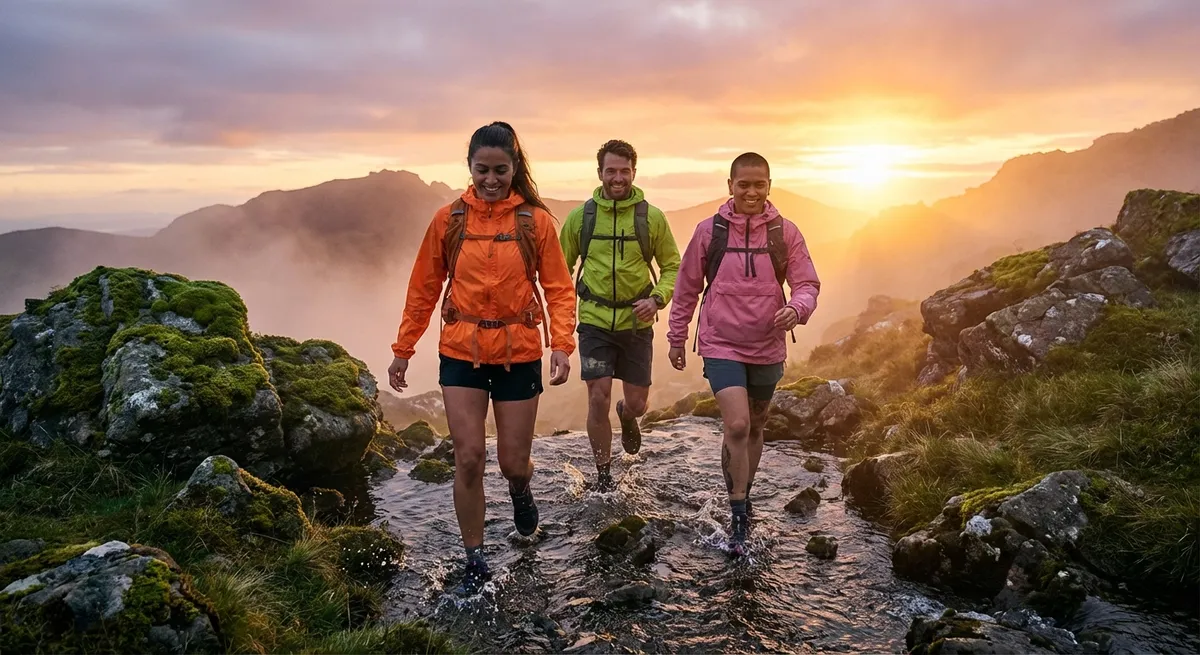
Why Choose a Destination That Challenges Your Body?
A fitness-focused trip isn’t about punishment or strict routines—it’s about amplifying everything you already love about travel. When you choose destinations built for movement, your days shift from “What should we see?” to “How far can we go?”
Active destinations tend to offer more access to nature, safer walking and cycling routes, and a culture that normalizes being outdoors. You’re not cramming workouts into a corner of your day; you’re letting them shape the entire experience. Hiking up to an alpine lake beats scrolling in a café. Sunrise runs along an ancient city wall leave a deeper imprint than any souvenir.
There’s also a mental reset that comes from working your body somewhere completely new. New landscapes, unfamiliar smells, different climates—your brain lights up while your muscles adapt. It’s a powerful combo: physical challenge plus sensory overload, all wrapped in a sense of discovery that makes effort feel like adventure.
Destination Highlights for the Movement-Obsessed
Some places simply invite you to move more. If you’re planning your next epic escape, consider these types of fitness-forward destinations and what they offer.
Mountain Playgrounds – Chamonix, France & Queenstown, New Zealand
Chamonix sits in the shadow of Mont Blanc, a daydream for hikers, trail runners, and climbers. From summer ridgeline treks to valley floor runs along glacial rivers, it’s impossible to stay still. Queenstown brings similar energy to the Southern Hemisphere: steep hills perfect for lung-burning hikes, crystal-clear lakes for open-water swims, and a culture that treats adrenaline like a daily vitamin.
Coastal Endurance Havens – Cape Town, South Africa & Lisbon, Portugal
Cape Town fuses ocean and mountain like nowhere else. You can start with a sunrise climb up Lion’s Head, squeeze in a surf session at Muizenberg, then cool down on the Sea Point Promenade. Lisbon, with its roller-coaster hills and Atlantic breezes, is a dream for hill sprints and stair workouts, plus waterfront cycling along the Tagus River.
Urban Movement Labs – Copenhagen, Denmark & Vancouver, Canada
Copenhagen is built for bikes. More people commute on two wheels than by car, turning every errand into low-key cardio. Vancouver offers an urban-nature hybrid: the seawall in Stanley Park for long runs, North Shore mountains for trail adventures, and paddleboards gliding across English Bay at sunset.
Tropical Training Grounds – Costa Rica & Hawaii (Big Island)
Costa Rica’s jungles, waterfalls, and surf breaks make “rest day” a foreign term. You can hike to volcano craters, zip-line through canopy, then paddleboard mangrove estuaries. On Hawaii’s Big Island, lava fields, black-sand beaches, and long coastal roads have forged Ironman legends—perfect for cyclists, runners, and swimmers chasing their limits in paradise.
Each of these destinations encourages motion not as a chore, but as the default way to experience its wildest corners.
5 Active Travel Tips for Fitness Adventurers
When your trip revolves around movement, a little planning turns good adventures into unforgettable ones. Build these five tips into your next escape.
1. Program Your Week Around Your “Anchor Efforts”
Think of your trip like a training block. Choose 2–3 big “anchor efforts” for the week—maybe a full-day glacier hike, a long coastal ride, or a mountain summit—and build everything else around them.
Schedule lighter days before and after each anchor: easy walks, gentle swims, or casual city cycling. This lets you hit your key adventures with energy to spare while still soaking up the destination. Use local tourism sites or park maps to understand elevation gain, distance, and terrain so you don’t accidentally turn a “quick hike” into an epic sufferfest the day before your bucket-list climb.
2. Travel Light but Pack “Performance Essentials”
You don’t need a suitcase full of gear, but a few smart items can transform how freely you move:
- Versatile footwear: One pair of trail-to-town shoes that can handle rocky paths and still pass in a café.
- Compact recovery tools: A mini massage ball or collapsible roller for sore calves and tight hips.
- Hydration system: A soft flask or pack for long city explorations or all-day hikes.
- Technical layers: Quick-dry tops, a light shell, and sun protection that can handle surprise rain, altitude winds, or tropical heat.
Focus on items that help you stay moving day after day: comfort, protection, and recovery beat style-only choices every time.
3. Use Local Infrastructure as Your Training Playground
Active cities and regions often invest in infrastructure that doubles as a gym without walls. Seek out:
- Waterfront paths for tempo runs or long walks (think Vancouver’s seawall, Lisbon’s riverfront).
- Public staircases and hills for interval training and power climbs.
- Bike-share systems for spontaneous low-impact cardio while sightseeing.
- Outdoor fitness stations or parks where you can squeeze in strength sessions between explorations.
Look at city maps with a “movement lens”—spot greenbelts, rivers, hills, and waterfronts, then design your daily adventures around them. You’ll see more of the place and stay fitter in the process.
4. Stack Micro-Adventures into Your Itinerary
You don’t need every day to be an ultra-distance epic. Stack small, intentional bursts of movement into whatever you’re already doing:
- Walk or jog to viewpoints instead of taking trams or taxis.
- Add a dawn beach walk, pier run, or park loop before breakfast.
- Choose kayaking, paddleboarding, or snorkeling over passive boat tours.
- Explore new neighborhoods by bike instead of public transit.
These micro-adventures keep your activity levels high without dominating your schedule. By the end of the trip, they compound into serious mileage, vertical gain, and memories.
5. Respect the Environment and Your Body’s Signals
The boldest travelers are the ones who come home in one piece and hungry for more. That means two things: understanding the environment and listening to your own limits.
At altitude, slow your pace and hydrate more. In humid or hot climates, prioritize early morning sessions, sun protection, and electrolytes. On technical trails or remote routes, be conservative: bring navigation, extra layers, and let someone know your plan. If your body throws up red flags—dizziness, sharp pain, unusual fatigue—downshift. Swapping a peak attempt for a recovery day exploring markets or soaking in a hot spring won’t ruin your trip; it may save it.
Conclusion
The world is full of places that don’t just welcome your restless feet and curious lungs—they challenge them. When you chase destinations that demand effort, everything changes: your photos look wilder, your stories get better, and your memories anchor to the climbs you conquered and the oceans you crossed under your own power.
Your next stamp in the passport doesn’t have to be about checking sights off a list. It can be a chapter in the story of how you built a stronger, braver version of yourself—one trail, one shoreline, one city stairwell at a time.
Pack your grit. Book the ticket. Let the destination set the pace, and meet it stride for stride.
Sources
- Centers for Disease Control and Prevention – Physical Activity and Health – Overview of the health benefits of regular physical activity, useful for understanding why active travel is so powerful
- UN World Tourism Organization – Tourism and Health – Explores the intersection of tourism, wellbeing, and active lifestyles
- Destination Canada – Outdoor Adventure Travel – Insights into outdoor and adventure tourism trends, including examples from places like Vancouver
- Government of New Zealand – Great Walks – Official information on multi-day hiking routes that highlight New Zealand as a prime fitness destination
- European Cyclists’ Federation – Cycling in Copenhagen – Details how Copenhagen’s cycling infrastructure supports active transportation and movement-focused travel