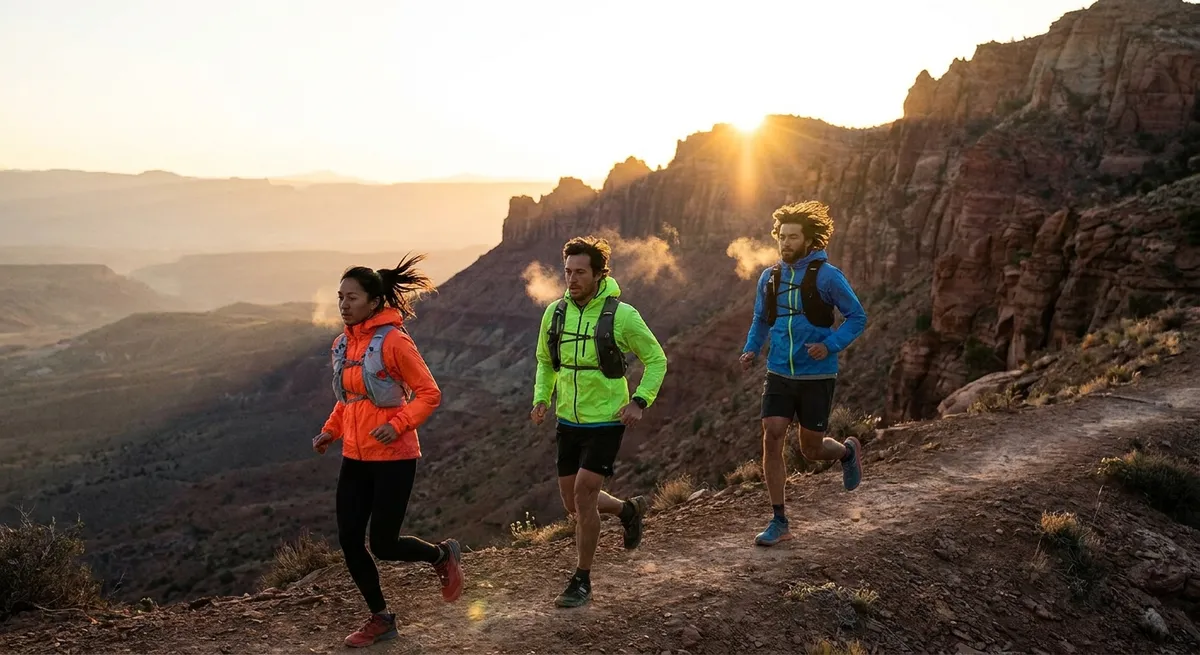
This guide is your invitation to rewire the way you travel. You’ll discover how to turn any trip into a living, breathing training camp—without sacrificing the magic of exploration. Lace up: your passport is about to become your most powerful piece of fitness equipment.
What Adventure Fitness Really Means (And Why It’s Addictive)
Adventure fitness isn’t about chasing the perfect body; it’s about chasing the version of you who says yes to the steep trail, the frigid sunrise swim, and the extra kilometer through a city you’ve never seen before.
Instead of separating “vacation” from “training,” you fuse them. Your long run becomes a moving city tour. Your strength session becomes hauling a loaded pack up switchbacks in Patagonia. Your recovery day? Wandering a food market in Bangkok, sampling local produce that fuels your next climb.
You’re not just burning calories—you’re building resilience, coordination, and confidence in unfamiliar environments. Studies show that physical activity outdoors can boost mood and reduce stress more than indoor exercise, especially in natural spaces with water, forests, or mountains in view. Adventure fitness taps this effect again and again, turning your travels into a series of small, powerful mindset shifts.
At its core, adventure fitness is about presence: feeling your lungs burn in the Alpine air, your quads fire as you push a bike up a cobblestone hill in Lisbon, your heart racing as you dive into a cold Icelandic fjord. It’s training that reminds you you’re very much alive.
Choose Destinations That Challenge Your Body and Awe Your Senses
If you want your travels to sharpen your fitness instead of softening it, start with the map. The destinations you pick can shape your training in surprising ways.
- Mountainous havens like Chamonix in France, Queenstown in New Zealand, or Huaraz in Peru are natural intervals—every trail is a leg day plus cardio test. Altitude, steep grades, and rocky terrain build strength and endurance with each step.
- Coastal playgrounds such as Portugal’s Algarve, Costa Rica’s Nicoya Peninsula, or South Africa’s Cape Town deliver surf sessions, cliffside trail runs, open-water swims, and soft-sand sprints that torch your stabilizers.
- Desert and canyon landscapes in Utah’s national parks, Jordan’s Wadi Rum, or Spain’s Tabernas Desert demand heat management, hydration strategies, and mental grit—an ideal environment to practice pacing and recovery.
- Urban jungles like Seoul, Berlin, or Buenos Aires become obstacle courses of stairs, parks, riverside paths, and bike lanes. You can stack step counts, tempo runs, and bodyweight circuits while soaking up street art, markets, and nightlife.
Think of each region as a different training block: mountains for power and endurance, oceans for core and balance, cities for speed and agility. When you plan your route, ask one question: How will this place move me?
5 Active Travel Tips for Fitness Adventurers
Turning your trip into an adventure fitness quest doesn’t require perfection—just intention. These five tips will keep you exploring hard without burning out or getting sidelined.
1. Build Your Itinerary Around “Anchor Efforts”
Instead of trying to cram a workout into every day, choose anchor efforts—big, intentional movement sessions that define your travel week. Everything else flexes around them.
Example anchor efforts:
- A sunrise summit hike above Innsbruck, Austria
- A half-day coastal trail run on Italy’s Cinque Terre
- A guided mountain bike loop in Whistler, Canada
- A long open-water swim on Greece’s Naxos island
Plan 2–3 of these per week, then fill the gaps with lighter exploration. This reduces burnout, protects your joints, and gives you signature memories that stick far longer than random hotel gym sessions.
2. Pack a “Micro Gym” That Fits in Your Daypack
Your gear shouldn’t weigh more than the stories you bring home. A minimalist kit can turn any hostel patio, airport lounge, or viewpoint into a training spot.
Pack:
- Mini resistance band for glute activation, hip work, and upper-body pulls
- Lightweight suspension trainer (or a sturdy yoga strap) to hook onto doors, trees, or railings for full-body strength
- Jump rope for quick conditioning—especially in cities
- Collapsible water bottle that doubles as a makeshift light weight when filled
With this micro gym, you can hit a 20–30 minute strength session overlooking Lake Bled in Slovenia or in a riad courtyard in Marrakech, keeping your muscles ready for the next big push.
3. Turn Transport Days Into Movement Opportunities
Travel days don’t have to be black holes for your fitness. With a little creativity, they become stealth training windows.
At airports or train stations:
- Walk the terminals end-to-end between connections
- Use stairs only—add a brisk “stair climb” burst before your gate
- Do a short “travel mobility” circuit: ankle circles, hip swings, lunges, arm circles, and gentle spinal rotations
- Stand, stretch, and walk the aisle every 60–90 minutes
- Perform seated calf raises and glute squeezes to keep blood flowing
- Hydrate aggressively so muscles and joints stay happier when you finally hit the trail
On long-haul flights or bus rides:
By the time you reach your base camp in the Dolomites or your eco-lodge in Bali, your body will be primed instead of stiff and sluggish.
4. Let Local Terrain Design Your Workouts
The best workout plan in a new country is often the one written by the landscape itself. Instead of fighting your surroundings, surrender to them.
- In Amsterdam or Copenhagen, use the cycling culture—rent a bike and treat it as daily low-intensity cardio instead of just transport.
- In Rio de Janeiro, run or power-walk along Copacabana or Ipanema at dawn when the air is cooler and the city is just waking up.
- In Kyoto, use temple staircases for hill sprints or stair intervals—blend spiritual calm with physical effort.
- In Reykjavík, pair geothermal pool soaks with brisk coastal walks or trail runs to harness contrast therapy (hot water + cold air).
Ask locals where they train outdoors. You’ll discover viewpoints, running paths, and neighborhood climbs you’d never find in a generic guidebook.
5. Train With the Culture, Not Against It
The most memorable fitness sessions abroad are the ones that immerse you in local rhythms.
Seek out:
- Traditional movement practices: capoeira in Brazil, Muay Thai in Thailand, yoga in India, or martial arts in Japan. One class can change how you think about your body.
- Local running clubs or community rides: many cities host free weekly meet-ups; you’ll see the city through residents’ eyes.
- Outdoor fitness parks: from Barcelona’s beach calisthenics areas to Singapore’s neighborhood workout stations, you can get strong while people-watching and soaking up daily life.
Refuel with local staples—Mediterranean olives and fish after a coastal run in Greece, hearty stews after a long hike in the Scottish Highlands, plantain and beans after surfing in Costa Rica. Your nutrition becomes part of the story, not a restriction list you drag from country to country.
Destination Highlights for Your Next Adventure Fitness Escape
Need inspiration for where to point your compass next? These destination ideas pair perfectly with an adventure fitness mindset:
- La Réunion Island (French territory in the Indian Ocean)
A volcanic training ground of lava fields, emerald cirques, and ridges that will light your quads on fire. Trail runners flock here for multi-day explorations and races like the Diagonale des Fous. Off the trails, canyoning and paragliding keep the adrenaline humming.
- Patagonia (Chile & Argentina)
Towering granite spires, glacial lakes, endless wind, and some of the most cinematic hiking on Earth. Torres del Paine and El Chaltén offer everything from day hikes to multi-day treks where your pack becomes your barbell.
- Canary Islands (Spain)
A paradise for multi-sport athletes: run volcanic trails on Tenerife, surf Fuerteventura, ride winding roads on Gran Canaria, and finish with ocean swims at sunset. Year-round mild weather makes it a perfect winter escape for northern-hemisphere adventurers.
- British Columbia, Canada
From Vancouver’s seawall runs and North Shore mountain biking to the alpine wonderland of Whistler, you can stack trail days, paddleboarding, skiing, or climbing into one dense, unforgettable training block.
Wherever you land, let the terrain nudge you into new ways of moving. When in doubt, ask: What are locals obsessed with outdoors? Then try it.
Conclusion
Adventure fitness is not a break from your real life—it’s a rehearsal for the way you want to live every day: curious, strong, and ready to lean into whatever shows up on the horizon.
When you build anchor efforts into your trips, pack a micro gym, turn transit into movement, train with the terrain, and say yes to local culture, you don’t just log workouts—you collect stories. You learn to trust your body on unfamiliar ground. You realize that your limits aren’t walls; they’re trailheads.
The world is wide. Your lungs are deeper than you think. Pick a destination, choose your next effort, and step out the door. The adventure starts the moment you decide to move through your travels, not just pass through them.
Sources
- Harvard Health: Exercise is an all-natural treatment to fight depression - Overview of how physical activity, especially regular exercise, improves mood and mental health
- American Psychological Association: The exercise effect - Explains psychological benefits of exercise and its impact on stress and resilience
- National Park Service (USA): Benefits of Outdoor Recreation - Details the physical and mental health benefits of outdoor and nature-based activity
- World Health Organization: Physical activity - Global recommendations for physical activity and its role in health
- Stanford University: How nature experiences benefit mental health - Research summary on how time in nature affects mood and cognitive patterns