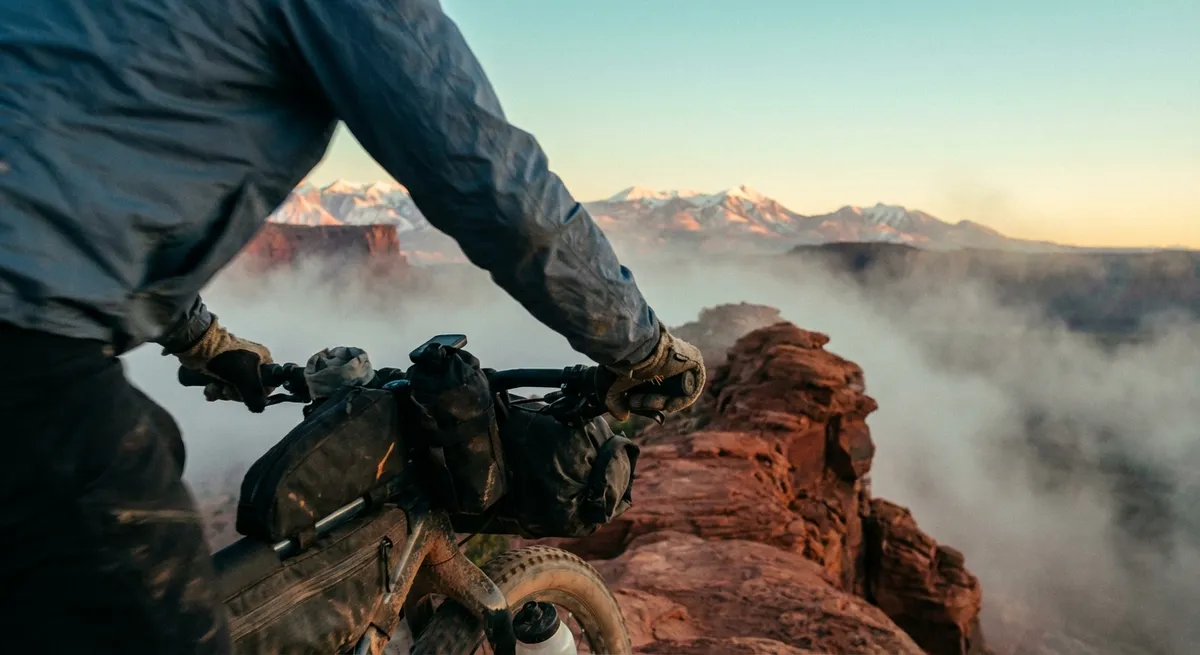
Below, you’ll find five power-packed active travel tips—each paired with destination ideas—to help you turn every journey into a story your body and mind will remember.
Reimagine “Sightseeing” as “Sweat-Seeing”
Forget tour buses and slow-moving lines. The best way to meet a new place is with your heart rate up and your eyes wide open. When you reframe sightseeing as “sweat-seeing,” every landmark becomes a checkpoint in your own personal adventure course.
Swap static observation decks for early-morning stair runs up iconic viewpoints, like the steep climb to Montmartre’s Sacré-Cœur in Paris or the hills of Lisbon’s Alfama district. Trade a casual stroll along the waterfront for a tempo run on Barcelona’s Barceloneta promenade or the Vancouver Seawall, where the ocean and skyline share the same frame.
In mountain towns like Chamonix, Innsbruck, or Queenstown, your “city walk” can become a trail run that leaves the last café behind in minutes. Urban parks—New York’s Central Park, London’s Richmond Park, or Singapore’s MacRitchie Reservoir—double as training grounds where every loop is a new variation on your workout.
When you move fast enough to feel the city in your lungs and legs, the story of the place sticks with you differently. You don’t just see it—you move through it.
Tip 1: Anchor Each Day Around One “Signature Move”
Your trip doesn’t need a rigid training plan, but it does benefit from a daily anchor—a single “signature move” that becomes the non-negotiable spark of activity each day. It keeps you grounded, even when itineraries shift and spontaneity takes over.
Pick one movement pattern that fits your destination and make it your daily ritual:
- Coastal hubs: sunrise beach runs or sand sprints in places like Bondi Beach (Sydney), Copacabana (Rio de Janeiro), or South Beach (Miami).
- Mountain escapes: daily summit hikes, hill repeats, or stair climbs in towns beneath peaks like the Dolomites, the Rockies, or the Japanese Alps.
- Historic cities: walking lunges or brisk power walks up every major staircase—think Rome’s Spanish Steps or Prague’s castle climb.
This “signature move” becomes the spine of your active day. Layer in shorter movement bursts—10-minute mobility work in your room, a quick bodyweight circuit in a park, or jogging between museums—and suddenly you’ve built a full, functional day of movement without sacrificing exploration.
By anchoring your day with one powerful, place-specific movement, you give your trip both physical structure and a memorable rhythm.
Tip 2: Let Terrain Be Your Coach, Not Your Enemy
New terrains can feel intimidating—cobblestone streets, steep hills, sandy beaches, humid jungles—but each one offers a different kind of training you can’t replicate on a treadmill at home. Instead of fighting the landscape, surrender to it and let it train you.
In hilly cities like San Francisco, Valparaíso, or Edinburgh, incline walking, hiking, or hill sprints turn the urban grid into a natural strength workout. In desert regions like Morocco’s dunes of Merzouga or Utah’s red rock trails, softer sand demands more from your stabilizers and calves, giving you powerful low-impact resistance work.
Coastal areas—like Croatia’s Dalmatian Coast or Greece’s island paths—invite you to mix trail running with cold-water swims, transforming the shoreline into a mini triathlon playground. Forested regions and national parks—from Slovenia’s Triglav to Canada’s Banff—allow easy shifts between hiking, trail running, and bodyweight workouts using logs, rocks, and benches.
When you let the environment shape your effort—speeding up on flat boardwalks, powering down on technical descents, easing into a mindful tempo through dense forest—you walk away with new strength, agility, and resilience sculpted by the landscape itself.
Tip 3: Pack a “Micro Gym” That Fits in Any Backpack
You don’t need a checked bag full of gear to stay powerful on the road. A well-planned “micro gym” weighs almost nothing, fits in your daypack, and instantly transforms any beach, balcony, or bus stop into a training space.
Consider packing:
- A lightweight resistance band or loop band for rows, glute work, and shoulder activation.
- A compact jump rope for high-intensity intervals in small spaces.
- A travel-friendly yoga strap or just a scarf/long towel for post-hike mobility.
- Minimalist trainers or trail shoes that can handle both pavement and dirt.
With this kit, you can build a quick morning routine in a hostel courtyard in Chiang Mai, a balcony session in Cape Town, or a mobility flow by Lake Bled. Your “gym” becomes wherever your feet land: a portside dock in Split, a quiet corner in an airport terminal, or a park overlooking Tokyo’s skyline.
The goal isn’t to replicate your home gym—it’s to stay adaptable, strong, and ready for whatever bold activity the day throws your way, from last-minute paddleboarding to a spontaneous street workout with locals.
Tip 4: Use Local Culture as Your Warm-Up and Cooldown
Active travel isn’t only about the muscles you work—it’s also about how deeply you immerse into the culture that hosts you. Use local traditions, rhythms, and rituals as your warm-up and cooldown to turn your trip into an experience that trains your curiosity as much as your body.
Start the day with movement aligned to local life: a gentle tai chi session in a Shanghai park, a beachfront yoga class in Goa, or an early-morning jog to a bustling market in Mexico City. Let your cool-down include walking through neighborhoods at golden hour, exploring hidden streets, and stretching on a quiet overlook as the city lights come alive.
Join local movement traditions when you can: capoeira circles in Brazil, salsa dancing in Colombia or Cuba, folk dance festivals in Eastern Europe. These experiences challenge your coordination, rhythm, and confidence while giving you a visceral connection to the place.
By integrating culture into your warm-ups and cool-downs, you ground your physical journey in human connection. Your body remembers the rhythm of a place just as much as its altitude or terrain.
Tip 5: Chase Elements, Not Just Elevation
Many active travelers focus solely on elevation gain or step counts. While those metrics can be motivating, some of the most transformative journeys happen when you decide to chase elements instead: water, wind, rock, ice, rainforest, and beyond.
Seek water-based movement in places like Norway’s fjords, Croatia’s islands, or New Zealand’s bays—kayaking, stand-up paddleboarding, or wild swimming. Let wind push you across coastal ridges on trail runs in Madeira or the Cinque Terre, testing your balance and focus.
Pursue rock and stone in climbing destinations like Kalymnos in Greece, Railay in Thailand, or the crags near Joshua Tree in the United States. Explore ice and snow through snowshoeing, backcountry skiing, or ice trekking in regions like Patagonia, Iceland, or the Alps.
By chasing elements, you’ll experience a wider spectrum of physical challenges: grip strength from climbing, core power from paddling, joint stability from snow travel, and mental resilience from changing conditions. Your training log becomes a catalog of landscapes, not just numbers.
Destination Highlights for Your Next Active Escape
If you’re ready to build an entire trip around movement, consider destinations where adventure and accessibility intersect:
- Interlaken, Switzerland: A launchpad for paragliding, lake paddling, high-altitude hiking, and via ferrata routes, all within short train rides.
- La Réunion (Indian Ocean): Crater hikes, volcanic ridges, canyoning, and trail runs through jungled ravines on a single island.
- Banff & Lake Louise, Canada: A dreamscape for hiking, trail running, snow sports, and glacier-fed lake paddling.
- Tasmania, Australia: Coastal multi-day treks, rugged day hikes, and wild coastline runs far from city crowds.
- Madeira, Portugal: Cliffside trails, levada walks, forest runs, canyoning, and ocean swims on an island built for vertical adventures.
Wherever you go, let the terrain write your workout, the culture shape your pace, and your curiosity decide the route.
Conclusion
Active travel is not about chasing perfection or sticking to a rigid plan. It’s about stepping into the world with a body that’s ready to move, lungs that crave fresh air, and a mindset that sees every alleyway, ridge, and shoreline as an invitation.
When you anchor your days with a signature move, let the landscape coach you, pack a micro gym, move with local culture, and chase the elements, your trips stop being breaks from your lifestyle and become part of your evolution.
Your next boarding pass isn’t just a ticket to another country—it’s a door to another version of yourself. Pack your curiosity, your courage, and just enough gear to get moving. The world is waiting, and it’s not standing still.
Sources
- Centers for Disease Control and Prevention – Physical Activity Basics - Overview of recommended physical activity levels and health benefits, useful for planning active travel days
- American College of Sports Medicine – ACSM’s Recommendations for Exercise - Evidence-based guidelines on exercise intensity and variety that can be adapted to travel
- Harvard T.H. Chan School of Public Health – Benefits of Physical Activity - Research-backed discussion of how regular movement supports long-term health
- Parks Canada – Banff National Park - Official information on outdoor activities, trails, and safety in one of the highlighted destinations
- Switzerland Tourism – Hiking in Interlaken Region - Destination guide featuring trails and outdoor adventures referenced in the article