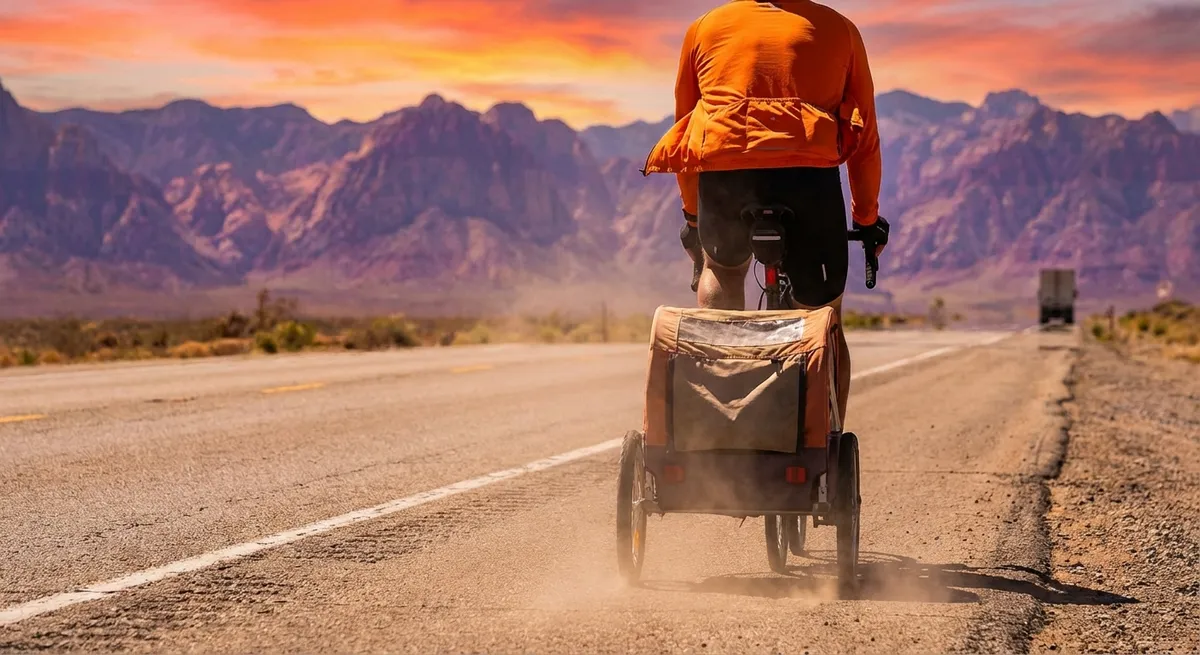
What Adventure Fitness Really Is (And Why It Changes Everything)
Adventure fitness isn’t about chasing the most extreme feat or racking up perfect stats on your watch. It’s the art of folding purposeful movement into exploration—using mountains, city streets, rivers, and forests as your gym.
Instead of isolating exercises, you move with your environment: sprinting for the last bus in Tokyo, bouldering seaside rocks in Portugal, power hiking the switchbacks above Lake Bled. Your cardio comes from chasing viewpoints, your strength from hauling a pack through airport stairs instead of escalators, your mobility from stretching under a Saharan sky.
The payoff is twofold. Physically, you rack up meaningful training volume without being chained to a hotel treadmill. Mentally, you forge sharp memories tied to effort: the burning quads on that final ridge, the salty air you gulped between paddle strokes, the sunrise you earned after a pre-dawn trail run. Your workout becomes a story you can tell, not just a data point.
Destinations That Invite You to Move
Some destinations practically dare you to move your body. Not just with “nice views,” but with terrain that begs for sweat, lungs, and grit.
Imagine waking in Chamonix, France, where every direction points to a trail slicing up toward jagged Mont Blanc vistas. Short on time? A brisk power hike from town to the Plan de l’Aiguille turns into a stair-master session carved in granite and pine. Stay longer and you’re stitching together runs and hikes through alpine meadows, refueling with espresso and tartes in tiny huts.
Or picture Cape Town, South Africa, where Lion’s Head and Table Mountain loom like natural training towers over a bustling city. One morning you’re scrambling sandstone steps to a summit sunrise, another you’re surfing Muizenberg’s beginner-friendly waves, legs and core fired up as you chase clean lines toward shore.
Then there’s Queenstown, New Zealand, a high-octane playground of lake loops, ridge runs, and mountain bike singletrack that can be as calm or as savage as you choose. Jog the lakefront at golden hour for active recovery, or hammer up the Ben Lomond track and let the panorama of the Southern Alps be your oxygen.
Your “fitness plan” becomes a list of must-do experiences, not chores.
5 Active Travel Tips For Fitness-Obsessed Explorers
1. Swap “Workout Blocks” for Movement Missions
Instead of scheduling rigid gym sessions, design “missions” that fit your day’s adventures.
Maybe you’re in Lisbon: turn your morning into a hill repeat workout by running or fast-walking from the waterfront up to Miradouro da Senhora do Monte, pausing only for views and photos. In Mexico City, map a 10K urban run that links leafy Parque México, Chapultepec’s castle, and a favorite taco stand for your post-run refuel.
By thinking in missions—“run to that lighthouse,” “hike to that crater rim,” “cycle to that monastery”—you blend exploration with training. You’ll often end up going farther and working harder than you would ticking off 5K on a hotel treadmill.
2. Use Terrain as Your Unfair Advantage
Every destination has a built-in training bias. Lean into it.
Island hopping in Greece? Make the staircases and steep alleys your daily glute and calf workout, walking instead of taking taxis. Stay in the Dolomites? Embrace slow, sustained climbs and descents to build mountain legs and bulletproof your ankles. In flat Amsterdam or Copenhagen, rent a bike and turn commutes into casual zone-2 rides that rack up serious weekly mileage.
Let the land decide your focus: hills for strength, altitude for lung capacity, sand for foot and core stability, snow for balance and power. You leave with both memories and specific adaptations you couldn’t have built at home.
3. Pack a “Micro-Gym” That Fits in Any Backpack
You don’t need a fully equipped weight room to stay strong on the road. A minimalist “micro-gym” turns any terrace, airport corner, or lakeside dock into a training zone.
Pack one light resistance band, one mini-loop band, and a compact jump rope. That’s enough for: banded squats and lateral walks before a summit hike, quick upper-body circuits on a balcony in Chiang Mai, or a five-minute jump rope burner in a rainy Icelandic parking lot while you wait for the clouds to break. Your luggage stays light, your training stays consistent.
Then layer it onto your adventures. Warm up glutes and hips before tackling Scotland’s Ben Nevis, or hit a five-move band circuit after snorkeling in Hawaii to keep shoulders stable and strong. The gear is simple, the payoff is staying injury-resistant and powerful for the next day’s mission.
4. Let Local Life Set Your Training Rhythm
Adventure fitness isn’t about fighting a place’s rhythm—it’s about syncing with it.
In Mediterranean towns where midday heat is brutal, join the locals: siesta in the early afternoon, then use the cool morning and late evening for runs along the waterfront or brisk hikes in the hills. In Nordic cities with long summer light, make the most of it—late-night bike rides along Oslo’s fjord or long, rolling runs across Stockholm’s bridges when most gyms are closing.
Check local markets for pre- and post-workout fuel: fresh fruit in Bali for a quick carb hit before a jungle trail run, protein-rich snacks in Tokyo’s konbini for convenient recovery on the go. By leaning into local schedules and foods, you’ll feel more energized, less jet-lagged, and more connected to the culture you’re moving through.
5. Chase Experiences, Not Just PRs
You don’t have to beat your 10K time in every country. Let the landscape decide what “success” looks like.
In Patagonia, success might be finishing a long, windy trek around Torres del Paine despite horizontal gusts and unexpected downpours. In Utah’s red-rock desert, it might be pacing yourself wisely so you can finish a slot canyon hike with energy to spare. In Kyoto, it may simply be jogging temple to temple at sunrise, stopping often to breathe in incense and silence.
Track your data if you enjoy it—but also keep a “movement log” of experiences: the first time you ran through a cloud on Madeira, the day you swam across a chilly alpine lake in Switzerland, the sunrise you shared with strangers on a volcano in Indonesia. Those are the personal records that keep you hungry for the next border crossing.
Building an Adventure-Ready Body Before You Go
You don’t need to be ultra-fit to travel this way—but a little preparation makes everything richer.
Focus on three pillars before your next trip: aerobic base, joint-friendly strength, and mobility. Build your base with regular walks, easy jogs, or cycling sessions so days packed with hikes and city exploration feel like fun, not survival. Add strength work—squats, lunges, pushes, pulls, loaded carries—to handle stairs, backpacks, and uneven terrain. Mobility sessions will make it easier to flow through cramped flights, long bus rides, and big hiking days without seizing up.
Test yourself locally: seek out stairs, trails, and hills where you live and practice moving with purpose. That way, when you land in Cusco, Reykjavik, or Vancouver, your body is ready to turn every landmark, alleyway, and ridgeline into an invitation to move.
Conclusion
Adventure fitness is less about discipline and more about devotion—to landscapes, to curiosity, to the version of you that says yes to the hard, beautiful way up. You don’t have to choose between “vacation mode” and “training mode.” You can let the planet train you—one summit, shoreline, and city street at a time.
Next time you pull out a map, don’t just ask, “Where should I go?” Ask, “How do I want to move there?” Then pack light, plan loosely, and leave room for detours. The strongest souvenirs you’ll bring home won’t fit in your suitcase: they’ll live in your lungs, your legs, and the stories you’ll be telling for years.
Sources
- Centers for Disease Control and Prevention – Physical Activity Basics - Overview of health benefits of regular physical activity and recommended guidelines
- American College of Sports Medicine – ACSM’s Guidelines for Exercise Testing and Prescription - Evidence-based recommendations on cardio, strength, and flexibility training
- Harvard T.H. Chan School of Public Health – Staying Active While Traveling - Practical strategies for maintaining physical activity during travel
- International Travel and Health – World Health Organization - Guidance on staying healthy and safe during international travel, including activity considerations
- Visit Norway – Hiking Safety and Preparedness - Real-world advice on preparing physically and logistically for outdoor adventures in demanding terrain