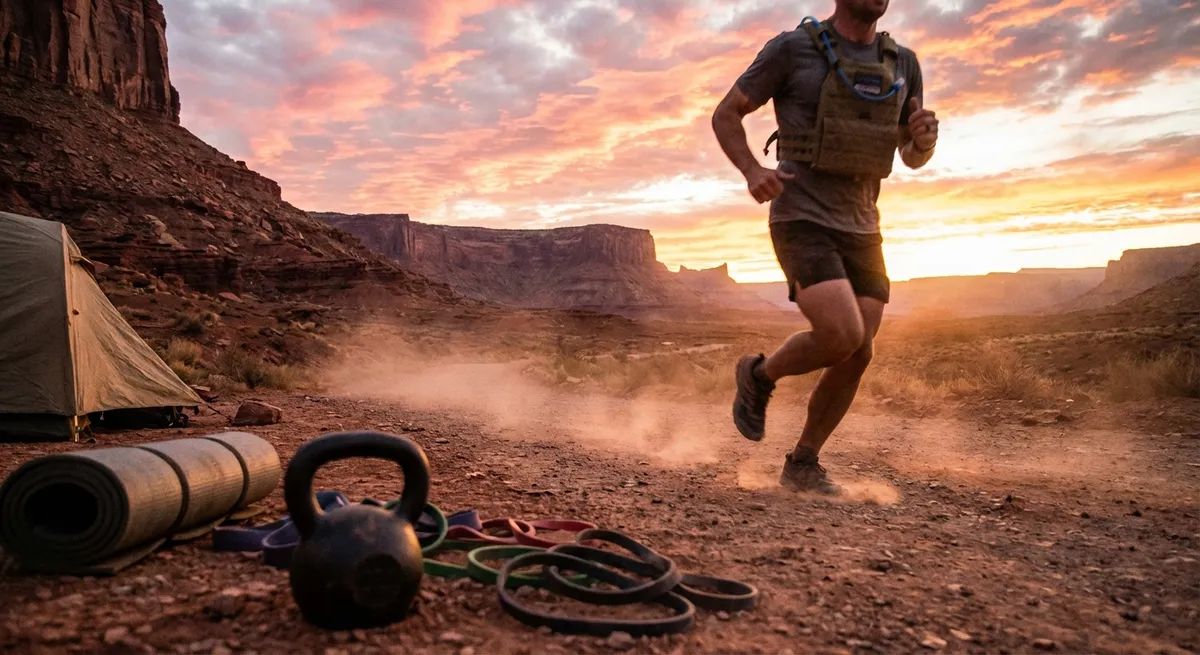
Redefine “Workout” as a Daily Quest
When you’re on the move, strict routines crumble—but that’s your opening. Instead of trying to copy‑paste your home gym program into a new city, reframe every day as a quest: “What challenge will I hunt down today?”
Swap rigid plans for flexible “movement missions”:
- One day focused on elevation (stairs, hills, volcano rims)
- One day focused on distance (long walks, hikes, bike rides)
- One day focused on power (sprints, steep climbs, bodyweight plyometrics)
- One day focused on recovery (easy swims, mobility sessions, yoga on a rooftop)
Destination idea:
In Lisbon, Portugal, chase hills instead of treadmills. Use the city’s steep alleys as natural interval training—power‑walk or jog uphill to viewpoints like Miradouro da Senhora do Monte, then walk down to recover. By the end of the trip, you’ll know the city through your quads.
By designing each day as a quest instead of a schedule, you stay consistent without feeling chained to a plan. Your training adapts to terrain, weather, and whim—exactly what adventure fitness is all about.
Tip 1: Use Terrain as Your Trainer
Forget machines. Let landscapes dictate your workout intensity, duration, and focus. Different terrains naturally target different muscles and energy systems, and they keep your mind fully engaged.
Try these terrain‑driven sessions:
- Beaches – Soft sand sprints, walking lunges along the shoreline, and push‑ups with your hands in the sand.
- Mountains & hills – Hill repeats, hiking with loaded packs, and improvised step‑ups on rocks or benches.
- Urban cores – Stair intervals, park circuit training, and city‑block tempo runs.
- Forest paths – Trail runs, lateral movements around roots and rocks, and balance work on logs or stumps.
Destination highlight: Bondi Beach, Australia. Run the coastal path to Coogee for rolling hills, stairs, and ocean views that pull you forward.
Destination highlight: Banff National Park, Canada. Take trails like Tunnel Mountain before sunrise for a soul‑stirring mix of incline training and alpine glow.
Destination highlight: Tokyo, Japan. Use city parks like Yoyogi as your training hub: sprint the loops, use benches for bodyweight circuits, and finish with easy laps to cool down.
Destination highlight: Black Forest, Germany. Flow through winding paths and rolling terrain, treating every bend as a new interval.
Your rule of thumb: when in doubt, follow the most interesting path, not the flattest one. The landscape will do the coaching.
Tip 2: Pack a “Micro Gym” in Your Daypack
You don’t need plates or machines when your backpack is a portable gym. A few smart items unlock dozens of travel‑friendly workouts without weighing you down.
Adventure fitness micro‑gym essentials:
- Mini resistance bands – Glute activation, shoulder pre‑hab, and full‑body circuits in tiny hotel rooms or airports.
- Lightweight suspension trainer – Anchors to doors, tree branches, or playground structures for rows, presses, and core work.
- Jump rope – High‑intensity conditioning in any parking lot, rooftop, or quiet street.
- Collapsible water bottles or dry bag – Fill with water or clothes for makeshift weighted carries or squats.
- Compact massage ball – Roll out tight calves and hips after long hikes or flights.
Destination idea:
In Chiang Mai, Thailand, rig your suspension trainer to a tree in Nong Buak Hard Public Park. Combine rows, push‑ups, jump rope intervals, and walking lunges for a 30‑minute burner, then cool down with a slow walk through the old city’s temples.
By carrying a micro gym, you’re never stuck waiting for equipment—you’re always one anchor point away from a full‑body adventure session.
Tip 3: Turn Everyday Logistics into Training Blocks
Long walks, luggage hauls, and transit gaps are perfect training windows. Instead of treating them as downtime, turn them into structured, intentional movement.
Ways to do this without feeling like you’re “always working out”:
- Airport & station circuits – Between gates, walk fast laps, hit calf raises on stairs, or drop into a few sets of squats and push‑ups in a quiet corner.
- Luggage strength work – Use your suitcase or duffel for suitcase carries (one hand), farmer’s carries (both hands), and overhead holds (only if safe and light enough).
- Transit layover walks – Commit to a minimum step count per layover. Many big airports have walking routes—follow them like indoor hiking trails.
- Errand intervals – Instead of hailing a cab, walk or jog to that café, viewpoint, or museum. Alternate brisk walking intervals with easier strolls.
Destination highlight:
In New York City, treat every subway exit as the start of a walking adventure. Choose a neighborhood (SoHo, Brooklyn Heights, the High Line) and cover it on foot with intentional pace changes: 2 minutes brisk, 2 minutes easy, repeated as you explore.
You’re not adding workouts—you’re amplifying what you’d be doing anyway.
Tip 4: Chase Active Experiences, Not Just Landmarks
Adventure fitness travelers don’t just “see” places—they feel them in their muscles. When planning a trip, weave movement into your must‑do experiences, so the most memorable parts of your itinerary automatically double as training.
Swap passive tourism for active versions:
- Instead of a bus tour, book a guided bike or running tour.
- Instead of a beach chair all day, sign up for surf lessons, SUP, or coastal hikes.
- Instead of a scenic drive, choose a route with trailheads and short summits along the way.
- Instead of only rooftop bars, pair sunsets with climbs—towers, hills, or viewpoints.
- Queenstown, New Zealand – Trail runs along Lake Wakatipu, mountain biking, bungee jumping, and alpine hikes on the Ben Lomond Track.
- Madeira, Portugal – Run or hike levada trails carved into mountainsides, mixing technical footwork with ocean views.
- Vancouver, Canada – Kayak near the city, hike the Grouse Grind for a brutal stair‑climb session, and cycle the SeaWall for an active recovery day.
Destination ideas that blend adrenaline and scenery:
By prioritizing active experiences, your memories come with built‑in endorphins.
Tip 5: Recover Like a Pro So You Can Adventure Again Tomorrow
Adventure fitness is sustainable only if you respect recovery. New climates, jet lag, and unfamiliar foods can stress your system; smart recovery keeps you primed for the next day’s challenge.
Key travel‑friendly recovery rituals:
- Hydration with intent – Aim for regular water intake, especially at altitude, in heat, or after ocean sports. Add electrolytes when you’re sweating hard.
- Post‑session mobility – 5–10 minutes of stretching or yoga after each intense day: calves, hip flexors, hamstrings, and upper back.
- Sleep as performance fuel – Use eye masks, earplugs, and a consistent wind‑down ritual, even if time zones shift. Protect at least one “early night” on multi‑day adventures.
- Food that builds, not just fills – Lean proteins, colorful vegetables, local fruits, and complex carbs to support endurance and repair. Enjoy the local cuisine—just anchor each day with at least one nutrient‑dense meal.
- Active recovery days – Beach strolls, easy swims, or gentle cycling instead of all‑out efforts every day.
Destination idea:
In Reykjavik, Iceland, alternate rugged outings—like hiking near Þingvellir or along the Sólheimajökull glacier—with hot spring soaks at places like the Secret Lagoon or local public pools. The geothermal water sessions become both cultural experiences and deep recovery.
When recovery is part of the adventure, you’re not “taking a day off”—you’re preparing for the next summit, wave, or skyline sprint.
Conclusion
Adventure fitness is not about perfection; it’s about presence. It’s choosing the steep alley over the escalator, the coastal trail over the crowded tour bus, the sunrise circuit over another forgettable hotel breakfast. With a micro gym in your pack, terrain as your trainer, and experiences that demand movement, every journey becomes part of your evolution—not just as a traveler, but as an athlete of the world.
Your next destination isn’t just a place on the map. It’s a new way to move. Pack your curiosity, lace up, and let the planet rewrite what “training” feels like.
Sources
- Centers for Disease Control and Prevention – Physical Activity Basics – Overview of recommended activity levels and benefits of regular movement
- American College of Sports Medicine – Exercising Outdoors – Evidence‑based guidance on training in outdoor environments
- Harvard T.H. Chan School of Public Health – Physical Activity Guidelines – Research‑backed recommendations for activity types and intensities
- World Health Organization – Physical Activity Fact Sheet – Global perspective on physical activity, health impact, and recommendations
- Adventure Travel Trade Association – Adventure Tourism Development Index – Insight into global adventure travel trends and active travel destinations