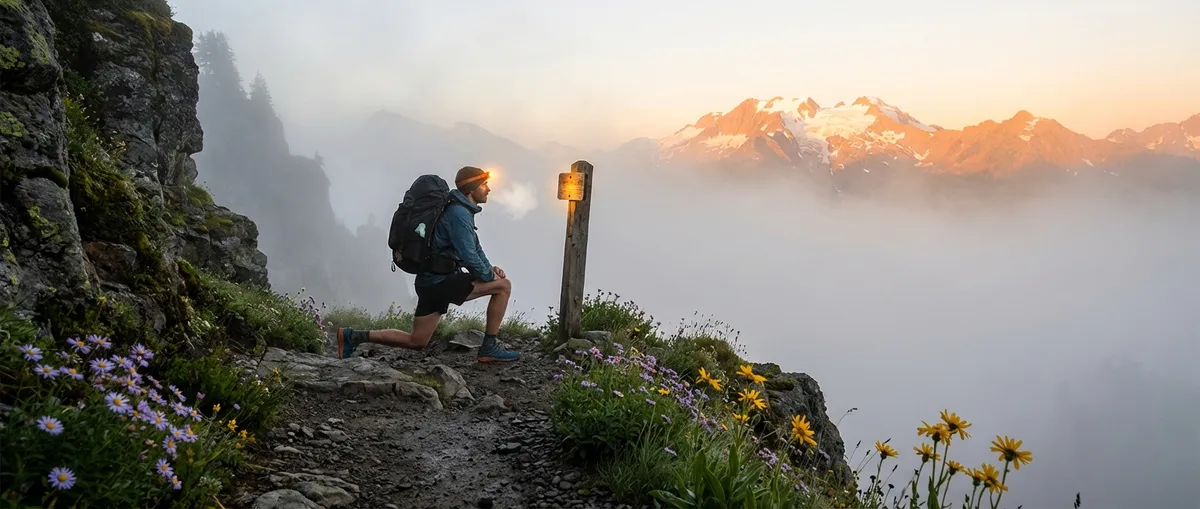
Why Sweat Outside When the Whole Planet Is Calling?
Outdoor training plugs you straight into the raw energy of a place. Uneven trails fire up stabilizing muscles that treadmills never meet, coastal winds challenge your core, and elevation throws a playful punch at your lungs. Sunlight boosts vitamin D, nature lowers stress, and your mindset shifts from “burning calories” to “collecting experiences.”
Think of every landscape as a training partner with a different personality. Alpine routes demand grit and lung power. Desert paths test hydration strategy and mental toughness. Waterfront promenades become tempo tracks with endless, horizon-level motivation. When fitness and exploration merge, your workouts stop being chores and start becoming stories.
Turn Landscapes into Training Partners
Before you even lace up, look at your destination with an athlete’s eye. Ask: what does this terrain want me to do?
- Mountains & Highlands – Perfect for lung‑burning inclines, power hiking, and loaded pack walks. Switchbacks become natural interval training. In the Dolomites, the Rockies, or Japan’s Northern Alps, every ascent doubles as strength and cardio.
- Coastlines & Beaches – Soft sand adds resistance to every step. Coastal routes in places like Portugal’s Algarve, Australia’s Gold Coast, or Costa Rica’s Pacific edge are ideal for barefoot sprints near the shoreline, walking lunges, and core sessions on a towel.
- Cities & Old Towns – Stairs, plazas, waterfront paths, and parks are hidden playgrounds. In cities like Lisbon, Istanbul, or San Francisco, steep streets and staircases offer built‑in hill repeats, and public squares are perfect for short bodyweight circuits.
- Forests & National Parks – Rooty trails sharpen balance and ankle strength. In destinations like Banff, the Black Forest, or New Zealand’s Fiordland, every route can be turned into a time‑trial, fartlek session, or loaded day hike.
- Deserts & High Plateaus – Great for early‑morning or sunset sessions that challenge your lungs and mental resilience. In Utah’s red rock country, Morocco’s dunes, or Atacama plateaus, controlled exposure to heat and elevation makes every step count.
When you see topography as training equipment, there’s no such thing as “no gym available”—just unused potential.
5 Active Travel Tips for Fitness Adventurers
These five strategies help you squeeze the most adventure—and performance—out of every trip.
1. Build a “Micro‑Workout” Map Before You Land
Use maps and local guides to identify natural workout zones near where you’re staying: stairs, parks, waterfronts, viewpoints, and short hiking trails.
- Drop pins on steep streets, stadium stairs, or hilltop overlooks for short, high‑intensity sessions.
- Mark a safe 3–6 km loop near your accommodation to use for easy runs or walks.
- Look for sunrise and sunset vantage points—perfect timing for cooler temperatures and unforgettable views.
In a city like Hong Kong, this might mean Victoria Peak trails before the crowds; in Cape Town, a pre‑breakfast climb on Lion’s Head; in Barcelona, stair intervals at Montjuïc with harbor views at the top.
2. Pack a “Pocket Gym” That Weighs Almost Nothing
A few lightweight tools can turn any guesthouse courtyard, beach, or park into a full‑body training ground:
- Mini resistance band – For glute activation, shoulder work, and warm‑ups before hikes.
- Long resistance band or suspension strap – Anchors to a tree, railing, or sturdy post; perfect for rows, presses, and assisted single‑leg work.
- Jump rope – Instant cardio when running isn’t ideal due to terrain or safety.
- Compact travel mat or quick‑dry towel – For core and mobility work without sacrificing your skin to concrete or hot sand.
On a trip through Southeast Asia, these tools mean you can train under a palm tree at sunrise, hit strength blocks in your hostel courtyard, or unwind with mobility work on a rooftop between adventures.
3. Use Local Terrain as Your Interval Coach
Design simple outdoor workouts that match the environment instead of fighting it.
- Hill Repeats in Mountain Towns
Choose a steady incline and alternate 30–60 seconds hard up / walk down to recover. Do 6–10 rounds. In Chamonix, Innsbruck, or Cusco, the landscape is practically begging for this.
- Sand Sprints on Coastal Escapes
Run 20–40 meters barefoot on firm, wet sand near the waterline; walk back; repeat 8–12 times. Add walking lunges or lateral shuffles between sets. Try this on Mexico’s Caribbean coast, Bali’s beaches, or Greece’s islands.
- Stair Circuits in Historic Cities
Find a stairway or public monument (like the steps up to churches, forts, or hilltop viewpoints). Use it for repeated ascents mixed with bodyweight exercises at the top: push‑ups, squats, planks, and dips. Great in places like Athens, Valparaíso, or Edinburgh.
- Trail Tempos in Forests & Parks
Warm up for 10 minutes, then alternate 3 minutes faster / 2 minutes easy while following a loop. Think of it as “conversation pace / can’t‑sing pace” intervals. Works beautifully in places like Vancouver’s Stanley Park or Tokyo’s outer gardens.
This approach keeps your training challenging but playful—like a game between you and the terrain.
4. Sync Recovery With Local Culture
Performance isn’t just about the effort; it’s about the rituals that restore you.
- In Iceland or Japan, hot springs and onsens become your recovery spa after long hikes or runs.
- In Mediterranean countries, long, leisurely dinners with healthy fats (olive oil, fish), whole grains, and vegetables refuel your muscles while you soak in the social atmosphere.
- In Southeast Asia, gentle evening walks through night markets help your legs flush out after a day of trekking, and herbal teas or light broths support hydration and digestion.
Plan active recovery days—easy walks, gentle swims, or slow bike rides—to explore neighborhoods, ruins, or coastal paths. You’ll experience more of the local rhythm while giving your body exactly what it needs to adapt.
5. Train Smart: Elevation, Heat, and Safety First
Adventure doesn’t have to mean recklessness. A few smart adjustments keep your outdoor sessions powerful instead of punishing:
- At Altitude (e.g., Andes, Himalayas, Rockies)
Start with slower, shorter efforts. Elevation stresses your cardiovascular system, so let your pace drop and watch for warning signs like persistent headaches, nausea, or dizziness. Hydrate more than usual and give yourself 1–3 days to acclimate before hard efforts.
- In Heat and Humidity (e.g., Southeast Asia, Central America)
Train early or near sunset, seek shade when possible, and scale back intensity. Electrolytes matter—especially if you’re sweating through long hikes or runs.
- In Remote or Wild Areas
Tell someone your route, check weather and trail conditions, and respect local wildlife and park rules. In some areas, running with headphones is a bad idea; you’ll want full awareness of your surroundings.
- In Busy Cities
Prioritize well‑lit, populated routes (riverfront paths, major parks, promenades), and consider reflective gear or a small visibility light if you’re out at dawn or dusk.
Strong travelers don’t only push hard—they read the environment and adapt.
Destination Highlights: Where the World Becomes Your Workout
If you’re looking for places where outdoor training and exploration effortlessly collide, these types of destinations deliver:
- Alpine Villages (e.g., Zermatt, Chamonix, Queenstown)
Wake to peaks and train on everything from rolling valley paths to steep cable‑car approaches. Mornings can mean hill intervals; afternoons, glacier‑view hikes.
- Coastal Adventure Hubs (e.g., Cape Town, San Sebastián, Byron Bay)
Mix ocean swims, sand sprints, waterfront runs, and coastal cliff walks in a single day. Finish with sunset mobility work overlooking the waves.
- Lakeside Retreats (e.g., Lake Bled, Lake Tahoe, Plitvice Area)
Run or cycle around the water in the cool hours, do bodyweight circuits on piers or shorelines, then use the lake as your natural ice bath—or your low‑impact swim lane.
- Urban‑Nature Hybrids (e.g., Vancouver, Auckland, Rio de Janeiro)
Start in parks and waterfront paths, then graduate to nearby mountains, forests, or islands for trail runs, hikes, and stair‑heavy viewpoints. These cities let you switch from city tempo to wild terrain in a single day.
Each place offers infinite ways to move—if you arrive ready to train with curiosity instead of routine.
Conclusion
Outdoor workouts turn the map into a mosaic of training possibilities. Every trip becomes a chance to test your legs against a new climb, your lungs against a new altitude, and your mindset against a new horizon. When you travel like an athlete and explore like an adventurer, your memories aren’t just photos—they’re mile markers, summit pushes, ocean sprints, and sunrise circuits that reshape who you are.
The next time you pack your bag, don’t just ask, “Where am I going?” Ask, “How will this place make me stronger?” Then step outside and let the world answer.
Sources
- CDC – Physical Activity and Health – Overview of health benefits of regular physical activity, including outdoor exercise
- Harvard Health Publishing – The Health Benefits of Strong Legs and Regular Walking – Evidence‑based insights on walking and lower‑body strength as foundations for active travel
- National Park Service – Hiking Safety Tips – Guidance on safe hiking and outdoor exploration in national parks and natural areas
- American College of Sports Medicine – Exercising in the Heat – Recommendations for adapting workouts to hot environments
- Altitude.org – How to Acclimatize to Altitude – Practical information on training and staying safe at higher elevations