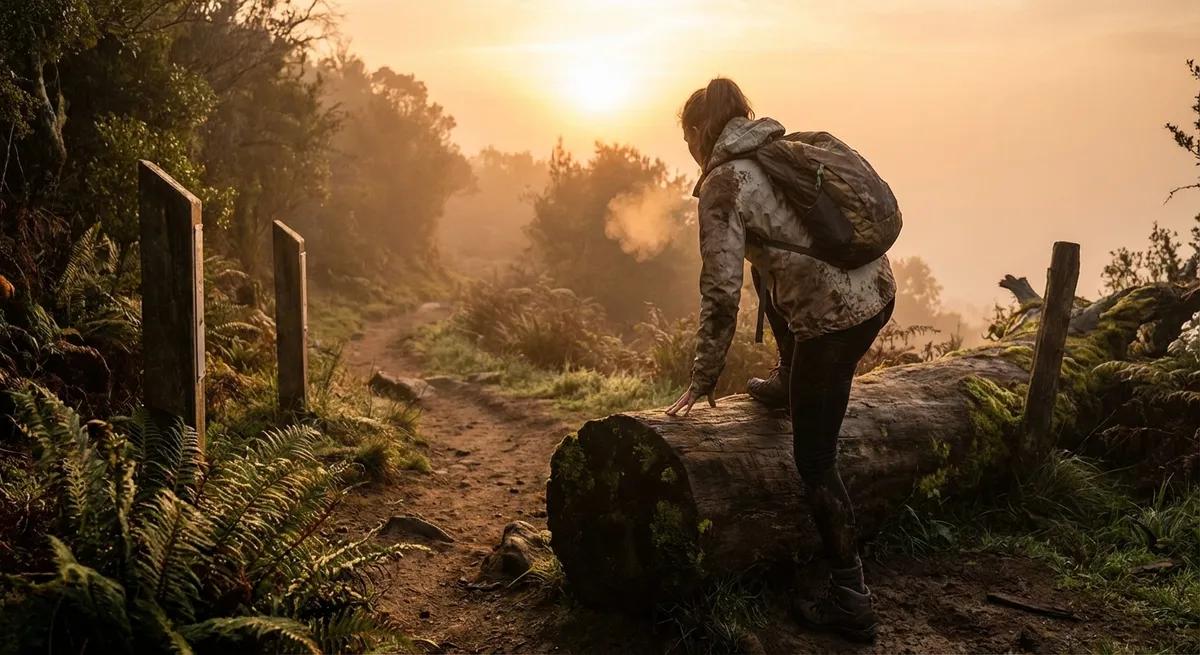
On the road, your body becomes your most reliable piece of gear, and the world turns into your training ground. From alpine villages in Switzerland to coastal paths in Portugal and night markets in Thailand, you can stack memories and muscle at the same time—if you travel with intention.
Below are five adventure-ready travel tips designed for people who want their trips to leave them breathless in all the right ways.
Reframe “Sightseeing” as “Endurance Exploring”
Adventure fitness starts with a mindset shift: you’re not just visiting a place—you’re moving through it.
Trade bus tours for human-powered routes. In Barcelona, swap a hop-on-hop-off ticket for a dawn run along Barceloneta Beach, finishing with a climb up to the Bunkers del Carmel for panoramic views. In Kyoto, walk or jog the Philosopher’s Path at sunrise, then explore temple steps as your built‑in glute workout.
When you choose to explore on your own two feet:
- You cover more micro‑terrain—stairs, slopes, cobblestones—that naturally challenge your muscles.
- You smooth out jet lag with daylight, movement, and fresh air.
- You move at “curiosity pace”: stopping for photos, detouring down side streets, and letting your heart rate rise with each new view.
Treat your daily sightseeing as a long, low‑intensity endurance session. Track your steps or distance if you like data, but let the main metric be how deeply you experience the place.
Destination ideas:
- Lisbon, Portugal: Hills and endless staircases turn a casual wander into a rolling leg day.
- Cusco, Peru: High-altitude streets and stone steps to Sacsayhuamán build lung power fast.
- San Francisco, USA: Urban hiking over Russian Hill and Telegraph Hill becomes a natural interval workout.
Pack Like an Athlete, Play Like an Explorer
You don’t need a full home gym to stay adventurous and strong on the road—just a few smart tools and a plan to use them wherever the day takes you.
Think “ultralight, maximum impact”:
- Mini resistance band: For glute activations before long hikes or airport layover circuits.
- Skipping rope: Compact, intense, and perfect for hotel courtyards and rooftops.
- Travel-friendly shoes: One pair that can handle trail switchbacks, cobbled streets, and spontaneous runs.
- Hydration strategy: Collapsible bottle or hydration bladder so you never use “no water” as an excuse.
From there, adopt a “whenever, wherever” workout philosophy:
- Waiting for sunrise at Mount Bromo in Indonesia? Do dynamic warm-ups and bodyweight squats while the sky lights up.
- Chill morning in a Cape Town hostel courtyard? Turn it into a quick EMOM (Every Minute On the Minute) circuit: push-ups, jump squats, planks, and burpees between coffee refills.
- Train stations and airports? Walking lunges down quiet corridors, calf raises on stairs, hip mobility flows near your gate.
Your gear is your permission slip: when it’s in your pack, you’re more likely to say yes to that sunrise run, that trail detour, that improvised stair sprint.
Let the Landscape Decide Your Workout
Instead of forcing your usual gym routine into every destination, let the terrain write the plan.
Think in terms of “landscape-specific sessions”:
- Mountains = Power & Lung Capacity
In Chamonix or the Dolomites, turn ascents into strength intervals: hike hard for 10–15 minutes, then pause to catch your breath, stretch, and soak in the ridgeline views. Downhills become controlled eccentric strength for quads and core.
- Coastlines & Islands = Endurance & Stability
On the Amalfi Coast or in the Greek isles, use undulating coastal trails for tempo efforts—run or brisk hike the flats and gentle downs, then power‑hike the climbs. Sand sections challenge foot and ankle stability, forcing smaller muscles to wake up.
- Cities = Functional Agility
In Tokyo, Istanbul, or Nairobi, you’re dodging crowds, hopping curbs, and tackling surprise hills. Use city staircases for stair sprints, park benches for step-ups and tricep dips, and plazas for short agility drills between landmarks.
- Waterfronts = Cross-Training & Recovery
In Bali, Hawaii, or Croatia, paddleboarding, kayaking, or open-water swimming engage your core and upper body while giving your joints a break from impact. Follow with a barefoot walk in the shallows as active recovery.
Let the question shift from “How do I keep my program?” to “What kind of athlete does this landscape invite me to become?”
Five Active Travel Tips for the Always-Moving Adventurer
Here are five practical, adventure-ready tips to keep your travels as active as your dreams:
Anchor Every Day With a Movement Ritual
Choose a 10–15 minute non‑negotiable routine you can do in a hostel bunk, ryokan room, or campsite: mobility flow, core series, or band work. This keeps your joints happy and your identity as a mover intact, even on transit days.
Book at Least One “Effort-Based” Experience Per Destination
Instead of only museums and cafés, deliberately add something that requires sweat: a glacier hike in Iceland, a cycling tour in Vietnam, a canyoning trip in Slovenia, or a sunrise stair climb up Rio’s Morro da Urca. Build your itinerary around one physical highlight you’ll remember forever.
Use the 20-Minute Rule on Low-Motivation Days
Jet lagged in Mexico City or rained-in in Queenstown? Promise yourself 20 minutes of movement: stair intervals in your hotel, yoga in your Airbnb, or a short jog around the block. Once you start, you often go longer—but if you don’t, you’ve still moved.
Fuel Like You’re in Training, Not on a Permanent Cheat Day
Sample the pastries in Paris and the street food in Bangkok—but pair them with hydration, protein, and plants. Aim for a balanced plate at least twice a day so your body can rise to the demands of trekking, climbing, and long walking days.
Schedule Recovery as Deliberately as Adventure
Rest is what turns your effort into actual fitness gains. Mix in slow days: hammam sessions in Morocco, onsen soaks in Japan, gentle beach walks in Costa Rica. Stretch in your room while journaling, or use a lacrosse ball or water bottle to roll out tight calves and hips.
These small decisions compound. A week of consistent micro‑choices can leave you coming home fitter, not just more tired.
Weave Fitness Into Culture, Not Around It
Adventure fitness shouldn’t feel like you’re doing your “real life” back home and then awkwardly squeezing in tourism. The sweet spot is letting culture and movement fuse.
Examples of movement‑rich cultural experiences:
- Japan: Walk between Kyoto’s temples, then practice mindful movement by slowing your pace under the torii gates at Fushimi Inari. Finish with a restorative soak at an onsen.
- New Zealand: Join a local trail running group in Wellington or Queenstown—many welcome drop-ins and love showing off their backyard hills.
- Morocco: Hike from Berber village to village in the Atlas Mountains, learning about local food and traditions between climbs.
- Norway: Embrace “friluftsliv,” the Nordic love of outdoor life, by hiking above Bergen then picnicking on the ridge with locals.
When your workouts are conversations with a place—its people, food, language, and landscapes—your training becomes a living memory instead of a checklist.
Conclusion
Your strongest stories rarely come from spotless hotel gyms. They’re written on cliff paths, cobblestones, forest tracks, and stone staircases that leave your legs shaking and your heart completely full.
Adventure fitness is not about staying on track with a rigid plan—it’s about expanding what “fitness” can mean when you let the world participate. Pack light, move often, say yes to sweat, and let every country, coastline, and mountain range leave its mark on your muscles and your mindset.
You’re not just traveling. You’re training for a life that feels as big and bold as the map in front of you.
Sources
- American College of Sports Medicine – ACSM Guidelines for Exercise Testing and Prescription - Foundational recommendations on physical activity, endurance, and strength training that inform safe adventure fitness.
- Centers for Disease Control and Prevention – Physical Activity Basics - Evidence-based guidance on weekly activity targets and health benefits relevant for active travelers.
- Harvard T.H. Chan School of Public Health – Staying Active - Explores how different types of movement contribute to overall health and fitness, useful for planning varied travel workouts.
- World Health Organization – Physical Activity - Global perspective on recommended activity levels and the benefits of regular movement.
- National Park Service – Hike Smart - Practical safety and preparation tips that apply to hiking and outdoor adventure training in diverse environments.