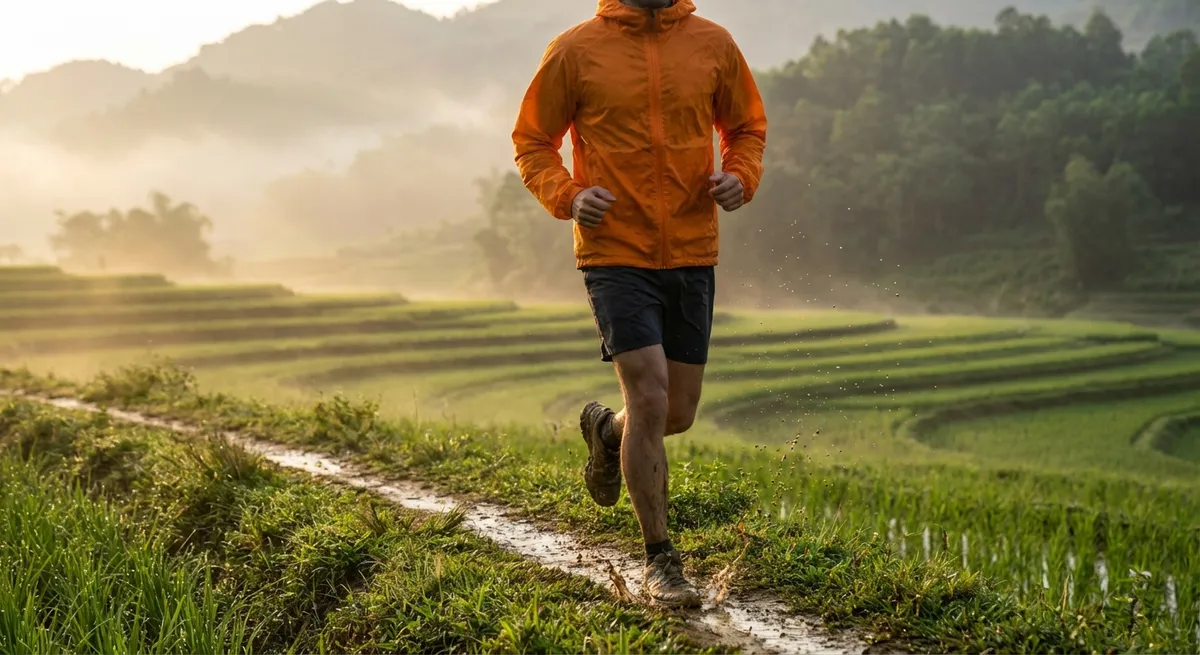
Why Active Travel Changes Everything
Active travel turns you from spectator into participant. Instead of skimming through cities and landscapes, you feel them—under your boots, through your handlebars, in the slow burn of a hill climb or the cool relief of an ocean swim.
It heightens your senses: the smell of pine on a mountain ridge, the grit of sand after a beach run, the echo of your breath in canyon air. It deepens your connection with local culture when you walk, cycle, or paddle through neighborhoods and natural spaces instead of racing past them in a car.
Physically, it keeps your energy high, helps offset long flights and indulgent meals, and supports cardiovascular health, mood, and sleep. Mentally, it gives structure to your days and a sense of accomplishment that goes far beyond “I saw that.” You’ll return home not just with photos, but with a stronger body and a sharpened sense of what you’re capable of.
Tip 1: Follow the Terrain, Not the Treadmill
Leave “standard workouts” at home. On the road, the landscape is your training plan. Let the terrain decide how you move, then lean into it with intention.
In mountain towns like Chamonix in France or Banff in Canada, chase elevation with ridge walks and stair-like trail ascents, treating each climb as natural interval training. In coastal spots like Cape Town or Portugal’s Algarve, trade machines for beach runs on packed sand at low tide, cliffside hikes, or surf sessions that torch your upper body and core. Cities like Tokyo, Barcelona, or Mexico City become urban obstacle courses—long walking days, park circuits, and stair-heavy subway stations that rack up thousands of purposeful steps.
Instead of squeezing a hotel gym session into your schedule, ask: “How can I meet this landscape with movement?” The result is training that’s more adventurous, more memorable, and often more challenging than anything scripted.
Destination highlights to try the “terrain-first” approach:
- Madeira, Portugal – Steep levada walks, rugged coastal trails, and natural ocean pools for post-hike swims.
- Cusco, Peru – Altitude hikes and ancient stone stairs that double as fiery leg workouts.
- Vancouver, Canada – Oceanfront seawall cycling, forest trails in Stanley Park, and quick access to mountain hikes.
Tip 2: Design Movement-Rich Days Before You Book
The most active trips are intentional from the very first click. Before reserving flights or hotels, sketch your ideal “movement day” in that destination—then build your travel plans backwards from it.
Look up local running or cycling routes, trail networks, climbing spots, or paddling areas. Search for “running route + [city],” “bike-friendly + [country],” or “urban hikes + [destination]” to discover possibilities. Check if the city has bike-share systems, waterfront trails, or car-free walking zones that make daily movement almost automatic.
Pick accommodations that support your active style: near a waterfront promenade in Nice, by a trailhead in Innsbruck, or walking distance to parks and markets in cities like Copenhagen or Melbourne. When transit options pop up, choose the one that lets you move more—rent a bike instead of a car, take the long route on foot, or ride partway and walk the rest.
By hardwiring activity into your logistics, you ensure your days don’t depend on motivation alone; they’re built around movement from the start.
Tip 3: Pack a “Micro Gym” and Train Anywhere
You don’t need a trunk full of gear to stay strong on the road. A small “micro gym” can slip into your carry-on and turn any rooftop, park, or hostel courtyard into your own training ground.
Essential items: a light resistance band for pulls and rows, a mini-loop band for glutes and hips, and a compact jump rope. With those, you can structure short sessions that support all the adventure miles you’ll be logging: banded rows to balance all that backpack time, glute activation before steep hikes, jump-rope intervals when you’re short on daylight or space.
Pair your micro gym with bodyweight moves that work anywhere—push-ups, air squats, walking lunges, planks, slow calf raises on steps, and wall sits in your hotel room. Keep sessions short, 15–25 minutes, and think of them as your “maintenance kit” between big outdoor days.
Active-travel-friendly routine idea:
- Warm-up: 5 minutes walking or light jogging (hotel corridors, local park, or beach).
- Strength circuit: 3–4 rounds of 10–15 squats, 10 push-ups, 12 band rows per side, 15–20 glute bridges, 30–45 seconds plank.
- Finisher: 5–10 minutes jump rope or step-ups on a curb or bench.
You’ll move better, recover faster, and be ready to say yes when that spontaneous sunrise hike invitation appears.
Tip 4: Let Local Culture Shape Your Sweat
The most memorable active travel moments often come when you say, “What do locals do to move here?” Instead of forcing your usual routine into a new place, let local movement traditions pull you in.
In Rio de Janeiro, join outdoor beach workouts or bodyweight stations along Copacabana. In Seoul, wander into late-night park fitness areas or early-morning group stretches. In Bali, book a sunrise yoga class overlooking rice terraces; in New Zealand, lean into the national love of tramping (backpacking) and coastal walks. If you’re visiting a surf town, ski village, or climbing hub, sample the sport that defines the destination—even at a beginner level.
You’ll leave with more than a sweat; you’ll carry home a piece of the region’s identity. Active experiences like dance classes, martial arts sessions, community runs, and outdoor group fitness are also an easy way to meet people and swap stories with fellow travelers and locals alike.
Culture-driven movement ideas:
- Japan: Try forest bathing walks (shinrin-yoku) in places like Yakushima or the Kiso Valley, blending mindfulness and hiking.
- Spain: Walk sections of the Camino de Santiago for a fusion of pilgrimage, culture, and distance walking.
- Hawaii (U.S.): Explore outrigger canoeing, surf lessons, or coastal hikes like the Nā Pali Coast (with proper permits and planning).
Tip 5: Recover Like an Athlete, Explore Like a Nomad
Active travel can push your limits—in all the best ways—if you respect recovery as much as adventure. Treat your body like the vehicle that’s carrying you through mountains, markets, and shorelines, and it will reward you with more energy, fewer injuries, and deeper enjoyment.
First, prioritize sleep where you can: a quiet room, eye mask, and a rough schedule that allows 7–9 hours most nights. Hydrate more than you think you need, especially at altitude or in hot climates. Balance big days (long hikes, bike tours, intense climbs) with lighter movement days (gentle city walks, easy swims, stretching in a park).
Add micro-recovery rituals to your travel rhythm: calf and hip flexor stretches after long flights, gentle yoga at sunrise, a five-minute foot massage with a ball or water bottle after full days on your feet. Use local recovery opportunities too—thermal baths in places like Budapest or Iceland, hammams in Morocco or Turkey, or simple ocean soaks after tropical runs.
When you blend hard effort with intentional rest, you create a sustainable way to roam: strong enough to chase the next ridge, rested enough to savor every step.
Conclusion
Active travel is not about chasing the toughest trail or the longest ride. It’s about rewriting the story of how you move through the world—trading passive sightseeing for experiences that leave you winded, wide-eyed, and fully alive. When you follow the terrain, design movement-rich days, train with minimal gear, embrace local culture, and recover like it all matters, every destination becomes more than a place to see. It becomes a place that changes you.
Pack your curiosity, your willingness to sweat, and a small micro gym. The planet is waiting—with stairs to climb, waves to catch, and sunrises you only reach if you start moving in the dark.
Sources
- Centers for Disease Control and Prevention – Physical Activity and Health - Overview of how regular physical activity benefits heart health, mood, and longevity
- World Health Organization – Physical Activity Fact Sheet - Global guidelines and recommendations for adults and the health impact of staying active
- Harvard T.H. Chan School of Public Health – Staying Active While Traveling - Practical tips for building movement into trips and travel days
- U.S. National Park Service – Hiking Safety - Guidance on safe, prepared hiking in varied terrain and weather conditions
- Visit Copenhagen – Biking in Copenhagen - Example of how a destination is built for everyday active exploration by bike