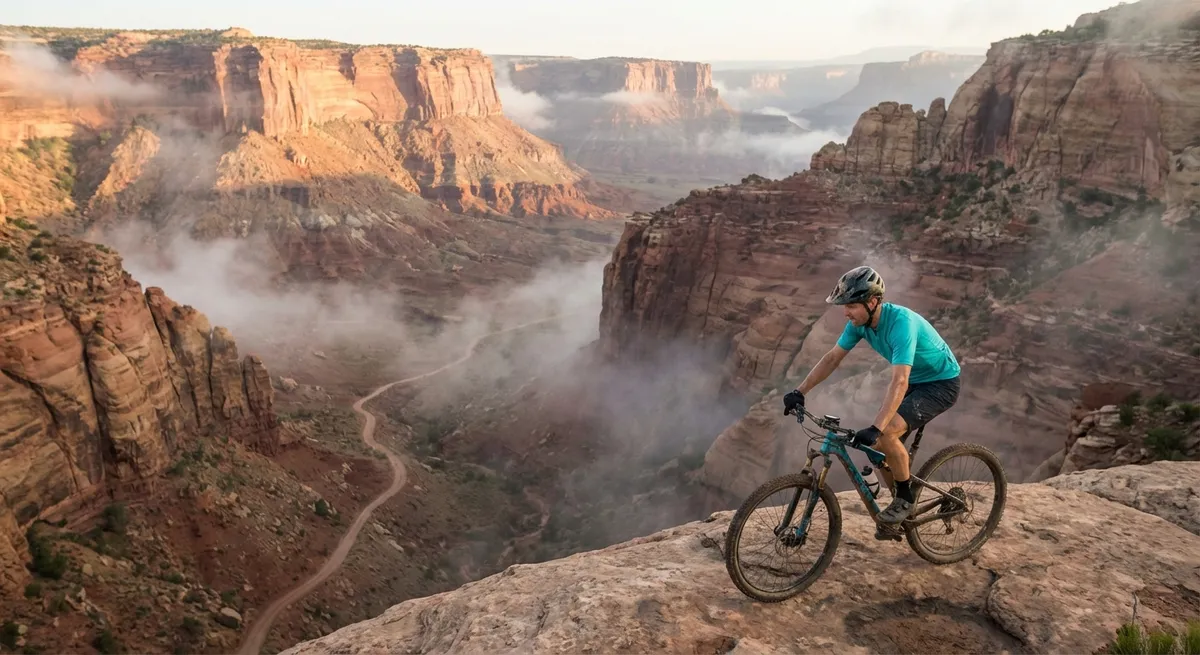
Rewriting “Leg Day”: Let the Landscape Lead
When you stop chasing hotel treadmills and start chasing terrain, leg day becomes an epic story instead of a chore.
Sand becomes your plyo box. Hills turn into natural incline trainers. Rocky paths tap your stabilizer muscles like a precision coach. Even city staircases double as brutal sprint tracks with postcard views at the top.
In mountainous destinations like Chamonix, Queenstown, or Banff, hike-to-run combos can replace your entire lower-body split: power hike up, controlled jog down, mix in lunge-walk intervals whenever the trail flattens. On coasts like Cape Town’s Sea Point Promenade or Rio’s Copacabana, barefoot runs on firm wet sand challenge your calves and feet while the ocean keeps you cool.
Let your surroundings dictate the workout: steep streets for hill repeats, boardwalks for tempo runs, stone alleys for agility drills, beaches for power strides. The more varied the terrain, the more complete the training—and the more unforgettable the memory.
Destination Highlights: Outdoor Playgrounds Worth the Flight
Every region hides its own “open-air gym,” waiting for travelers who’d rather sweat than sit.
In Vancouver, you can cycle the seawall at sunrise, hit bodyweight circuits at the outdoor fitness stations, then push your lungs on the Grouse Grind—an infamous stair-like trail locals nicknamed “Mother Nature’s StairMaster.”
In Barcelona, morning runs along Barceloneta Beach roll seamlessly into pull-ups and dips on public calisthenics bars. The city’s wide avenues and parks create a natural route for fartlek runs, sprinting between landmarks like the Arc de Triomf and Parc de la Ciutadella.
Head to Queenstown, New Zealand, and every direction is a workout: trail runs around Lake Wakatipu, stair sessions up to skyline viewpoints, and post-hike mobility flows in lakeside grass with mountain peaks as your backdrop.
Even bustling hubs like Tokyo or London offer surprises: riverside paths for tempo runs, urban parks perfect for EMOM (Every Minute On the Minute) circuits, and stair-filled subway stations that turn commuting into stealth conditioning.
Explore with a map, not a machine: circle water, green spaces, high points, and long, straight paths. That’s your training split, written by the city.
5 Active Travel Tips for Fitness Adventurers
These five strategies keep your adventures wild, your body primed, and your training alive—no matter where your boarding pass lands.
1. Build a “Go Pack” That Weighs Less Than a Laptop
Create a minimalist, always-ready fitness kit that disappears into your carry-on:
- Light resistance band (or two strengths)
- Compact jump rope
- Mini loop band for glute and hip work
- Collapsible water bottle
- Thin travel towel you can use as a mat
With this kit, any park becomes a conditioning zone: resistance-band rows anchored to a bench, glute bridges on the grass, jump rope sprints between trees. You don’t need a gym membership—just a patch of flat ground and your willingness to move.
2. Turn Transit Time into Micro-Training
Long journeys don’t have to mean stiffness and fatigue.
At airports and stations, trade waiting-room chairs for walking laps with your pack, calf raises at the gate, hip circles, and gentle lunges in a quiet corner. On trains, stand in the aisle periodically for ankle mobility, standing marches, and shoulder rolls.
These micro-sessions keep blood flowing, reduce jet lag, and make that first destination workout feel smooth instead of sluggish. Movement doesn’t start when you arrive; it starts the moment you lock your front door.
3. Let Local Terrain Shape Your Weekly Split
Instead of trying to copy your home routine city by city, design your training around what the destination offers best.
- Mountain town? Make it strength-and-endurance week: hiking, trail running, hill sprints, rock hopping.
- Coastal city? Lean into runs, swims, beach circuits, and sunrise mobility on the shore.
- Urban labyrinth? Focus on speed, agility, and stamina: staircase sprints, park circuits, fast-paced exploratory walks.
Sketch a loose schedule before you go: which days are long-exploration days, which are intensity bursts, and which are gentle mobility and recovery. You’ll stay consistent without feeling chained to a regimen that doesn’t fit the terrain.
4. Use Landmarks as Your Interval Clock
Replace your watch timer with the streets themselves.
Pick a visible target—a statue, streetlight, hill crest, bridge, or mural—and use it as your goal. Run hard to the next bridge, walk to the following intersection, then drop into 10 push-ups or squats at the fountain you’ve been eyeing. Every landmark becomes a programmable “station” in your circuit.
In a city like Paris, sprint between bridges along the Seine. In Cape Town, use beachfront lifeguard towers as markers for running intervals and burpee breaks. It’s interval training disguised as sightseeing, and you’ll remember the city by the sweat you left on its stones.
5. Recover Like It’s Part of the Expedition (Because It Is)
Adventure is demanding. Recovery is what lets you actually enjoy it.
Prioritize sleep even across time zones—dim screens, hydrate early, and aim to sync with local sunrise and sunset as fast as possible. Use simple mobility flows at sunrise or sunset: 10–15 minutes of hip openers, spinal twists, ankle circles, and gentle hamstring work.
Walk after big meals to ease digestion and help your body adjust to new foods. When safely available, use cold water dips in lakes, the ocean, or even a cool hotel pool to refresh sore legs after long days on your feet.
Your goal isn’t to limp through a bucket-list hike; it’s to feel strong enough to say yes when the guide mentions “one more secret viewpoint” that requires a detour and a few hundred extra steps.
Crafting Your Own Outdoor Workout Adventure
The world doesn’t care how much you can lift in a fluorescent gym. It cares how willing you are to chase a sunrise, climb one more flight of stone steps, or jump into cold water when your heart says “go” and your brain hesitates.
Instead of asking, “Where will I work out on this trip?” start asking, “How will this place change the way I move?” With a light kit, a flexible training mindset, and a habit of turning every street, shoreline, and trail into an opportunity, you’re not just staying fit—you’re forging a body that carries you deeper into the world.
Your next workout isn’t on a schedule. It’s on a map. Choose a dot, book the ticket, and let the landscape write your next training plan.
Sources
- Centers for Disease Control and Prevention – Physical Activity Basics - Overview of recommended activity levels and health benefits of regular movement
- American Heart Association – Outdoor Exercise Tips - Practical guidance and safety considerations for exercising outside
- Harvard T.H. Chan School of Public Health – Benefits of Physical Activity - Research-based insights on how physical activity supports health and weight management
- Sleep Foundation – Jet Lag and Sleep - Evidence-based strategies for handling jet lag and protecting recovery while traveling
- U.S. National Park Service – Hiking Safety - Official guidance on safe hiking practices and preparation for outdoor adventures