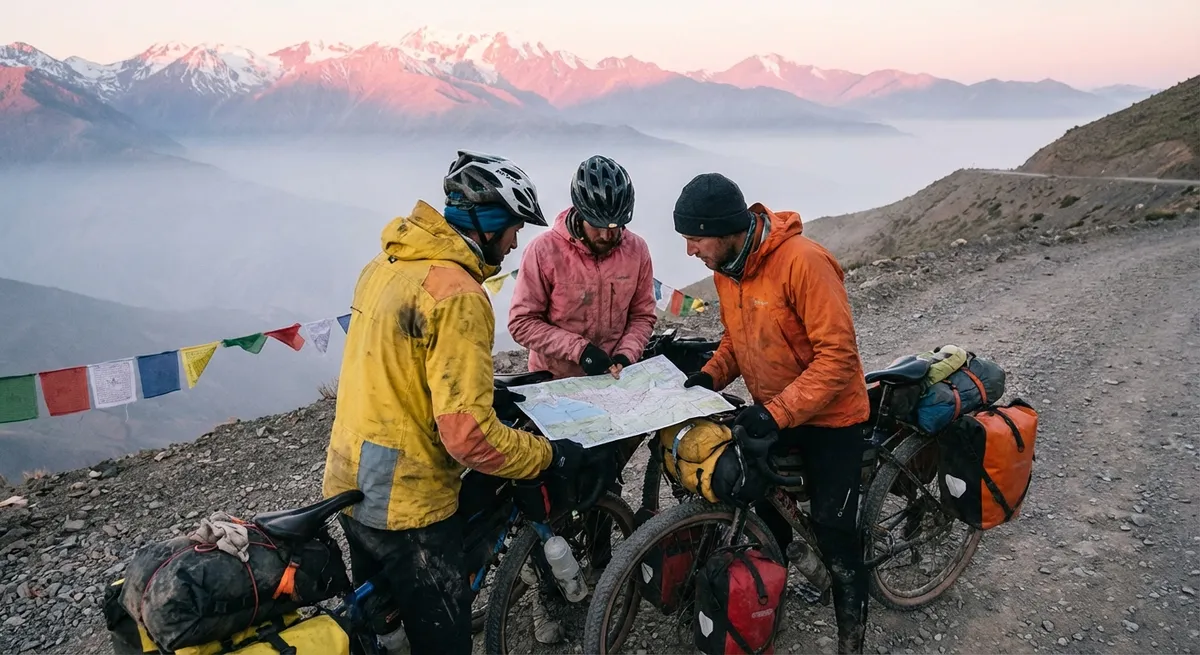
Why Active Travel Hits Different
Traditional vacations often split your life in two: “real life” and “escape.” Active travel stitches them back together. When your days are built around moving through a place—on your feet, on a bike, in the water—your body becomes the vehicle for discovery, not just the luggage carrier.
Movement changes how you see a destination. You don’t just visit Patagonia; you feel the wind claw at your jacket on a ridgeline. You don’t just walk through Kyoto; you climb its temple stairs at dawn while the city yawns awake. You don’t just land in Cape Town; you power-hike up Lion’s Head and watch the coastline flare gold beneath you.
Physically, the benefits stack up: elevated mood, better sleep, improved cardiovascular health, and a deeper sense of accomplishment that lasts longer than any souvenir. Mentally, you build resilience by navigating unfamiliar terrain, language, and conditions—skills that follow you home and leak into every arena of your life.
Active travel turns “Are we there yet?” into “Where can I push myself next?”
Choosing Destinations That Move You
When you plan with motion in mind, the map changes. Instead of asking “Where’s cheap?” or “Where’s famous?” you start asking “Where can I feel something powerful with my body?”
Consider these movement-rich regions as sparks for your imagination:
- Azores, Portugal – Misty crater lakes, black-sand beaches, and rainforest-like trails. Hike the Sete Cidades rim, soak in geothermal pools post-trek, and trail run along hydrangea-lined roads that feel like a dream sequence.
- Queenstown & Wanaka, New Zealand – A natural playground for hikers, trail runners, climbers, and mountain bikers. Think sunrise lung-busting climbs above Lake Wanaka followed by cold-water dips that shock you joyfully awake.
- Dolomites, Italy – Jagged limestone spires, via ferrata routes, and looping hikes that connect mountain refuges. Spend your days clinging to cables on cliff faces and your evenings refueling with polenta and local wine.
- Peru’s Sacred Valley – Stair-heavy ancient trails, high-altitude hikes, and market wanders that double as loaded carries. From the Inca Trail (or its lesser-known cousins) to Rainbow Mountain acclimatization walks, this region elevates both heart rate and perspective.
- Cape Town, South Africa – Trails weave straight out of the city. Scramble up Table Mountain routes, run along Signal Hill, and cool down with ocean swims at Clifton or Camps Bay.
You don’t need “epic” to move, though. Urban jungles like Tokyo, Paris, or Mexico City become endurance playgrounds when you deliberately walk, climb, and explore instead of defaulting to taxis and transit.
5 Active Travel Tips for Fitness Adventurers
1. Program the Trip Like a Training Cycle
Treat your itinerary like a training block, not a random mash-up of activities.
- Anchor days: Choose one or two “big effort” days—like a long summit hike, multi-hour bike ride, or kayak expedition.
- Build & deload: Schedule lighter movement days before and after those anchors (think city strolls, easy beach runs, restorative swims).
- Stack intensity strategically: Avoid back-to-back maximal days unless you’re very experienced; your body is also adapting to new time zones, sleep patterns, and food.
This approach improves performance, lowers your injury risk, and makes the highlights actually enjoyable instead of a sufferfest.
2. Pack a Micro-Gym That Fits in Your Daypack
Forget the hotel weight room—you can carry your training tools.
Consider this minimalist kit:
- Resistance band loop – For glute activation, hip work, and upper-body pulls.
- Light long band with handles or carabiner – Attach to railings or sturdy posts for rows, presses, and rotations.
- Jump rope – Quick conditioning on hostel rooftops, courtyards, or quiet streets.
- Collapsible massage ball or mini roller – For feet, calves, and hips after long days.
With these, any patch of flat ground becomes a strength circuit between excursions. Ten focused minutes before breakfast and ten after dinner can maintain strength and mobility for weeks.
3. Rewrite “Sightseeing” as “Route Planning”
When you start planning routes, not just checklists, your fitness explodes by accident.
- Stair hunts: In cities like Hong Kong, Lisbon, or San Francisco, build “stair sprints” into your walking route. Climb hard, descend easy, repeat.
- Viewpoint circuits: Identify overlooks, towers, or hilltop parks, then link them into a loop. You’ll earn every panorama with real effort.
- Waterfront intervals: Boardwalks, river paths, and coastal promenades are perfect for casual interval runs—jog between landmarks, push the pace between bridges or piers.
Every museum, café, and landmark becomes a waypoint in an active circuit instead of an excuse to sit more.
4. Train Your Recovery as Hard as Your Adventure
Active travel can tempt you into “more, more, more.” The real pros know when to throttle down.
Build these habits into your journey:
- Post-effort rituals: After long treks or city marathons on foot, spend 10–15 minutes on banded mobility or stretching. Focus on hips, ankles, calves, and upper back.
- Hydration discipline: New climates—humid jungles, high-altitude plateaus, dry deserts—can drain you fast. Keep a collapsible bottle and target frequent sips, not just big gulps at meals.
- Sleep protection: Use an eye mask and earplugs. Guard at least one “early night” every three to four days, especially at altitude or after big vertical gain.
You’re not just recovering to feel better tomorrow—you’re protecting the next landmark, the next ridge, the next sunrise you haven’t reached yet.
5. Let Local Culture Shape Your Movement
The most powerful fitness gains often come from adopting how locals move, not importing your gym routine.
- In Japan, join the morning flow: quiet walks through temple grounds, then practice slow, deliberate bodyweight movements in a park.
- In Spain, align with late dinners and cooler evenings by scheduling runs or walks at golden hour, when plazas and promenades buzz with movement.
- In Costa Rica, lean into the “pura vida” rhythm—surf when the swell is right, hike when the jungle is shaded, and nap in hammocks between.
Try local movement traditions—capoeira in Brazil, yoga in India, tango in Argentina, Nordic walking in Scandinavia. Each adds new skills to your body’s portfolio while embedding you deeper into the place you’re exploring.
Destinations That Double as Training Partners
Every landscape favors a different kind of exertion. When you match your training style to the terrain, the environment becomes your coach.
- Trail Runners & Fast Hikers:
- Chamonix, France: Technical trails, huge vertical gain, endless alpine views.
- Madeira, Portugal: Levadas (irrigation channels) that wind through jungle and cliffs.
- Cyclists & Gravel Adventurers:
- Girona, Spain: Pro-cyclist hub with rolling roads and gravel networks.
- Oregon, USA: Forest roads, coastal rides, and volcanic climbs around Mt. Hood and Crater Lake.
- Water Lovers:
- Azores, Portugal: Coasteering, open-water swims, and surf breaks.
- Indonesia (Bali, Lombok, Nusa Islands): Surf, free diving, and paddleboarding in warm water.
- Strength & Scramble Enthusiasts:
- Jordan’s Wadi Rum: Rock scrambles, desert treks, and load-carrying on sand.
- Canary Islands: Volcanic ascents and rocky ridges that demand strong legs and stable cores.
When you choose destinations that reflect your movement personality—or the athlete you want to become—the trip trains you while you’re too busy being amazed to notice.
Conclusion
Active travel is not about chasing the hardest trail or the biggest summit; it’s about using the world as a catalyst to become more alive inside your own skin. When you treat every journey as a chance to experiment with movement, your vacations stop being escapes and start becoming upgrades—mentally, physically, and spiritually.
There’s a version of you who sprints up foreign staircases for the view, who greets new cities with sunrise runs, who measures countries in kilometers traveled under your own power. That version of you is already waiting at your next departure gate.
Pack your curiosity. Pack your grit. Let the map set the stage—and let your body write the story.
Sources
- CDC – Physical Activity and Health - Overview of health benefits of regular physical activity, useful context for why active travel is so powerful
- Harvard Health – Travel and Your Health - Evidence-based guidance on staying healthy and active while traveling
- National Park Service – Hiking Basics - Practical safety and preparation tips that apply to active, outdoor-focused trips
- New Zealand Department of Conservation – Plan and Prepare - Official guidance on preparing for active adventures in rugged environments
- Visit Azores – Outdoor Activities - Destination-specific inspiration for hiking, water sports, and other active experiences in the Azores