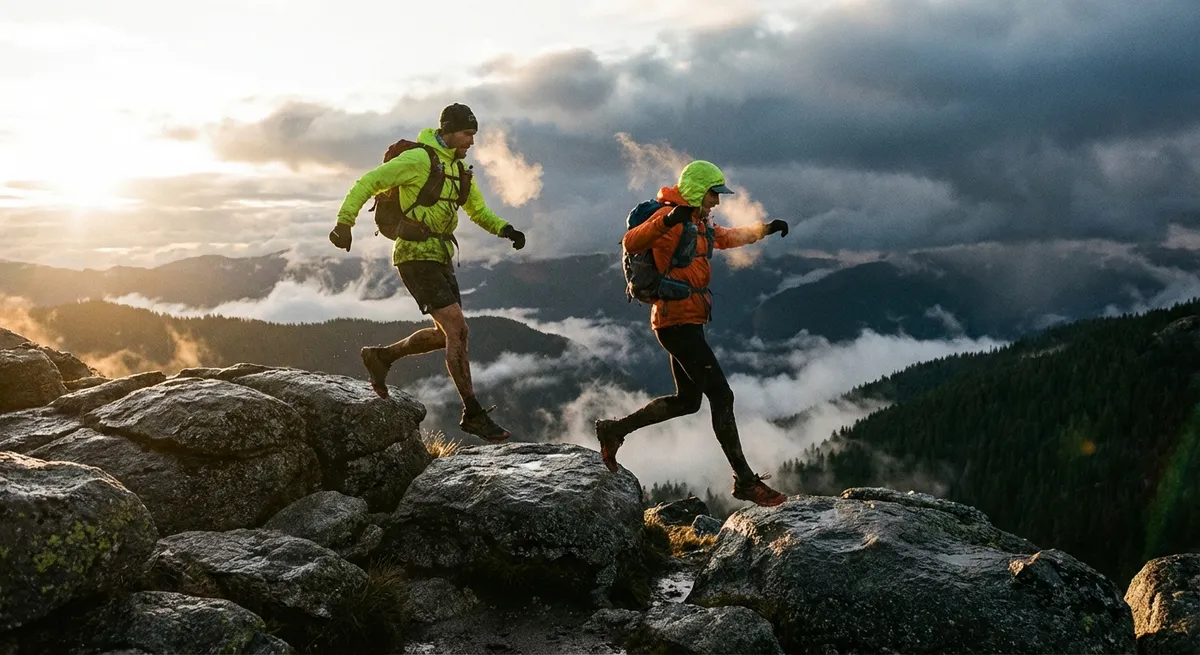
This is your guide to weaving real movement into real travel—no generic “stay active” clichés, just bold, practical strategies and destination ideas that make your next trip feel like a story you trained for.
Redefining Fitness: The World as Your Training Partner
Adventure fitness means your workout doesn’t pause when your plane takes off—it evolves. Instead of viewing travel as a break from your routine, you treat it as a phase of your training cycle, one that challenges balance, stamina, and mindset in new environments.
Think about it this way: hiking ridgelines in Patagonia builds strength and lung power differently than your usual treadmill run. Paddleboarding off the coast of Croatia fires up stabilizers your weights rarely touch. Even power-walking through alleyways in Istanbul, dodging crowds and street cats, sharpens agility and awareness. When you embrace movement as part of exploration, you stop “fitting in” workouts and start designing trips that make you fitter by default.
Adventure fitness also rewires how you measure progress. Instead of obsessing over your usual metrics, you track different victories: how confidently you scramble over wet rocks, how quickly you acclimate to higher altitude, how comfortably you carry your pack for hours. Your training becomes less about aesthetics and more about capability—what your body lets you do, not just how it looks in photos.
Tip 1: Build a “Go-Bag” Kit for Movement Anywhere
Your adventure starts before you clear security. A minimalist, smartly packed movement kit can turn any layover lounge, mountain hut, or guesthouse rooftop into a training zone—no extra checked baggage, no excuses.
Pack a compact resistance band for strength sessions under palm trees in Tulum or on a riad terrace in Marrakech. Add a lightweight jump rope for bursts of cardio along the waterfront in Lisbon or at sunrise on Copacabana Beach. A microfiber towel can double as a mat for core work on alpine balconies in Switzerland or beachfront patios in Bali. Slip in a collapsible water bottle to stay hydrated in long, dry stretches—think desert hikes near Sedona or dusty streets in Oaxaca.
Digital tools round out your go-bag. Download offline workout timers, maps, and safety apps before you lose service in the Dolomites or on rural Indonesian islands. Keep a few bodyweight routines saved for “no equipment, no problem” days, so if your hostel courtyard in Guatemala suddenly becomes your gym, you’re ready. The goal isn’t to travel heavy—it’s to travel prepared.
Tip 2: Let Terrain Be Your Coach, Not Your Enemy
Instead of fighting the terrain, design your training around it. Every landscape offers a natural advantage—your job is to say yes to it.
Headed to Reykjavik or Queenstown? Elevation and hills become your interval coach. Hike or run uphill segments with effort, then walk the descents to recover. Exploring coastal towns like Dubrovnik or Valparaíso? Those endless staircases are your built-in glute and cardio session—turn them into a 15-minute stair sprint challenge before sunset. Visiting Tokyo, London, or New York? Urban environments are obstacle courses: benches for step-ups and tricep dips, park paths for tempo runs, riverside walkways for long, easy miles.
In desert destinations like Joshua Tree or Wadi Rum, early mornings become prime movement time—low light and cooler temperatures are perfect for mindful runs or mobility sessions among rock formations. In tropical spots like Costa Rica or Thailand, dense jungle trails and uneven ground force you into a slower, more controlled pace that builds balance and ankle stability.
When you stop looking for flat, familiar surfaces and start using what’s in front of you—sand, stairs, cobblestones, forests—your “gym” gets more interesting, and your body gets more resilient.
Tip 3: Anchor Your Days Around One “Hero Movement”
Travel days can be chaotic, but one simple principle keeps you grounded: choose a single “hero movement” each day and build loosely around it. This keeps you consistent without feeling chained to a rigid plan.
In Bali’s Ubud, your hero move might be a daily sunrise hike through rice terraces, then casual cycling between temples. In Chamonix, it might be a climbing session or via ferrata route, with gentle evening walks to flush out your legs. In Cape Town, you could commit to one big climb of Lion’s Head or Table Mountain your first days, then maintain the theme with beach runs along Camps Bay or surf sessions in Muizenberg.
On travel-heavy days—long train rides across Europe, bus transfers through Vietnam—your hero movement might be 20 minutes of intense mobility and core in your room, or a brisk power walk around the station during long layovers. The point isn’t perfection; it’s identity. You’re a moving traveler, and each day’s hero movement is a promise you keep to yourself, no matter the itinerary.
Tip 4: Book Experiences That Double as Training Sessions
If you’re going to spend money and time on activities, choose the ones that leave you breathless—in the best way. Active experiences turn your sightseeing into workouts disguised as unforgettable moments.
In the Italian Dolomites or the Swiss Alps, choose hut-to-hut trekking over simple scenic viewpoints. Your accommodation becomes part of a multi-day endurance adventure, and those sunrise ridge walks become memories that feel like personal milestones. In Slovenia’s Lake Bled or Croatia’s Dalmatian Coast, rent a kayak or stand-up paddleboard—core work plus landscapes that feel unreal.
In Peru, combine culture and conditioning with high-altitude treks to Machu Picchu or Rainbow Mountain, using your pre-trip training to handle the thinner air. In Japan, try cycling routes between small towns instead of taking every train—your quads will remember the climbs even if your camera roll doesn’t. Surf lessons in Portugal’s Algarve, canyoning in Montenegro, trail runs in New Zealand’s South Island—each booked experience is another chapter in your training story.
When you choose active excursions over passive ones, your itinerary becomes a training plan you’re excited to wake up for, not a checklist you’re dragging your feet through.
Tip 5: Use Local Food as Fuel, Not Just Photos
Fueling an adventure body on the road doesn’t mean eating bland or obsessing over macros. It means respecting what your body needs while savoring what each destination offers.
In Mediterranean regions like Greece or Spain, traditional diets lean naturally toward heart-healthy fats, lean proteins, whole grains, and fresh produce—perfect for long days of movement. Use mezze plates, grilled fish, olives, and legumes as recovery fuel after coastal runs or hikes. In Vietnam or Thailand, noodle soups, fresh herbs, and rice dishes can be light yet energizing—ideal between morning exploration bike rides and evening walks.
In mountain regions like Nepal or the Andes, carb-heavy staples such as rice, lentils, potatoes, and flatbreads become your altitude allies, helping you sustain energy on demanding treks. In places like Mexico or Colombia, you can lean into grilled meats, beans, corn-based dishes, and fresh fruit to keep your energy stable during long walks and humid days.
Balance is key: enjoy local pastries in Paris or gelato in Rome, but pair indulgence with motion—walk instead of cabbing, take the long way along the Seine, climb that extra staircase to your viewpoint. When you treat food as both culture and performance fuel, you’ll feel strong enough to say yes to more adventures instead of needing to crash in your room.
Conclusion
Your next trip doesn’t need a break from your fitness journey—it can be the strongest, wildest chapter yet. With a small movement kit in your bag, a willingness to let the terrain lead, a daily hero movement to anchor you, active experiences on your itinerary, and local food as your ally, the world stops being a disruption and starts being your coach.
Adventure fitness isn’t about perfection. It’s about collecting stories only a moving body can earn: the stairs you sprinted at sunrise in Lisbon, the waves you paddled through in Bali, the ridge you pushed yourself to summit in Patagonia. Stamp your passport, lace your shoes, and let your training roam as far as your curiosity will carry it.
Sources
- Centers for Disease Control and Prevention – Physical Activity Guidelines - Overview of recommended activity levels and health benefits, helpful for planning active travel days.
- American Heart Association – Travel and Heart Health - Guidance on staying active and healthy while traveling, especially for cardiovascular fitness.
- Harvard T.H. Chan School of Public Health – The Nutrition Source: Healthy Eating Plate - Evidence-based framework for building balanced meals, useful when navigating local cuisines as fuel.
- International Travel and Health – World Health Organization - Information on staying healthy and safe during international travel, including considerations for physical activity.
- National Park Service – Hiking Basics - Practical advice on preparation and safety for hiking, relevant to adventure fitness in natural destinations.