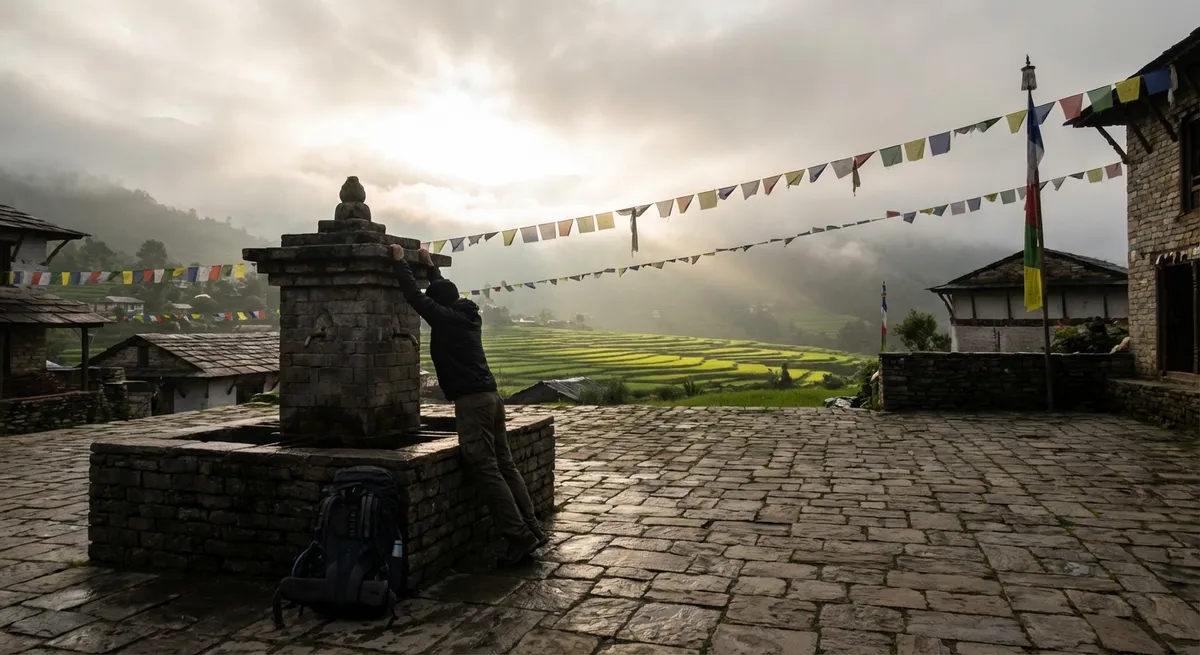
Why Active Travel Hits Different
The gym is controlled, predictable, safe. Active travel is everything else: uneven, weather-beaten, surprising—and that’s why it transforms you. When you run through Lisbon’s twisting alleys or paddle across Croatia’s glassy coves, your body isn’t just “exercising”; it’s negotiating a living, breathing environment.
Research backs the magic you feel on the road. Studies on “green exercise” show that moving in natural environments can boost mood and reduce stress more than indoor workouts, while walking-focused tourism contributes significantly to cardiovascular health and long-term fitness. But beyond the science, there’s something primal about earning your viewpoint, your meal, your night’s sleep with your own muscle power.
You don’t need to be ultra-fit or an extreme athlete to travel this way. You only need curiosity and a willingness to let your itinerary be written by trails, tides, and terrain instead of only museum hours and restaurant bookings. The reward? You remember places not just for how they looked, but how they felt in your lungs, your legs, your heartbeat.
Choosing Destinations That Make You Want To Move
The best active trips start before you lace up your shoes—they start with where you choose to go. Think less about “Is there a good hotel gym?” and more about “What does this landscape invite my body to do?”
Coastal cities like Cape Town, Rio de Janeiro, and Vancouver naturally pull you outside. You can stitch together sunrise runs along the waterfront, ocean swims, cliffside hikes, and SUP sessions in a single long weekend. Meanwhile, cities framed by dramatic terrain—like Innsbruck in Austria or Queenstown in New Zealand—turn the horizon into a menu: valley bike rides, mountain ridge scrambles, river rafting, all within easy reach.
Don’t sleep on cultural capitals either. Places like Kyoto, Seville, or Bogotá are basically open-air cardio circuits disguised as historic adventures: temple stairways, hilltop viewpoints, labyrinthine old quarters that demand wandering by foot or bike. The trick is to choose destinations where landscape and culture both reward movement, so you never feel like you’re “missing out” by skipping a taxi ride for a walk or a tram ride for a ride share bike.
When you research, scan photos and maps with an athlete’s eye. Hills? Promenades? coastal paths? riverside routes? public parks? Those are your training grounds. Bonus points if the destination has strong outdoor culture—places where early-morning runners, cyclists, or surfers are part of the city’s daily rhythm.
5 Active Travel Tips For Fitness Adventurers
1. Plan Your Days Around “Anchor Efforts,” Not Attractions
Instead of stacking museums and restaurants in your itinerary, build your days around one core physical challenge—a morning trail run, a summit hike, a long city bike loop, an ocean swim—then weave attractions and cafes around it.
In Santorini, for example, your anchor effort could be the cliffside hike from Fira to Oia, with detours for espresso stops and photo viewpoints. In Hong Kong, it might be a sunrise climb up Victoria Peak followed by dim sum and a lazy harbor ferry ride. This approach keeps movement non-negotiable while still leaving space for spontaneity and recovery.
Anchor efforts also allow you to periodize your trip like a training week: alternate harder days (hikes, long rides, big elevation) with lighter “recovery exploration” days (walking tours, easy paddles, yoga in a park). You’ll come home feeling built up, not burnt out.
2. Pack Like An Athlete, Not A Tourist
Your gear should say, “I’m here to move.” Aim for a minimalist, high-performance packing list that lets you pivot from city streets to mountain switchbacks without lugging a full-on expedition kit.
Non-negotiables include:
- Versatile footwear: one pair of lightweight, grippy trainers that work for city walks, stairs, light trails, and casual dinners. Trail-running shoes with subtle styling are often perfect.
- Technical layers: quick-dry tops, a light insulating midlayer, and a packable wind/rain shell. Good layering lets you chase sunrises, night markets, and windy ridgelines in comfort.
- Compact recovery tools: a resistance band, lacrosse or massage ball, and maybe a lightweight jump rope. These keep your body happy after long flights and hard days.
- Swim kit on standby: a packable swimsuit and mini microfiber towel can transform any unexpected ocean, river, or hotel rooftop pool into an instant training session or chilly plunge.
Think in terms of mobility and resilience. The more you can carry on your back without strain, the more ready you are to say “yes” when a local invites you on a spontaneous detour hike or bike ride.
3. Turn Local Terrain Into Your Training Partner
The magic of active travel lies in using the world itself as your gym equipment. Instead of forcing your normal routine into a new environment, let the environment rewrite your routine.
In stair-heavy cities like Porto, Valparaíso, or San Francisco, your “leg day” is built right into the streets. In flat biking cities like Copenhagen or Amsterdam, skip the stationary bike and let your commute be your cardio. In alpine regions like the Dolomites or the Canadian Rockies, your strength and endurance days become hut-to-hut hikes or ridge runs.
Beach destination? Use the shoreline for barefoot sand sprints, bodyweight circuits, and mobility work at sunrise. Jungle or forest region? Slow, technical hikes build ankle stability, balance, and mindfulness. Volcano or highland plateaus? Short, steep bursts train your lungs and mental grit.
This is where you build “adventure fitness”—a blend of cardio, strength, agility, and decision-making that doesn’t just show up in a fitness tracker; it shows up when the trail gets rocky, the waves pick up, or the weather changes unexpectedly.
4. Sync With Local Rhythm For Better Recovery
Active travel isn’t about hammering your body every single day. Recovery matters more when you’re dealing with jet lag, new foods, and unfamiliar climates. The secret is to let local culture and rhythm guide your rest.
In Mediterranean destinations, follow the slower middle-of-the-day pace: sunrise runs or swims, long mid-day meals and siestas, then easy evening walks along promenades or plazas. In Nordic cities with long summer days, you can take advantage of extended light for mellow evening bike rides or light hikes, keeping intensities low while soaking up the scenery.
Use local wellness traditions, too. In Japan, hit an onsen after mountain hikes. In Finland or Estonia, embrace sauna culture as part of your recovery ritual. In Bali or Costa Rica, blend yoga or breathwork classes into your active days to calm your nervous system after surf or trail sessions.
Hydration and sleep are your unseen training partners. Carry a reusable bottle, lean into local fruits and hydrating foods, and protect at least a few nights for deep, non-negotiable rest instead of back-to-back late nights.
5. Let Local Guides Push Your Limits—Safely
The right local guide can turn a generic hike or paddle into one of the most unforgettable efforts of your life. They know the hidden routes, the changing conditions, and how to dial difficulty up or down without putting you in danger.
In coastal destinations like Portugal’s Algarve, a guided sea kayak tour can take you into sea caves and cliff-lined coves you’d never find alone. In high-altitude regions like Peru’s Sacred Valley, local guides can pace your ascent, help you read your body’s response to altitude, and share cultural context that turns struggle into meaning.
Be honest about your fitness and experience level. A good guide will respect your ambition but protect you from pushing past safe limits. They can also teach you local techniques—whether it’s sand dune running in the desert, scrambling efficiently on limestone ridges, or reading waves on a reef break—that you can carry into future adventures.
By leaning into local expertise, you compress years of trial-and-error into a few intense, unforgettable days, levelling up both your athletic skill set and your confidence in unfamiliar terrain.
Destination Highlights To Spark Your Next Active Escape
If your passport hand is already itching, consider these landscapes as archetypes for your next active journey:
- Azores, Portugal: Volcanic crater lakes you can circumnavigate on foot, hot springs for post-hike recovery, coastal trails, and misty highland paths that feel like walking through a fantasy novel.
- Banff & Jasper, Canada: Glacier-fed lakes perfect for cold-water dips, rugged day hikes that double as serious leg sessions, and mellow rivers for recovery paddles between big mountain days.
- Madeira, Portugal: Levadas (narrow irrigation channels) become cliff-hugging pathways for trail runs and hikes, while cloud-forest ridges and coastal climbs punish and reward in equal measure.
- Bogotá & Surroundings, Colombia: Altitude-hardened city running, bike culture that will blow your mind, and quick escapes to cloud forests and highland lakes for weekend summit missions.
- New Zealand’s South Island: Fjords, glaciers, alpine lakes, and coastal tracks—arguably one of the world’s densest collections of “anchor effort” routes for hikers, runners, and paddlers.
You don’t have to tick off all the famous routes to “do it right.” Active travel is less about brag-worthy names and more about the intimate, sweaty, personal connections you forge with a place—those quiet, oxygen-hungry moments when you and the landscape are in direct conversation.
Conclusion
Think of your next trip not as a break from training, but as the most powerful training block you’ll do all year. When you design journeys around movement—choosing landscapes that invite effort, tuning into local rhythms, and letting terrain dictate your workouts—you don’t return home needing a “post-vacation reset.” You come back sharper, stronger, and hungrier for the next horizon.
Your body is your most reliable piece of travel gear. Train for the journey, not just the gym, and every destination becomes a playground, every sunrise a start line, every summit—literal or metaphorical—a reminder that you’re built to roam, sweat, and rise again.
Sources
- Centers for Disease Control and Prevention – Physical Activity and Health – Overview of how regular physical activity improves cardiovascular health, mental health, and overall well-being
- Harvard T.H. Chan School of Public Health – Green Exercise: Why Exercising Outdoors Is So Powerful – Explores the mental and physical benefits of outdoor activity versus indoor exercise
- World Tourism Organization (UNWTO) – Walking Tourism Report – Details how walking-focused tourism supports health and sustainable travel experiences
- American Council on Exercise (ACE) – Benefits of Outdoor Exercise – Describes performance and mood benefits of training outside in varied environments
- National Park Service – Hike Smart Resources – Practical guidance for safely planning and enjoying physically demanding hikes in diverse terrains